New Delhi


Toyota Urban Cruiser Ebella First Drive Review: Sensible First EV From Toyota, But Is That Enough?
Toyota has finally entered India’s electric vehicle space with the Urban Cruiser Ebella. Sharing its underpinnings with the Maruti Suzuki e-Vitara, the Ebella promises range, practicality and Toyota’s signature understated appeal. But in a fast-evolving EV market, does being sensible cut it?

Dhruv Paliwal
Updated Feb 11, 2026, 12:02 PM IST

Toyota Urban Cruiser Ebella First Drive Review: Sensible First EV From Toyota, But Is That Enough?
Toyota has taken its time with electric vehicles in India. While rivals rushed in with dedicated EV platforms and aggressive positioning, Toyota chose a more measured path. The Urban Cruiser Ebella is its first all-electric offering for our market, and it isn’t a clean-sheet Toyota.

People Also Search
How does the Ebella compare to the Maruti Suzuki e-Vitara?
What battery options are available for the Urban Cruiser Ebella?
What safety features does the Urban Cruiser Ebella include?
What are the charging options for the Urban Cruiser Ebella?
What distinguishes the Urban Cruiser Ebella's interior features?
Underneath, it is the same car as the Maruti Suzuki e-Vitara. What Toyota has done is give it a distinct face and position it with its own brand philosophy which revolves around durability, reliability and quiet competence. And that philosophy reflects clearly in the way the Urban Cruiser Ebella feels.

Toyota Urban Cruiser Ebella First Drive Review: Design - A Familiar Shape With a Fresh Face
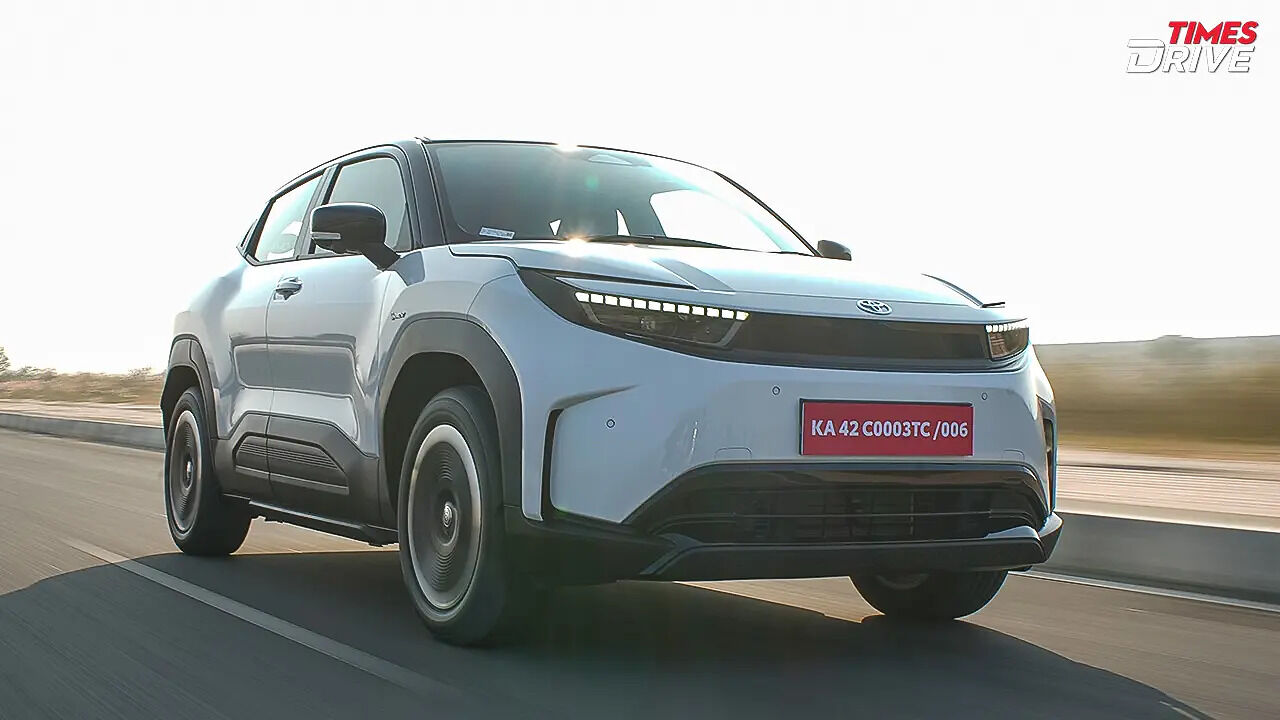
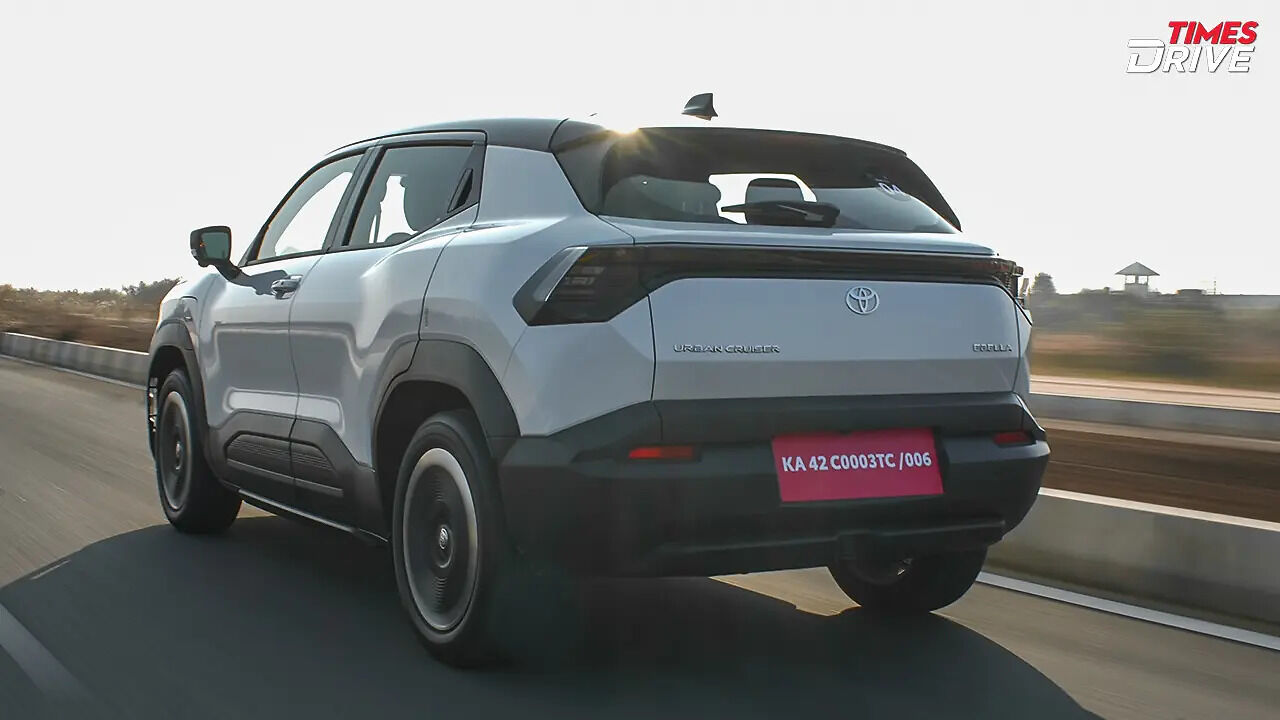
The biggest visual differentiator lies up front. The Urban Cruiser Ebella gets a redesigned fascia that looks cleaner and arguably more cohesive than its sibling. The headlamps feature a single projector setup with integrated LED DRLs, and there’s a subtle Prius-like influence in the way the lighting elements are shaped and positioned.
It doesn’t scream for attention. It doesn’t try to look futuristic for the sake of it. Instead, it carries a restrained, mature EV identity which will appeal to buyers who don’t want their electric car to look like a science experiment.
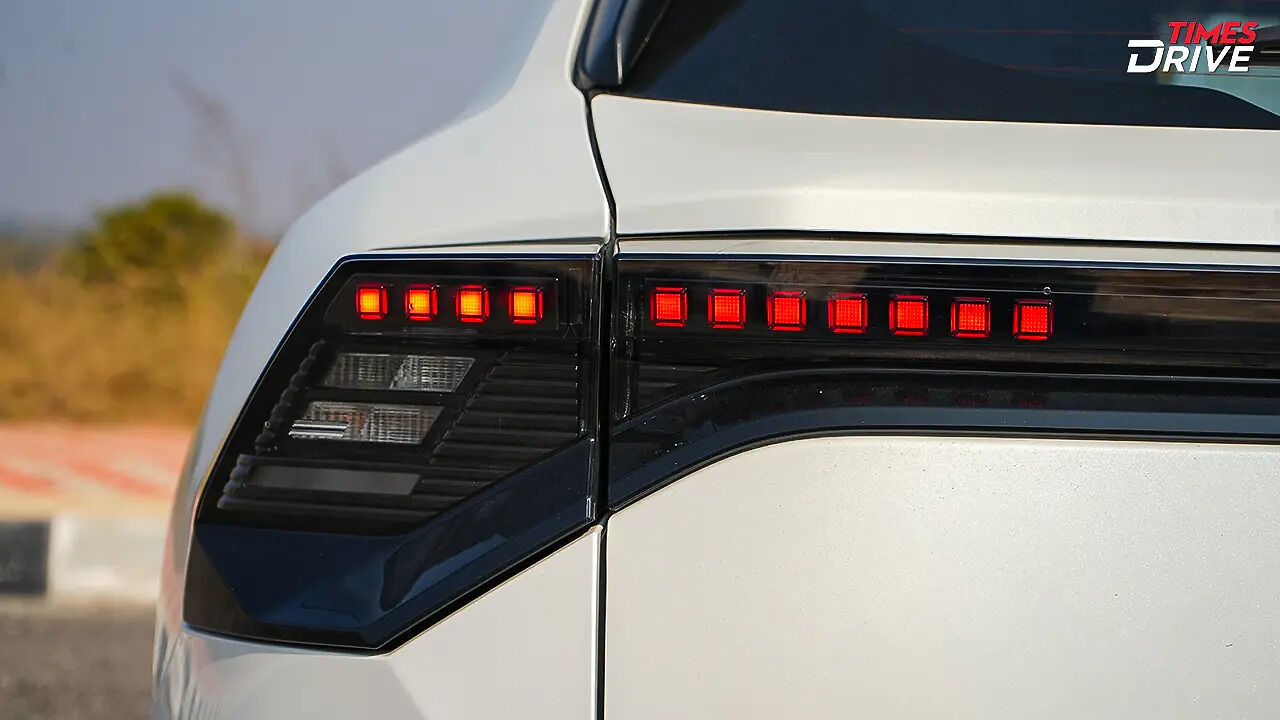
Move to the side, and the story changes very little. The silhouette, character lines and proportions are identical to the e-Vitara. Even the alloy wheel design remains the same, save for the Toyota logo at the centre.
At the rear, the lighting signature is slightly tweaked, and of course, you get Urban Cruiser Ebella badging. But overall, this is not a dramatic reinvention. It’s a subtle differentiation exercise.

Toyota Urban Cruiser Ebella First Drive Review: Interior - Premium Feel With Some EV Compromises
Step inside, and the cabin makes a positive first impression. Material quality feels solid. The seats are well-contoured and supportive. There’s a premium ambience helped by piano black inserts and a neatly laid-out dashboard.
The “squircle” steering wheel adds a touch of modernity, and the Toyota branding is prominently placed. Controls feel tactile, and overall ergonomics are largely intuitive.
However, there are packaging compromises. The raised floor (because of the battery pack) affects under-thigh support for the driver. Taller drivers will particularly notice this. Over longer journeys, that slight lack of thigh support can translate into discomfort.
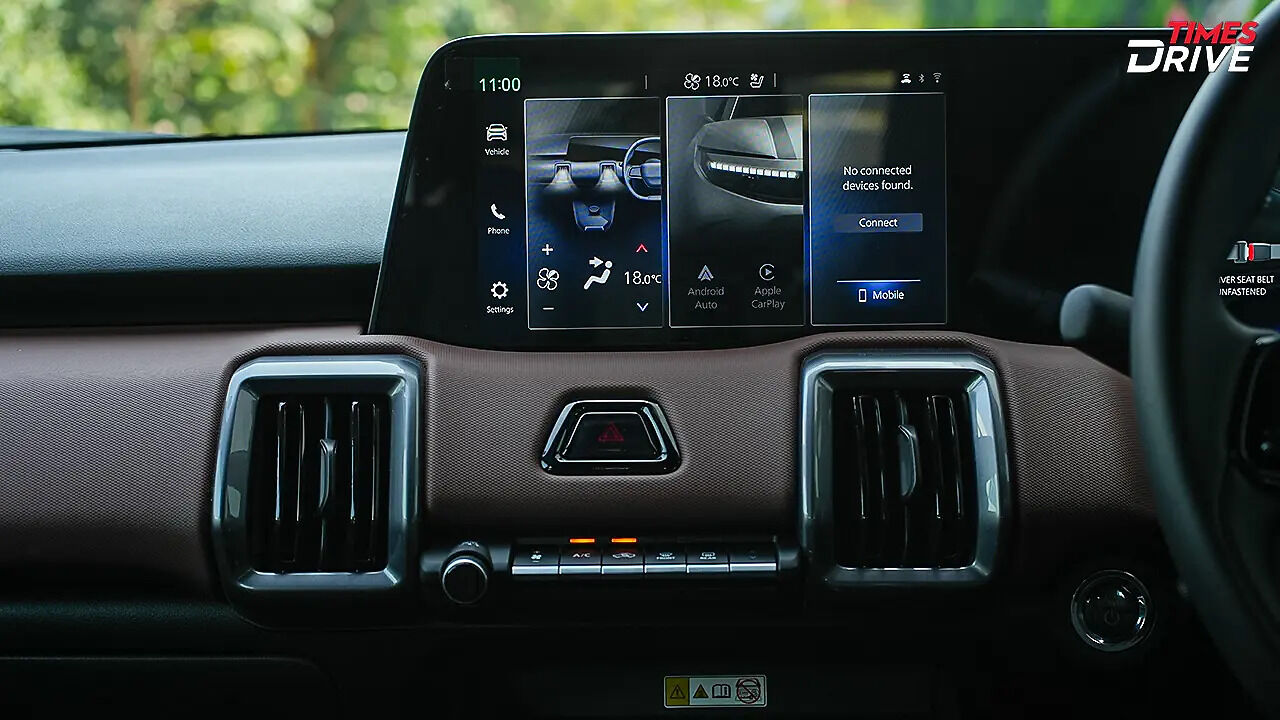
The infotainment screen and the digital driver instrument cluster, while feature-loaded, are not symmetrically positioned despite being placed in the same housing. It works, but the positioning and user interface could have been better thought through. It’s functional rather than class-leading.
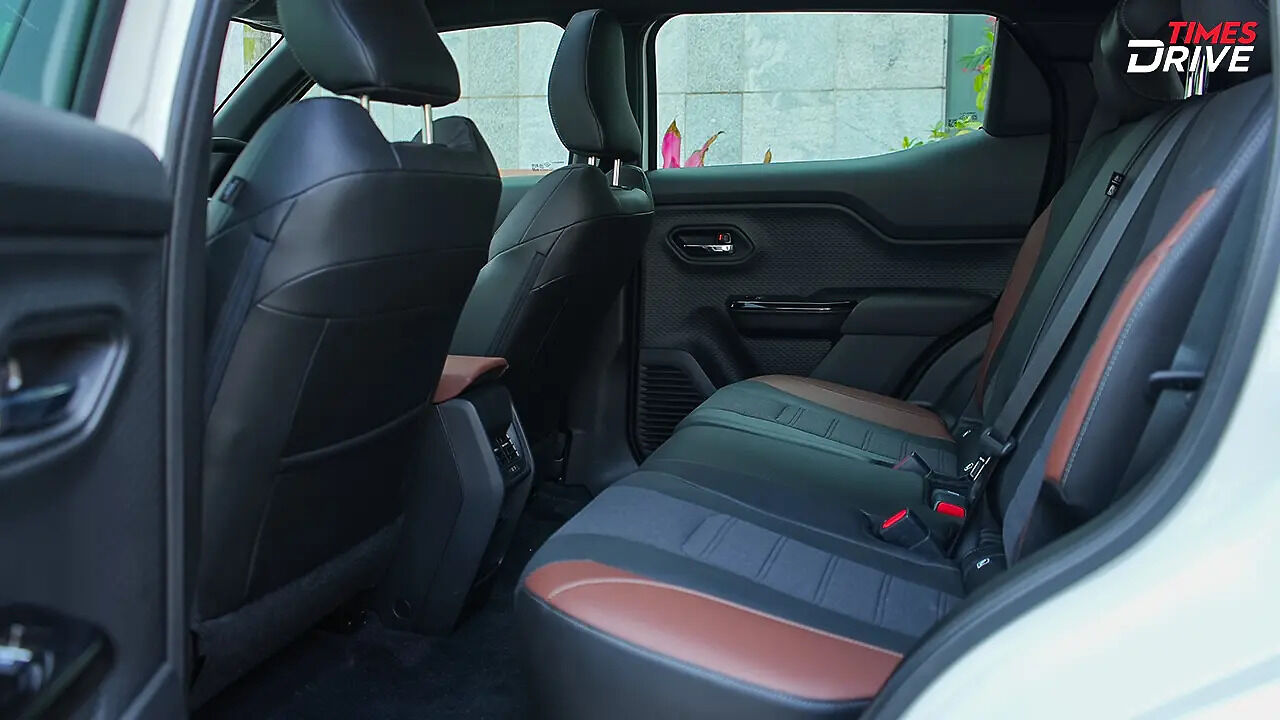
At the rear, practicality improves. The seats offer a 60:40 split, along with sliding and reclining functions. This flexibility is genuinely useful for families who want to balance passenger comfort and luggage space. The rear armrest doubles as a cup holder, however using the armrest means leaving a big hole in the seats with direct access to the boot. There should have been a secondary barrier to separate the boot from the passenger compartment.
At 306 litres, the boot space also feels a bit lacking. Toyota provides a full-size spare wheel underneath, which is reassuring for Indian conditions.
Toyota Urban Cruiser Ebella First Drive Review: Performance and Ride Quality - Calm, Controlled and Predictable
The Urban Cruiser Ebella comes in three variants — E1, E2 and E3 — with two battery pack options.
The E1 gets a 49 kW battery pack producing 144 PS and 193 Nm of torque. The E2 and E3 variants step up to a larger 61 kW battery pack, delivering 174 PS and the same 193 Nm torque figure. Toyota claims a range of up to 440 km on the smaller battery pack, and 543 km on the larger battery pack.
Importantly, the torque delivery is calibrated to feel progressive rather than aggressive and this is where the Ebella’s character becomes clear. Unlike some EVs that deliver an immediate surge the moment you tap the accelerator, the Ebella feels measured. The throttle response is responsive but not jumpy. There’s no exaggerated “EV snap.” Instead, power builds in a controlled, linear manner.
For everyday urban driving, that works beautifully. It feels easy, predictable and unintimidating. For first-time EV buyers, this calibration will feel reassuring.
Switch to Sport mode, and throttle response sharpens noticeably. It’s still not neck-snapping quick, but it becomes more eager. Eco and Normal modes prioritise efficiency and smoother responses.
Regenerative braking is offered in three levels. The system works well, but there’s a usability hiccup — you need to be stationary to adjust regen levels. In daily driving, where traffic conditions constantly change, that’s inconvenient. Ideally, regen should be adjustable on the move.
The steering feels natural, and despite the unconventional steering wheel shape, there’s no oddity in actual operation. The rotary gear selector does take a moment to get used to, especially if you’re coming from a traditional lever. But after a short period, it feels intuitive.
On the suspension front, the car feels stable and composed. However, over broken patches and large speed breakers, the setup feels on the firmer side. It’s not uncomfortable, but it isn’t plush either. The stiffness becomes noticeable on uneven surfaces, and that could divide opinions among buyers who prioritise comfort above all else.
Toyota Urban Cruiser Ebella First Drive Review: Verdict - The Bigger Picture
The Urban Cruiser Ebella is not trying to reinvent the EV formula. It is not flashy. It is not aggressively futuristic. It does not overwhelm you with theatrics. Instead, it feels like a carefully engineered, practical electric SUV aimed at urban families who want range confidence, brand trust and everyday usability.
The raised floor and suspension firmness are compromises you’ll have to evaluate personally. The lack of a boot partition is a small but notable oversight. And the placement of the screens could have been better executed. But as a first EV for Toyota in India, the Urban Cruiser Ebella feels mature and sorted rather than experimental.
The Toyota Urban Cruiser Ebella is then a sensible, well-rounded electric SUV that focuses on refinement and practicality over drama. If Toyota prices it right, this could quietly become one of the more dependable electric SUVs in its class. If not, being sensible alone may not be enough.
Log in to post a comment.
End of Article
Trending
Kia Sorento Diesel AWD First Drive Review: New Benchmark in Premium SUVs?

Mercedes-Benz GLS 450d Night Edition First-Drive Review: Should You Pay Extra For It?

Mahindra Thar OG First Drive Review: Can You Drive It Every Day?
2026 Honda Elevate Facelift First Drive Review: Did They Fix It?
Simple Wave Family Electric Scooter First Ride Review: Should You Hold Your Breath?
Ather Konarc First Ride Review: An Electric Scooter With Everyday Solutions
Volvo EX90 Twin Motor First Drive Reviews: Make You Feel Special
Popular

STAY UPDATED Get the latest news from Times Drive