New Delhi


Best Cars for First-Time Buyers in India in 2026: Price, Safety, Mileage and Easy Ownership
When selecting your first car in India, compact models are ideal due to their visibility, dimensions, and safety features. Notable options include the Maruti Suzuki Celerio, Tata Punch, Hyundai Exter, Toyota Glanza and Maruti Suzuki Swift.

Updated Oct 19, 2026, 10:35 AM IST
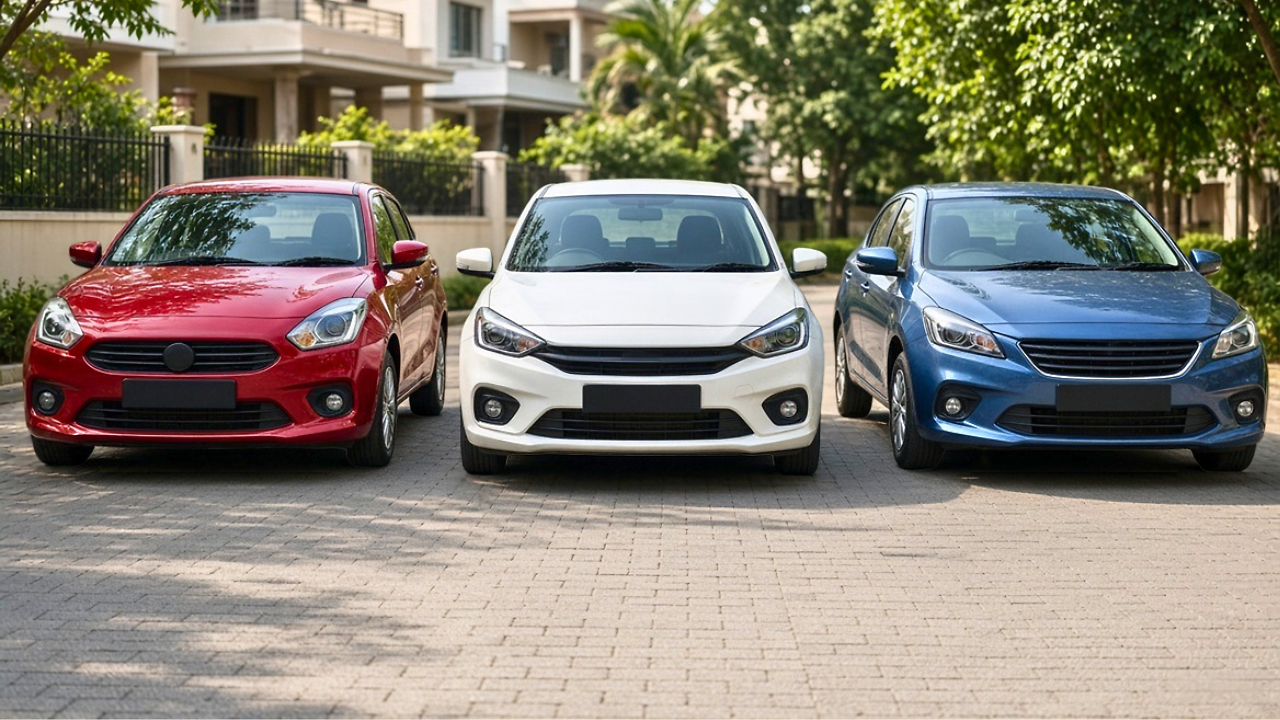
Best Cars for First-Time Buyers in India in 2026: Price, Safety, Mileage and Easy Ownership
For a first car in India, start with compact models that offer clear visibility, manageable dimensions, predictable controls and essential safety equipment. The Celerio suits tight city streets; the Swift is an all-round hatchback; the Punch and Exter give a higher seating position; and the Glanza offers more cabin and boot space. Test-drive the exact variant before choosing.
Key Highlights
- For a tight budget and narrow streets:
Maruti Suzuki Celerio , with a compact footprint and an AMT option. - For a first car that will also do highway trips:
Maruti Suzuki Swift , available with manual and AMT gearboxes. - For a higher seating position:
Tata Punch or Hyundai Exter; both offer six airbags and electronic stability control as standard. - For a larger hatchback with petrol, CNG and AMT choices:
Toyota Glanza , although its longer body needs more parking space than the Celerio. - Safety equipment varies by trim. Confirm the exact variant's airbags, stability control, child-seat anchors and parking aids before paying a booking amount.
How was this shortlist chosen?
The comparison focuses on mass-market cars that are currently sold in India and are manageable for a new driver. The criteria are ex-showroom price, external dimensions, gearbox choices, claimed fuel efficiency, standard safety equipment, parking aids and ownership practicality. It is not a ranking of crash-test performance. Safety equipment and crash-test ratings are different measures, and a rating should be checked against the exact model year and variant tested.Which cars are suitable for first-time buyers?
| Model | Price (ex-showroom) | Dimensions (length × width × height) | Transmission & Claimed Mileage | Safety | Parking Aids | Ownership Considerations |
| Maruti Suzuki Celerio | Rs 4.69 lakh | 3,695 × 1,655 × 1,555 mm | 5-speed MT or AMT; petrol 24.97–26.00 km/l, CNG 34.43 km/kg (manual) | Six airbags, ABS with EBD and electronic stability control across the range | Rear parking sensors standard; rear camera on selected higher trims | Small footprint and low entry price; CNG is limited to a manual variant and rear-seat comfort should be checked with regular passengers |
| Maruti Suzuki Swift | Rs 5.83 lakh | 3,860 × 1,735 × 1,520 mm | 5-speed MT or AMT; petrol 24.8 km/l MT and 25.75 km/l AMT; CNG 32.85 km/kg MT and up to 35.34 km/kg AMT | Six airbags, electronic stability control, hill-hold assist and ISOFIX child-seat mounts standard | Rear camera on the top ZXi+ trim; check the exact variant | Suits mixed city and highway use; higher trims can cost close to larger hatchbacks |
| Tata Punch | Rs 5.74 lakh | 3,876 × 1,742 × 1,615 mm | Petrol MT or AMT; claimed petrol mileage about 18.8–20.09 km/l; CNG options are variant-dependent | Six airbags, ESC, TPMS and ISOFIX listed as standard on the updated range | Rear parking sensors; 360-degree camera on selected higher variants | Higher seating and 193 mm claimed ground clearance are useful on uneven roads, but the body is wider than a small hatchback |
| Hyundai Exter | Rs 5.80 lakh | 3,830 × 1,723 × 1,643 mm | Petrol MT or AMT; CNG MT; petrol 19.2–19.4 km/l and CNG 27.1 km/kg claimed | Six airbags, ESC and hill-start assist standard | Rear parking sensors standard; rear camera from the HX3 trim | Tall seating and driver-seat height adjustment help with the driving position; CNG boot space is lower than the petrol version |
| Toyota Glanza | Rs 6.99 lakh | 3,990 × 1,745 × 1,530 mm | Petrol MT or AMT; 23.80 km/l MT and 24.77 km/l AMT; CNG 33.61 km/kg MT and 34.47 km/kg AMT | Six airbags, vehicle stability control, hill-hold assist and ISOFIX; Level 2 ADAS on V(O) | Rear camera or 360-degree camera depending on variant | More cabin and boot space than the smallest hatchbacks; its length and higher-trim pricing make a careful parking test important |
What should a first-time car buyer check before booking?
On-road budget:
Include registration, insurance, accessories, parking costs and loan interest. Do not set the budget using the ex-showroom price alone.Visibility and seating position:
Adjust the seat and steering, check the bonnet edges where visible, and make sure the mirrors show traffic without excessive head movement.Parking confidence:
Try a reverse park and a tight turn during the test drive. Sensors and cameras help, but they do not replace checking mirrors and surroundings.Pedal and gearbox response:
Test the clutch bite point in a manual. In an AMT, check low-speed crawling, gear changes and hill starts on a safe route.Safety kit:
Confirm the number of airbags, ESC, ABS with EBD, rear-seat belts, ISOFIX mounts and tyre-pressure monitoring where offered.Service access:
Check the authorised service centre's distance from home or work, scheduled maintenance costs, warranty terms and roadside assistance.Family and luggage needs:
Take the people who will regularly travel with you and test the rear seat, child-seat fitment and boot with the luggage you normally carry.Should a first-time buyer choose manual or automatic?
A manual can cost less to buy and gives the driver direct control over gear selection, but learning clutch control takes practice. An AMT removes the clutch pedal and can reduce effort in traffic, although gear changes may be more noticeable than in a conventional torque-converter automatic or CVT. The Celerio, Swift, Punch, Exter and Glanza offer automatic options on selected variants; CNG transmission availability differs by model.Choose the gearbox you can drive comfortably in the conditions you face most often. During a test drive, try slow traffic, a U-turn, reverse parking and a slope where permitted. Do not assume every automatic behaves the same way, and read the owner's manual for hill starts and parking procedures.
What safety features should a first car have?
At minimum, check for airbags, ABS with EBD, electronic stability control, three-point seat belts and rear parking sensors. ISOFIX child-seat anchors matter for families with young children. A reversing camera, hill-start assist and tyre-pressure monitoring can add convenience or help the driver notice a problem, but they do not replace attentive driving.Airbag count alone does not establish how well a car protects occupants in a crash. Where a current Bharat NCAP or Global NCAP result exists, check the tested model, year, body structure and equipment specification. Do not apply an older rating automatically to a facelift or a different variant.
Which car is easiest to park?
The Celerio has the shortest body in this comparison and is a sensible first test for drivers who regularly use narrow lanes or compact parking spaces. The Swift is also a hatchback-sized option, while the Punch and Exter offer a higher seating position but have wider bodies. The Glanza is longer, so check rear visibility and turning space carefully.A rear camera can make it easier to judge the final few centimetres, but it may be limited to a higher trim. If the budget permits, compare the cost of the variant with a camera against an aftermarket system and confirm that any accessory does not affect the warranty. Practise parking with the mirrors and camera together rather than relying on the screen alone.
Frequently Asked Questions (FAQs)
Which car is best for a first-time buyer?
The right choice depends on budget and use. The Celerio is worth a look for a compact city car; the Swift is a more rounded hatchback for city and highway use; the Punch and Exter suit buyers who prefer a higher seat; and the Glanza offers more cabin space.Is an automatic car better for beginners?
An automatic can reduce workload in stop-start traffic because the driver does not operate a clutch. An AMT may have more noticeable shifts than a CVT or torque-converter automatic, so test the exact car before deciding. Automatic transmission does not replace learning braking, observation and parking skills.What safety features should I look for in my first car?
Check airbags, ABS with EBD, ESC, three-point seat belts, ISOFIX child-seat anchors and rear parking sensors. Consider a reversing camera and hill-start assist if they suit your driving environment. Check any available crash-test rating for the exact model and version.How much should a first-time buyer spend?
Set an on-road budget that leaves room for insurance renewal, fuel or charging, scheduled service, tyres and unexpected repairs. A lower-priced variant with essential safety equipment may be a better fit than a top trim bought mainly for convenience features.Which car is easy to park?
A short hatchback such as the Celerio is easier to place in many tight spaces because of its smaller footprint. The Swift is another option. Visibility, steering response, turning radius and the availability of parking sensors or a camera also matter, so test the car in a realistic parking area.Final Verdict
For a tight budget and city-only use, start with the Celerio and compare its manual and AMT variants. Choose the Swift if the car will also see regular highway use. The Punch and Exter are worth testing if a higher seating position matters, while the Glanza suits buyers who want a larger hatchback and more features. Prioritise safety equipment, visibility and the right gearbox over cosmetic add-ons, and test-drive the exact variant before booking.Log in to post a comment.
End of Article
Trending
Best Cars for a 100 Km Daily Commute in 2026: Mileage, Comfort and Running Cost
5 Most Affordable Cars with 6 Airbags You Can Buy in India
Tata Safari vs Hyundai Alcazar Spec Comparison: What's Different?
Tata Sierra vs Harrier Spec Comparison: What's Different?
Toyota Glanza Facelift vs Tata Altroz Spec Comparison: What's Different?
Mahindra XUV 3X0 CNG vs Tata Nexon CNG Spec Comparison: What’s Different?
5 Most Affordable Convertibles You Can Buy in India
Popular
STAY UPDATED Get the latest news from Times Drive