New Delhi


Car Insurance Explained: Third-Party vs Comprehensive, IDV, Zero Depreciation and NCB
Choosing car insurance requires comparing mandatory third-party cover with comprehensive protection, IDV, zero-depreciation add-ons, no-claim bonuses, deductibles, exclusions, and garage networks based on your specific vehicle and usage.

Updated Nov 2, 2026, 08:46 AM IST
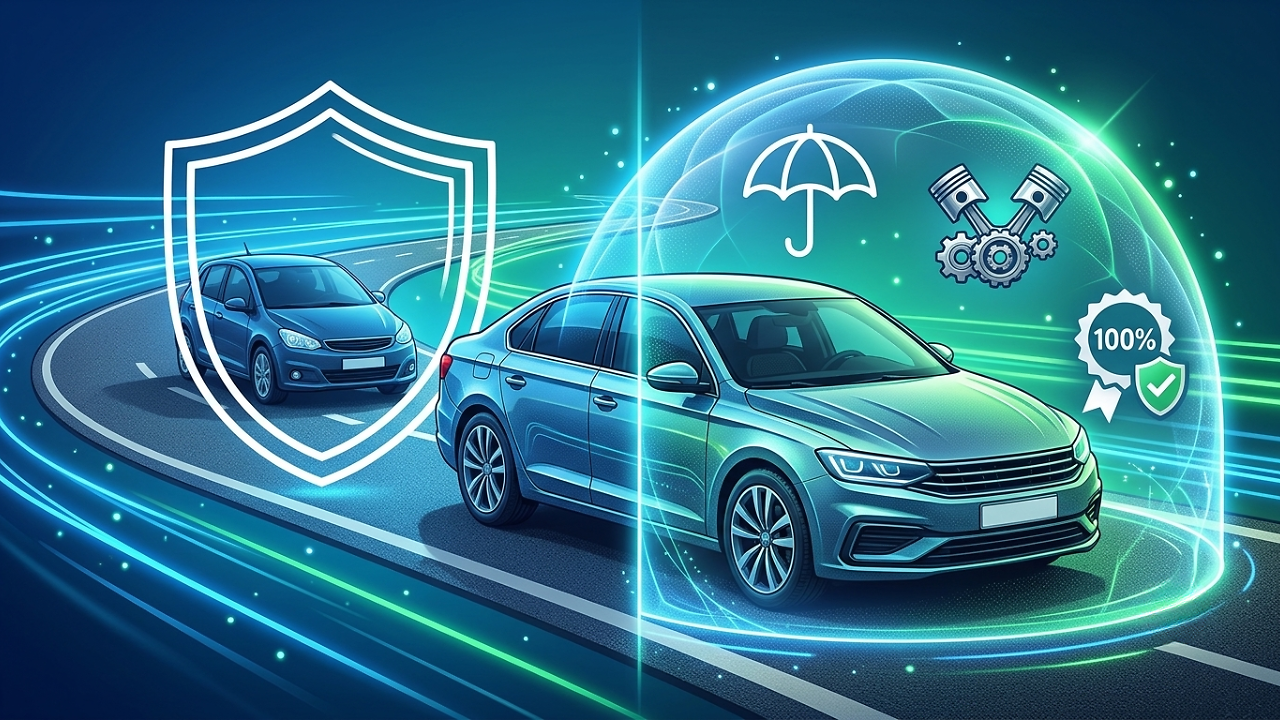
Car Insurance Explained: Third-Party vs Comprehensive, IDV, Zero Depreciation and NCB
Third-party car insurance covers legal liability for injury, death or property damage caused to another person; it does not pay for damage to your own car. Comprehensive insurance combines third-party cover with own-damage protection, subject to policy terms and exclusions. IDV, zero-depreciation add-ons and no-claim bonus can affect premiums and claim settlements.
Key Highlights
- Third-party liability insurance is mandatory for vehicles used in public places in India under Section 146 of the Motor Vehicles Act.
- Comprehensive/package insurance generally includes third-party liability and own-damage cover, subject to policy wording.
- IDV is the insured value agreed for the policy period and is especially relevant to theft and total-loss claims.
- Zero-depreciation cover can reduce depreciation deductions on eligible parts, but does not remove every deduction or exclusion.
- NCB is a discount on the own-damage premium for eligible claim-free years—not the entire policy premium.
- Compare coverage, deductibles, exclusions, claim process and add-ons, not only the quoted premium.
What Is The Difference Between Third-Party And Comprehensive Car Insurance?
Third-party insurance protects against specified legal liabilities to other people. Comprehensive insurance adds protection for damage to the insured car.| Policy type | What it generally covers | What it does not generally cover | When it may make sense |
| Third-party liability | Legal liability for injury/death to a third party and third-party property damage, subject to law and policy terms | Damage to your own car or theft of your car | To meet the mandatory liability requirement |
| Own-damage (OD) | Damage to your own car from covered events | Third-party liability by itself; exclusions and deductibles still apply | Alongside valid third-party cover |
| Comprehensive/package | Third-party liability plus own-damage protection for covered events | Excluded events, deductibles, wear and tear and non-covered expenses | When you want liability and own-car protection together |
Is Third-Party Insurance Mandatory In India?
Yes. Section 146 of the Motor Vehicles Act requires third-party insurance for motor vehicles used in public places. This is liability protection for other road users; it is not a substitute for own-damage cover. Check current law and official guidance for applicable requirements and penalties.What Is IDV And How Does It Affect Your Premium And Claim?
Insured Declared Value (IDV) is the value agreed between the insurer and policyholder for the insured car at the start of the policy period. It is important for the own-damage premium and theft or total-loss claims, subject to policy settlement terms.
IDV is not necessarily the price you could get by selling the car privately. It also does not mean every claim will be paid at IDV. For a repairable accident, the insurer assesses covered repair costs, applicable depreciation, deductibles and policy conditions. For a total-loss or theft claim, settlement is generally linked to IDV and the policy terms.
Illustrative IDV example: Suppose a car’s policy IDV is ₹7 lakh at renewal. If it is later stolen and the claim is accepted as a total loss, settlement is assessed using the policy’s total-loss terms and IDV, subject to applicable deductions, salvage requirements and conditions. This is an illustration, not a guaranteed payout.
At renewal, compare IDV alongside the premium. A higher IDV can increase the own-damage premium, while an unrealistically low IDV may leave you with less protection in a total-loss situation. Follow the insurer’s permitted IDV range.
What Does Zero-Depreciation Cover Include?
Zero-depreciation (zero dep or “bumper-to-bumper” in some marketing) is an optional add-on that can reduce depreciation deductions on eligible parts during an approved claim. Without it, depreciation may be deducted from the assessed value of certain replaced parts.It does not mean every repair is paid in full. Deductibles, exclusions, consumables charges, non-covered damage, limits and vehicle-age restrictions may still apply. Eligible parts, claim limits and conditions vary by insurer. Read the add-on wording before buying.
Illustrative zero-dep claim: Assume an accident repair includes ₹30,000 of eligible replacement parts and ₹20,000 in labour. A standard policy may deduct depreciation from eligible parts under its rules. With an applicable zero-dep add-on, that deduction may be reduced or waived for covered parts. Deductibles, excluded items and other charges may still be payable. Actual claims depend on the policy, parts, insurer assessment and add-on limits.
How Does The No-Claim Bonus (NCB) Work?
NCB is a discount earned for eligible claim-free policy years. It generally applies to the own-damage premium, not the third-party premium or the entire bill. The discount rises according to the insurer’s schedule and can reach 50% after multiple consecutive claim-free years, subject to policy rules.- NCB is linked to the policyholder, subject to verification and transfer procedures.
- It may be transferred when changing insurers or replacing a car, if conditions are met.
- A claim can affect NCB unless the policy provides an eligible protection feature or an exception applies.
- NCB protection is an add-on with conditions; it does not automatically make every claim NCB-free.
- Check that the NCB percentage at renewal matches your claim history and previous policy documents.
Cashless Vs Reimbursement Car Insurance Claims
| Claim route | How it works | What to check |
| Cashless | The insurer settles approved covered costs directly with a network garage, subject to assessment and policy terms | Network status, pre-authorisation, approved estimate, deductibles and owner-payable items |
| Reimbursement | You pay the garage and submit documents for assessment and reimbursement of eligible costs | Repair approval, invoices, required documents, timelines and policy conditions |
What Is Usually Excluded From Comprehensive Car Insurance?
- Exact exclusions vary, but may include:
- Normal wear and tear, ageing and mechanical breakdown not caused by a covered event.
- Driving without a valid licence or in circumstances excluded by the policy.
- Driving under the influence of alcohol or drugs, where excluded under applicable terms.
- Consequential damage or loss not covered by the policy.
- Consumables, deductibles and certain accessories or parts unless covered.
- Damage outside geographical or usage conditions.
- Read the policy wording, exclusions and add-on conditions rather than relying only on a marketing summary.
What Should You Compare Before Buying Or Renewing?
| Item | Why it matters | What to check |
| Cover type | Defines liability and own-car protection | Third-party, OD or comprehensive/package |
| IDV | Relevant to premium and total-loss settlement | Value within insurer’s permitted range |
| Deductibles | Amount you may pay during a claim | Compulsory and voluntary deductibles |
| Add-ons | Tailor cover to car and usage | Zero dep, engine protection, roadside assistance, NCB protection |
| Exclusions | Defines what is not covered | Policy and add-on wording |
| Garage network | Affects repair convenience | Garages near home/work |
| Claim process | Affects documentation and repair workflow | Cashless availability and approvals |
| Premium | Important, but not the only factor | Compare like-for-like cover and IDV |
How To Choose Based On Your Car And Usage
- Older car with lower market value: Compare own-damage premium with the car’s value and likely repair exposure. Third-party-only is not automatically best.
- New or expensive car: Consider the financial impact of own damage, theft and repairs. Review IDV, deductibles and add-ons.
- Frequent city driving: Check network garages, claim convenience and common accident coverage.
- Long-distance use: Review roadside assistance and towing conditions.
- Financed car: Check lender requirements and policy conditions.
Frequently Asked Questions
Is third-party car insurance mandatory in India?
Yes. Third-party insurance is required under Section 146 of the Motor Vehicles Act for vehicles used in public places. It does not cover damage to your own car.How is IDV calculated?
IDV is agreed at the start of the policy using the insurer’s valuation method and vehicle details, including age and depreciation. Check the insurer’s IDV basis at renewal.Does NCB transfer if I change insurers?
It may be transferred with the policyholder, subject to documentation and verification. Confirm eligibility and process before renewal.What is not covered under comprehensive insurance?
Exclusions, deductibles and claim conditions apply. Common exclusions can include wear and tear, mechanical breakdown not caused by a covered event and non-covered consumables.
How do I file a cashless claim?
Contact the insurer, register the claim, take the car to a network garage, obtain approval before repairs and retain documents. The insurer assesses covered costs and owner-payable items.Verdict: Which Car Insurance Should You Choose?
There is no single policy for every car owner. Third-party cover meets the mandatory liability requirement but does not protect your own car against damage or theft. Comprehensive cover adds own-damage protection and may be relevant when repair or replacement costs would be difficult to absorb.Choose after comparing the car’s age and value, driving pattern, IDV, deductibles, exclusions, add-ons and garage access. A lower premium is useful only if the coverage and claim conditions suit your needs.
Log in to post a comment.
End of Article
Trending

Which Are the Most Affordable Scrambler Bikes in India?
Car Specifications List Explained: bhp, Torque, Displacement, Wheelbase and Ground Clearance

Which Are the Most Affordable Retro or Neo-Classic Bikes in India?
How Do Bharat NCAP and Global NCAP Safety Ratings Work? How to Read a Car's Crash-Test Result
Which Are the Most Affordable Electric Scooters in India in 2026?
Cars With Sunroof Under Rs 15 Lakh in India in 2026: Variants, Prices and Features Compared

Hyundai Bayon vs Kia Seltos Spec Comparison: What’s Different?
Popular
STAY UPDATED Get the latest news from Times Drive