New Delhi


Tata Punch EV Facelift vs Old: Here’s Everything That’s Changed
Tata Motors has launched an updated version of the Punch EV in India, featuring design tweaks, added features, and new battery options. The facelift maintains the overall silhouette but introduces changes like redesigned front and rear elements, including new LED lights and a different color palette. Interior updates include a fresh grey-and-white theme and new power window switches. The facelift also enhances technology with over-the-air updates, while safety features remain robust. New battery packs provide improved range and performance compared to the previous model.

Keshav Rajput
Updated Feb 23, 2026, 02:39 PM IST

Tata Punch EV Facelift vs Old: Here’s Everything That’s Changed
Tata Motors has introduced the updated version of the Punch EV in India. The facelift brings design revisions, feature additions and updated battery packs. While the overall structure remains unchanged, several elements differentiate the facelift from the pre-facelift (old) model. Here is a detailed comparison of what has changed and what remains the same.

People Also Search
What are the variant-wise prices for the Punch EV Facelift?
What are the battery options for the Punch EV Facelift?
How does the Punch EV Facelift compare in terms of safety features?
What new features are introduced in the Punch EV Facelift?
What are the expected real-world ranges for the battery packs?
Tata Punch EV Facelift vs Old: Exterior Changes
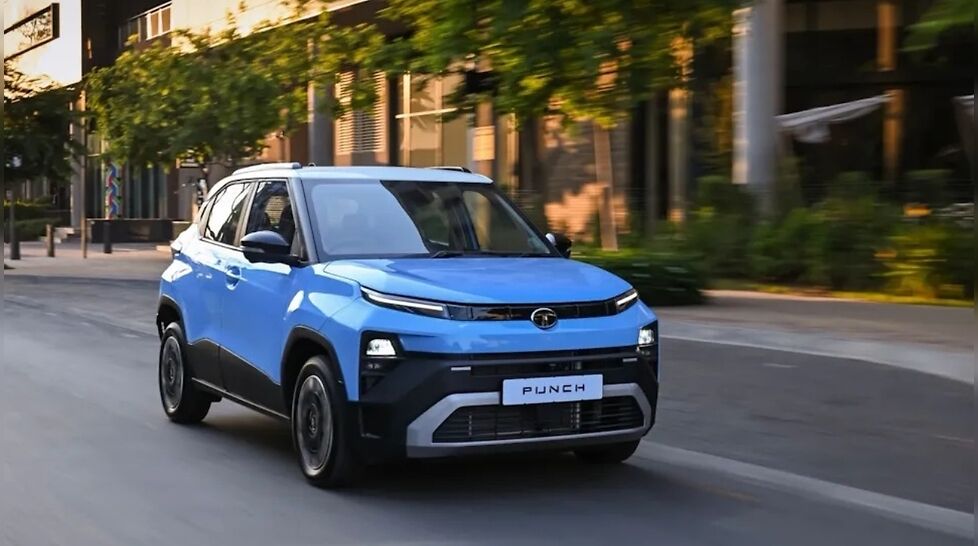
The facelifted Punch EV retains its overall silhouette and proportions. However, there are visible differences at the front and rear. At the front, the connected LED light bar offered on the old model has been removed. The facelift instead features LED DRLs positioned at the outer edges. The bumper has been redesigned with a larger air dam and a textured silver faux skid plate, replacing the earlier black strip element.
The charging port location remains unchanged. From the side, there are no structural changes. The facelift continues with blacked-out ORVMs with integrated turn indicators, roof rails, body cladding and 16-inch alloy wheels with the same design as before. The ‘Tata.ev’ badge on the lower front doors has been retained.
The most noticeable update is at the rear. The facelift now gets connected LED tail lamps similar in layout to the ICE-powered Punch, along with a revised rear bumper. Additionally, new colour options have been added to the palette.
Tata Punch EV Facelift vs Old: Interior Updates
On the inside, the layout remains largely identical to the old model. The facelift continues with a dual-tone interior theme and a free-floating 10.25-inch infotainment touchscreen.
The primary change is in the colour scheme. The earlier black-and-white combination has been replaced with a grey-and-white theme. The two-spoke illuminated steering wheel and lower centre console design remain unchanged.
Rear seat space remains the same as before. The upholstery receives refreshed colour shades in leatherette trim. Tata has also introduced new toggle-style power window switches in the facelift.
Tata Punch EV Facelift vs Old: Features and Safety
There are no major removals in terms of equipment. Most features from the old Punch EV continue in the facelift. New additions include over-the-air (OTA) updates, voice commands supporting six languages, smartwatch connectivity, a high-beam assist alert and a blind-spot monitor.
Features carried forward include a 10.25-inch touchscreen with wireless Apple CarPlay and Android Auto, a 10-inch digital driver’s display, automatic climate control, ventilated front seats, wireless phone charger, cruise control, paddle shifters, connected car technology and a sunroof.
Safety equipment remains comprehensive. The facelift continues with six airbags as standard, electronic stability control (ESC), ABS with EBD, electronic parking brake with auto-hold, a 360-degree camera, tyre pressure monitoring system (TPMS), hill hold assist and hill descent control.
Tata Punch EV Facelift vs Old: Powertrain
The Tata Punch EV facelift is now offered with two new battery pack options: 30 kWh and 40 kWh, replacing the earlier 25 kWh and 35 kWh units. The 30 kWh variant delivers a claimed MIDC (Part 1 + 2) range of 365 km to 375 km. It produces 86.8bhp and 154Nm of torque, with a 0–100 kmph acceleration time of 13.5 seconds. The larger 40 kWh variant offers a claimed MIDC range of 468 km. It generates 127.2bhp and 154 Nm of torque. The 0–100 kmph acceleration time for this version stands at 9 seconds.
The pre-facelift Punch EV was available with 25 kWh and 35 kWh battery packs. The 25 kWh variant had a claimed MIDC (Part 1 + 2) range of 265 km. It produced 79.9bhp and 114Nm of torque. The 35 kWh version offered a claimed MIDC range of 365 km. It delivered 120.3bhp and 190Nm of torque.
Also Read
Log in to post a comment.
End of Article
Quick Price CompareTata Punch EV Price in India
- Popular Cities
- Similar Brands
Trending
Which Are the Most Affordable Scrambler Bikes in India?
Car Specifications List Explained: bhp, Torque, Displacement, Wheelbase and Ground Clearance
Which Are the Most Affordable Retro or Neo-Classic Bikes in India?

How Do Bharat NCAP and Global NCAP Safety Ratings Work? How to Read a Car's Crash-Test Result
Which Are the Most Affordable Electric Scooters in India in 2026?
Cars With Sunroof Under Rs 15 Lakh in India in 2026: Variants, Prices and Features Compared

Hyundai Bayon vs Kia Seltos Spec Comparison: What’s Different?
Popular

STAY UPDATED Get the latest news from Times Drive