New Delhi


Audi Q9 Debuts World's First Curved Digital OLED Rear Lights: All You Need to Know
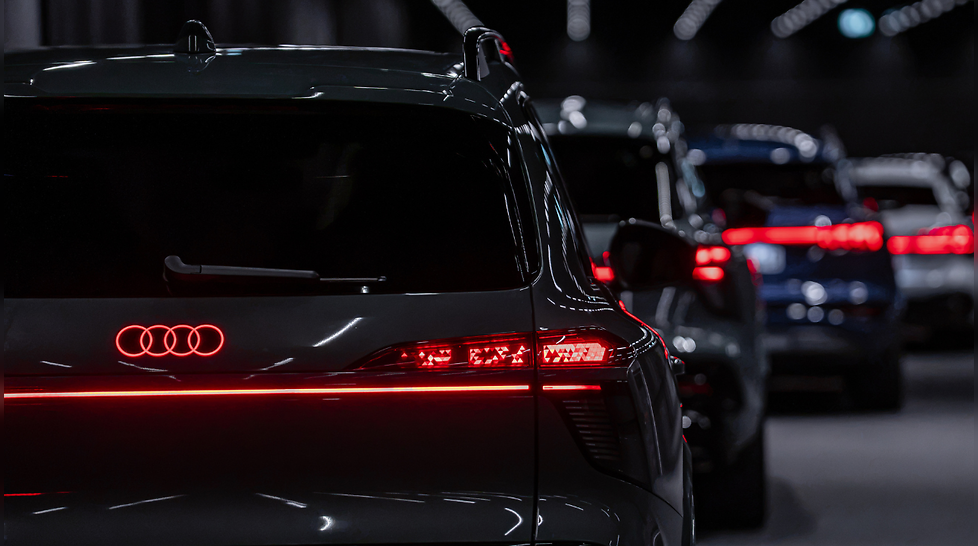
Audi is set to revolutionise automotive lighting with its upcoming Q9 flagship SUV, featuring the world's first three-dimensionally curved digital OLED rear-light panels. This innovative technology includes ultra-thin carrier glass that can bend easily.

Updated Oct 26, 2026, 06:13 PM IST
Audi Q9 Debuts World's First Curved Digital OLED Rear Lights: All You Need to Know
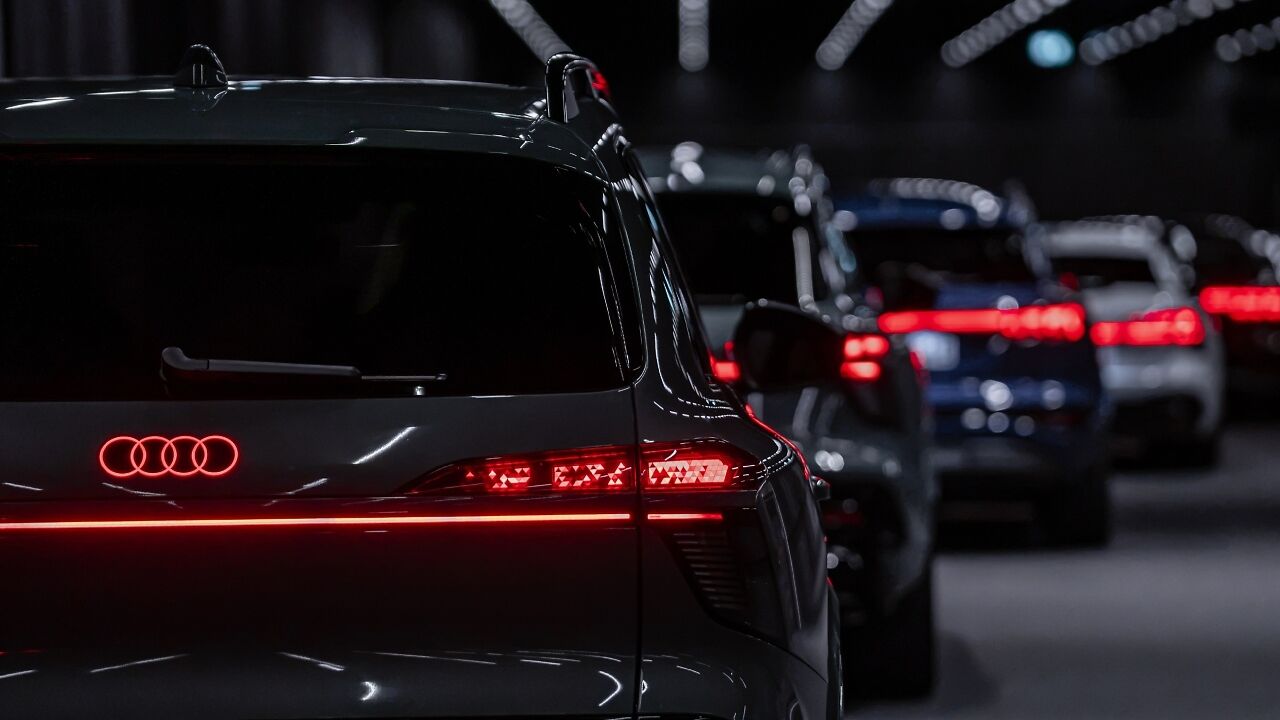
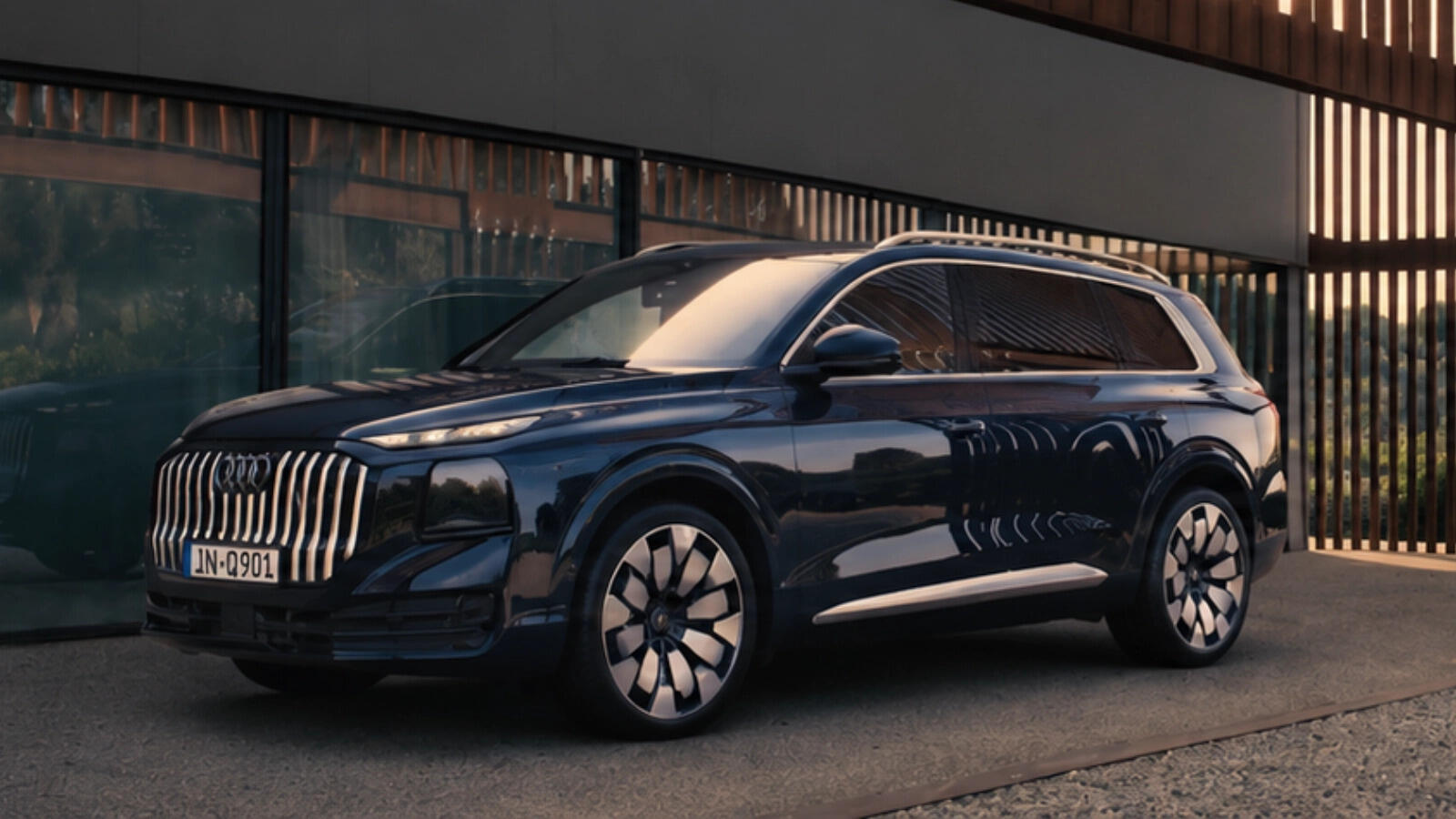
German luxury carmaker Audi is taking automotive lighting technology to the next level with its upcoming flagship SUV, the Q9. The new model will become the world's first production car to feature three-dimensionally curved digital OLED rear-light panels. The technology combines a distinctive lighting design with personalisation options and safety-focused communication features.
Key Highlights:
Audi Q9 will be the first production car to feature three-dimensional curved digital OLED rear lights.
The new lighting system uses ultra-thin 0.1 mm carrier glass that can bend to a radius of 200 mm.
The third-generation OLED technology features 512 individually controlled segments across six panels.
Digital Matrix LED headlights will feature 25,600 micro-LEDs and road-projection functions.
The curved panels use carrier glass measuring just 0.1 mm thick, approximately the thickness of a human hair. This allows them to bend to a radius of 200 mm and follow the contours of the vehicle's body.
Audi Q9 To Feature Third-Generation OLED Technology
The Audi Q9 will introduce the third generation of the carmaker's digital OLED technology. The system consists of 512 individually controlled segments spread across six panels, with the largest panel containing 99 segments.
The lighting system will offer up to eight selectable light signatures at both the front and rear. These include new semi-active designs that use three-dimensional lighting effects, allowing owners to personalise the vehicle's appearance.
Audi says the technology could also improve communication between vehicles and their surroundings. The company aims to develop lighting systems that do more than illuminate the road by helping make vehicles more noticeable and communicate potential hazards to other road users.
Commenting on the development, Audi highlighted the role of lighting in improving road safety while offering greater design flexibility and personalisation.
Audi Q9 To Get Digital Matrix LED Headlights
At the front, the flagship SUV will feature digital Matrix LED headlights equipped with a micro-LED module measuring around 13 mm wide. Each module contains 25,600 micro-LEDs, with each measuring approximately 40 micrometres.
The headlights can project lane and orientation lighting onto the road. They will also offer turn signals designed to help pedestrians and cyclists recognise the vehicle's intended direction before it turns.
These functions are aimed at improving visibility and making the vehicle's movements easier for other road users to understand.
How Audi's OLED Rear-Light Technology Has Evolved
Audi first introduced OLED rear-light technology in a production car with the TT RS in 2016. The technology enabled uniformly illuminated surfaces, high contrast and dynamic lighting effects, giving designers greater flexibility.
In 2020, the Audi Q5 introduced digital OLED technology, allowing individual lighting segments to be controlled independently. This enabled customers to select different rear-light signatures.
The technology advanced further in 2024 with the second generation of digital OLEDs in the Audi Q6 e-tron. The number of individually controllable segments increased tenfold, while new safety functions were introduced.
These included a communication light system capable of displaying warning symbols to alert other road users to situations such as emergency braking, breakdowns and accident scenes. A proximity warning function also made a stationary vehicle more noticeable when other road users approached.
With the Q9, Audi is taking the technology into its third generation, combining curved lighting panels, customisable signatures and safety-oriented functions. Further details about the flagship SUV's launch and specifications have not been provided in the supplied announcement.
Log in to post a comment.
End of Article
Trending
Audi Q9 Debuts World's First Curved Digital OLED Tail Lights with 512 Digital Segments

Hyundai Bayon Variants Explained: Here's What Each Trim Offers
Hyundai Bayon Launched in India: Top 5 Highlights
Hyundai Bayon SUV Launched in India at Rs 9.99 Lakh with Level 2 Pro ADAS

Hyundai Bayon CNG India Launch Scheduled for January 2026: Here's What to Expect

Jeep Compass Sport Diesel 9AT Launched In India at Rs 21.99 Lakh; Deliveries to Begin in November
New Triumph Tiger 1200 Global Debut Tomorrow: Here's What to Expect
Popular



STAY UPDATED Get the latest news from Times Drive