New Delhi


MoRTH Introduces WLTP Emission Standards for M1, M2 Vehicles from April 2027
The Ministry of Road Transport and Highways has amended the Central Motor Vehicles Rules, 1989, focusing on emission standards for category M1 and M2 vehicles with specific weight limits. Effective from April 1, 2027, the regulations mandate strict emission limits for various pollutants and require manufacturers to comply with AIS-175 procedures for type approval, production conformity, and on-board diagnostics.

Keshav Rajput
Updated Feb 9, 2026, 12:34 PM IST
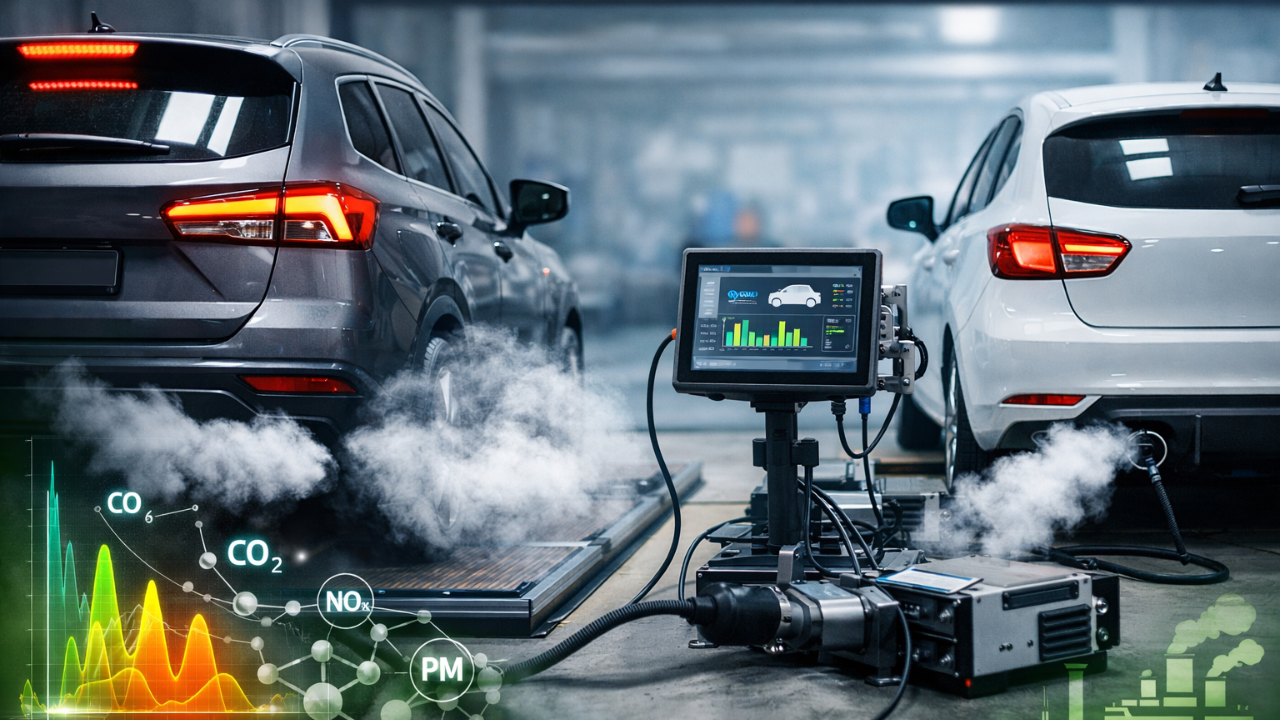
MoRTH Introduces WLTP Emission Standards for M1, M2 Vehicles from April 2027
The Ministry of Road Transport and Highways has issued an amendment to the Central Motor Vehicles Rules, 1989 after releasing draft proposals earlier and reviewing objections and suggestions received from stakeholders.

People Also Search
What is the impact of WLTP on fuel consumption testing?
How do acoustic warning systems enhance EV safety?
What are the new CAFE 3 standards for small vehicles?
What advancements do BS-VI norms introduce?
How does the WLTP compare to previous testing standards?
Applicability
Under the amendment, the requirements will apply to category M1 vehicles and to category M2 vehicles with a gross vehicle weight not exceeding 3,500 kg. The standards will cover models manufactured on or after 1 April 2027.
Emission standards under WLTP
The notification prescribes emission limits for vehicles fitted with positive ignition and compression ignition internal combustion engines. The parameters include carbon monoxide, total hydrocarbons, non-methane hydrocarbons, nitrogen oxides, particulate matter and particle number. The tests for type approval will be conducted on a chassis dynamometer and will follow the procedures laid down in AIS-175, as amended from time to time.
Production conformity
The rules state that there will be no relaxation of norms for conformity of production. Manufacturers will be required to follow the compliance procedures defined in AIS-175 for demonstrating that vehicles continue to meet the prescribed limits.
Evaporative and crankcase emissions
For gasoline-fuelled vehicles, evaporative emissions must not exceed 2.0 grams per test. The crankcase ventilation system must also be designed in a way that prevents the release of gases into the atmosphere. Testing procedures will be as specified in AIS-175.
Deterioration factors and durability
The amendment assigns deterioration factors for positive ignition engines and provides pathways for establishing these factors through whole-vehicle ageing or bench durability testing. Such tests are to be carried out in accordance with AIS-175 and must be conducted by agencies authorised under the rules.
On-board diagnostics requirements
Vehicles covered under the amendment will need to be equipped with on-board diagnostic systems capable of identifying malfunction areas when emissions rise above defined thresholds. The notification lists specific limits for pollutants such as carbon monoxide, non-methane hydrocarbons, nitrogen oxides and particulate matter. It also defines minimum in-use performance ratios for different monitoring systems, with detailed tracking requirements referenced to AIS-175.
Real-world driving emissions
For type approval, real-world driving emissions will be measured using portable emission measurement systems. Conformity factors, along with margins that account for measurement uncertainty, have been specified for nitrogen oxides and particle number. Carbon monoxide will also be measured and recorded during these tests.
Fuel compatibility and safety norms
The notification further states that vehicles running on CNG, Bio-CNG or HCNG will need to meet applicable safety requirements under the relevant AIS standards. Manufacturers will be required to declare compatibility with higher ethanol blends such as E85 and E100 and display this information through a visible label. In addition, all gasoline mono-fuel and bi-fuel vehicles, including hybrids, must be certified for operation on E20 fuel.
Log in to post a comment.
End of Article
Trending

2027 Maserati GranTurismo, GranCabrio Launched in India: Prices Start at Rs 2.62 Crore

Top Upcoming Cars in India in November 2026

Maserati GT2 Stradale Launched in India at Rs 5.71 Crore: All You Need to Know
Updated Tata Punch Launched in South Africa with Turbo Petrol Engine

Ducati Monster Dark Revealed: Gets All-Black Design, 109bhp V2 Engine

Denza Z9 GT Teased Ahead of India Debut on November 13

Maruti Suzuki Fronx Facelift Spied Testing: ADAS, Rear Disc Brakes, New Engine Expected
Popular

STAY UPDATED Get the latest news from Times Drive