New Delhi


5 High-Tech Features in Modern Cars Most Owners Rarely Touch
Modern cars come equipped with several advanced features, but not all of them find a place in owners' everyday driving routines. Here are five high-tech car features that many owners rarely use.

Updated Nov 19, 2026, 02:31 PM IST
5 High-Tech Features in Modern Cars Most Owners Rarely Touch
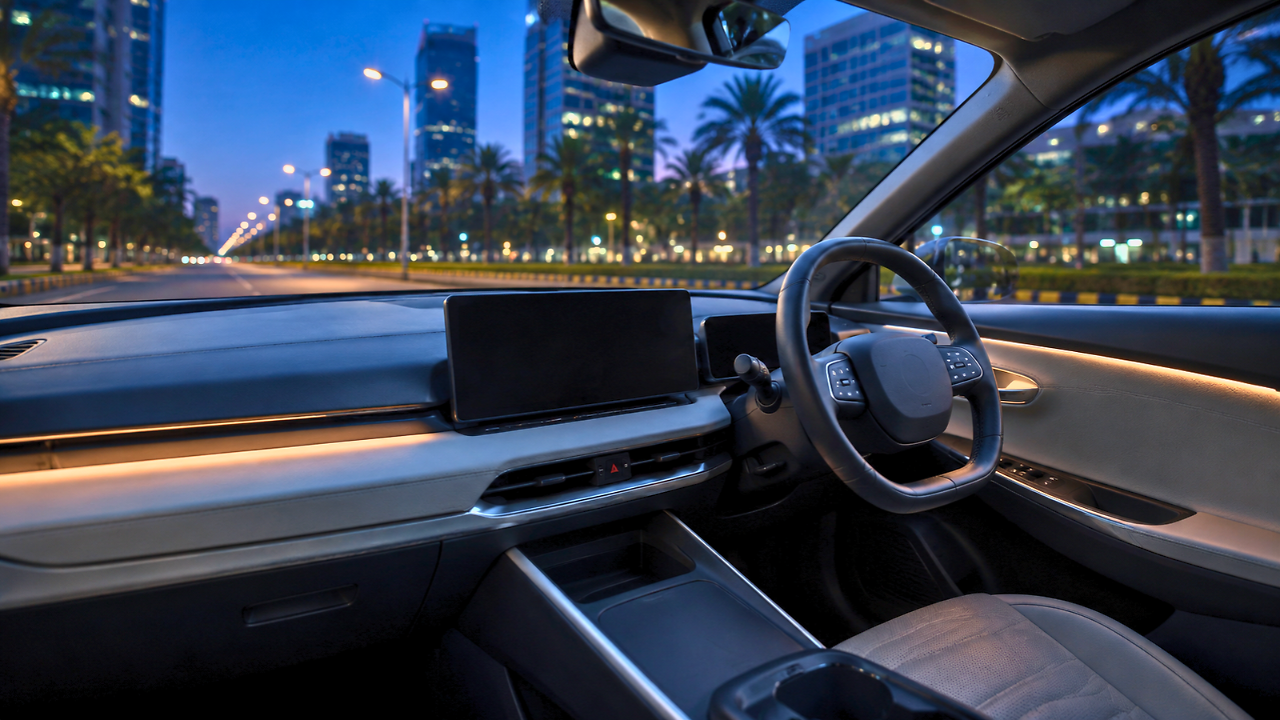
Modern cars come equipped with several technology-based features that are designed to improve convenience, safety and the overall driving experience. While features such as touchscreen infotainment systems, digital instrument clusters and wireless smartphone connectivity are now common, there are several other functions that owners may not use regularly.
Carmakers have introduced technologies such as gesture control, voice commands, built-in navigation systems and automatic parking assistance to make vehicle operation easier. Some cars also get a dedicated valet mode that restricts access to selected functions when the vehicle is handed over to another person.
However, many owners continue to rely on conventional controls and smartphone applications, leaving some of these factory-fitted features underused. Here are five high-tech features in modern cars that owners may rarely use.
1. Gesture Control
Gesture control allows occupants to operate selected infotainment functions through hand movements. Instead of using the touchscreen or physical buttons, drivers can perform specific gestures to access certain functions.Depending on the manufacturer and the vehicle, the system can be used to adjust audio volume, change music tracks, answer calls or control selected infotainment settings. It uses cameras or sensors to detect hand movements and translate them into commands.
Despite being available in some premium cars, gesture control is not a feature that most owners use regularly. One reason is that drivers are already familiar with steering-mounted buttons and touchscreen controls. Learning different gestures for individual functions can also take time.
In some situations, the system may not recognise a hand movement correctly, which can make conventional controls a more convenient option.
2. Voice Commands
Voice commands allow drivers to operate selected vehicle functions through spoken instructions. The technology is integrated into the infotainment system and can be used for tasks such as making phone calls, changing music tracks, entering navigation destinations and adjusting climate control settings.Some modern cars also feature voice assistants that can understand natural language commands, reducing the need to remember specific instructions.
However, many owners continue to use the touchscreen or physical buttons to operate these functions. Voice recognition systems can sometimes struggle with cabin noise, different accents or unclear pronunciation. This may require drivers to repeat commands or use specific phrases.
Another reason for limited usage is familiarity. Drivers who are accustomed to conventional controls may not see the need to switch to voice commands for everyday functions.
Nevertheless, the feature can be useful when drivers want to access certain infotainment or vehicle functions without taking their hands off the steering wheel.
3. Pre-loaded Navigation Maps
Several modern cars come with factory-fitted navigation systems that offer pre-loaded maps. These systems are integrated into the infotainment unit and provide turn-by-turn directions, route information and estimated arrival times.Unlike smartphone-based navigation applications, pre-loaded maps can work without an active internet connection, provided the relevant map data is stored in the system. This can be useful when travelling through areas with limited mobile network connectivity.
Depending on the manufacturer, the system may also offer information about points of interest, speed limits and alternative routes.
However, many car owners prefer using Google Maps or Apple Maps through Android Auto and Apple CarPlay. Smartphone applications offer familiar interfaces, real-time traffic updates and regular map updates, making them a preferred option for everyday navigation.
Factory-fitted navigation systems may also require periodic map updates through the manufacturer's software or authorised service network. As a result, some owners rarely explore the navigation system already available in their vehicles.
4. Automatic Parking Assist
Automatic parking assist is designed to help drivers park their cars with minimal manual input. The system uses cameras and ultrasonic sensors to identify suitable parking spaces and assist with manoeuvring.
Depending on the vehicle, the technology may control the steering while the driver operates the accelerator and brake. More advanced systems can also manage acceleration and braking during the parking process.
Some manufacturers also offer remote parking assistance, which allows the driver to move the vehicle into or out of a parking space using a smartphone or key fob.
Despite its functionality, automatic parking assist is not used regularly by many owners. Drivers who are comfortable parking their vehicles manually may not feel the need to activate the system every time they park.
The process of identifying a suitable parking space and activating the feature can also take longer than parking manually in certain situations. Additionally, the system may have limitations in narrow parking spaces or locations with unusual layouts.
However, automatic parking assistance can be useful when parking in tight spaces, particularly when the driver needs additional help judging the available clearance.
5. Valet Mode
Valet mode is a feature available in several premium cars that restricts access to selected vehicle functions when the car is handed over to another person.
The feature is primarily designed for situations where owners use valet parking services at hotels, restaurants, shopping centres or other locations.
Depending on the manufacturer, activating valet mode can limit vehicle speed, restrict access to certain infotainment settings and prevent access to personal information stored in the system. Some vehicles may also offer restrictions on the boot or glovebox.
This allows another person to park or move the vehicle without having unrestricted access to selected functions and stored information.
However, valet mode is often overlooked because many owners are either unaware of its availability or do not know how to activate it. The functionality also varies between manufacturers and models, with some systems offering more restrictions than others. Owners can check their vehicle's owner's manual to understand the functions covered under valet mode and how to activate them.

Log in to post a comment.
End of Article
Trending

Which Are the Best Cars Under Rs 8 Lakh in India?

Which Are the Best Bikes for Riding on Hills and Ghat Roads in India

7 Mistakes That Can Damage Your Car’s Paint: Car Maintenance Guide

Which Are the Best Bikes for Bad Roads and Rough Terrain in India

Which Is the Best First Car to Buy in India?

Which Are the Best Bikes for College Students in India?
Which Are the Best Sedans Under Rs 15 Lakh in India?
Popular

STAY UPDATED Get the latest news from Times Drive