New Delhi


Porsche Cayenne Electric SUV To Make Global Debut On November 19
Porsche is set to unveil its all-electric Cayenne Electric SUV on November 19, 2025, with a public debut at the Icons of Porsche Festival in Dubai on November 22. This fourth-generation model follows the Macan Electric and will be sold alongside the existing petrol-powered Cayenne. Built on the VW Group's 800V PPE architecture, it features a battery capacity between 108 kWh and 113 kWh, offering a range of approximately 600 km. The design includes advanced technology and unique styling elements, enhancing both performance and comfort.

Atul Bandhu
Updated Nov 11, 2025, 03:50 PM IST
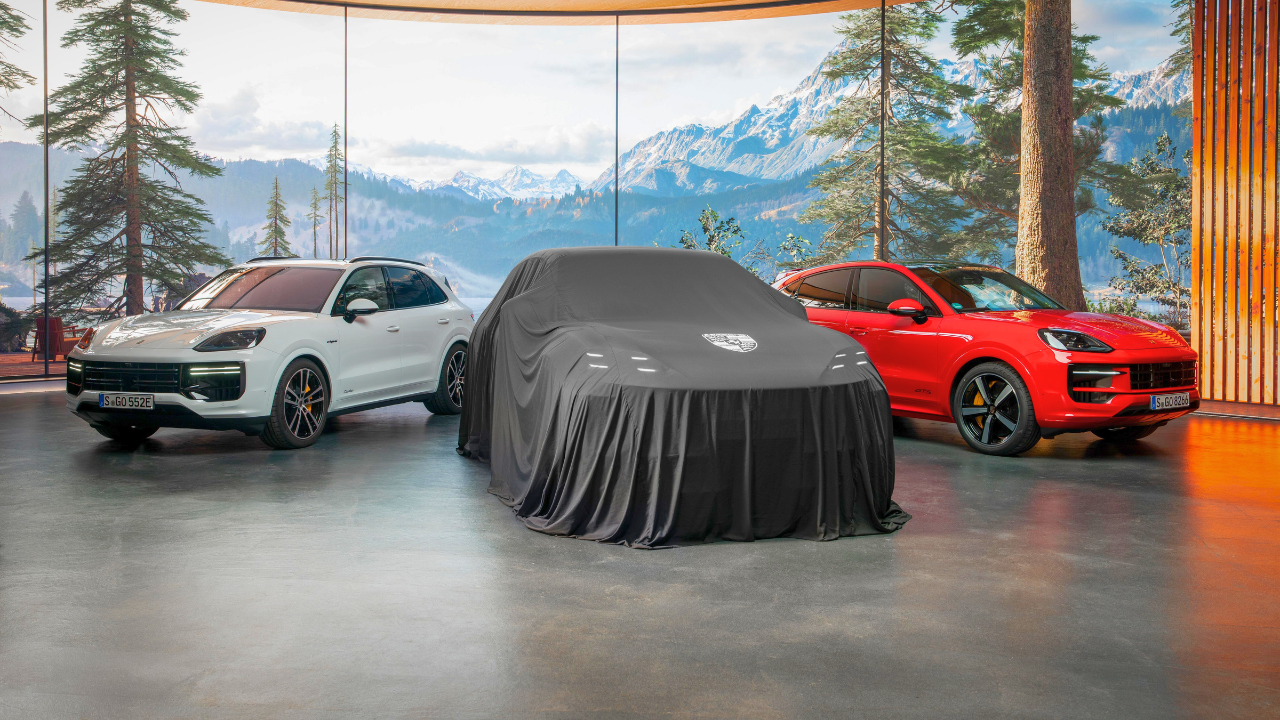
Porsche Cayenne Electric SUV To Make Global Debut On November 19
Photo : TIMES DRIVE
German luxury and sports car manufacturer Porsche will take the wraps off the all-electric version of its flagship SUV, the Cayenne Electric, on November 19th 2025. The Porsche Cayenne Electric SUV is also set to make its public debut at the Icons of Porsche Festival in Dubai on November 22nd 2025. The Porsche Cayenne Electric is based on the prototype showcased by the company earlier this year at the Munich Motor Show 2025.

People Also Search
How does the power output of the Porsche Cayenne Electric compare to the Macan Electric models?
What unique design features does the Cayenne Electric introduce compared to the Macan Electric?
What charging capabilities does the Cayenne Electric have compared to the Macan Electric?
What are the future plans for Porsche's Cayenne lineup beyond the Cayenne Electric?
How do the battery specifications of the Cayenne Electric compare with those of the Macan Electric?
The Porsche Cayenne Electric fourth-generation model marks the brand’s second all-electric SUV after the Macan Electric and is slated to go on sale globally in early 2026. Unlike the Macan Electric, which has replaced its petrol counterpart in several markets, the Cayenne Electric will be sold alongside the existing third-generation ICE Cayenne. Porsche’s dual strategy comes as it continues to balance customer demand between internal combustion and electric powertrains across global markets.
The new Cayenne Electric is underpinned by the VW Group’s 800V Premium Platform Electric (PPE) architecture, shared with the Macan Electric and Audi Q6 e-tron. However the Cayenne is expected to be slightly longer than the current model and have a longer wheelbase.
The Cayenne Electric is expected to feature a battery pack ranging from 108 kWh to 113 kWh, offering a range of around 600 km (WLTP). The system is likely to support 400 kW DC fast charging, allowing a 10 to 80 percent recharge in about 15 to 16 minutes.
The Cayenne Electric can feature a dual-motor all-wheel-drive setup, with different power outputs across the range. The base variant is expected to produce around 400 bhp, the mid-spec S version will deliver up to 650 bhp and the top of the line Turbo and Turbo GT models are expected to exceed 900-1000 bhp.
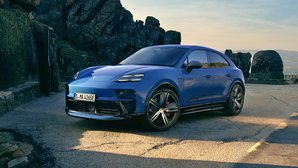
The Porsche Cayenne Electric introduces distinct design elements including frameless windows, flush door handles and a more aerodynamic front fascia with active grille shutters. The rear light bar adopts a new three-dimensional treatment, while wheel sizes will range between 20 and 23 inches depending on the variant.
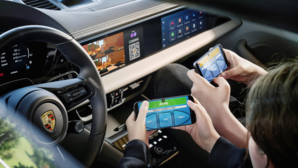
On the inside, the Cayenne Electric is expected to boast features like - a curved “Flow Display” central touchscreen that extends across the dashboard and into the centre console, a 14.9-inch passenger display, creating a continuous digital interface, a 14.5-inch driver display with touch-sensitive control zones for driving functions, a new 87-inch augmented reality head-up display projecting navigation and vehicle data onto the road ahead, electrochromic panoramic glass panels, ambient lighting linked to the display themes, heated armrests and electrically adjustable rear seats.
It is also likely to sport the Porsche Active Ride Control, an adaptive suspension system designed to independently control each wheel for improved comfort and handling. The setup can work in conjunction with air suspension, rear-wheel steering and torque vectoring.

Log in to post a comment.
End of Article
Trending
Mahindra XUV 3XO CNG Launched in India: Top 5 Highlights
Mahindra XUV 3XO CNG Launched at Rs 9.99 Lakh with Dual-Cylinder Technology
New Audi Q3 India Launch Tomorrow: Here's What to Expect
Toyota Glanza Facelift Variants Explained: What Does Each Variant Offer?
BMW Concept 7 Protection Armoured Sedan Unveiled
Toyota Glanza Facelift Launched in India: Top 5 Highlights
Toyota Glanza Facelift Launched at Rs 6.99 Lakh with Updated Design, Powertrain, Features and ADAS
Popular





STAY UPDATED Get the latest news from Times Drive