New Delhi


Qualcomm’s Savi Soin: “V2X is the Digital Seatbelt India Needs”
India faces a pivotal moment with rising vehicle sales alongside alarming accident rates. Qualcomm is spearheading a transformative shift towards connected mobility through advanced technologies like Vehicle-to-Everything (V2X). This innovation enables vehicles to communicate with each other and infrastructure, enhancing road safety and traffic efficiency. Qualcomm collaborates with Indian OEMs to develop systems that integrate safety features and improve user experiences. As V2X technology advances, it holds the potential to significantly reduce road fatalities, especially among vulnerable road users.

Times Drive Desk
Updated Jul 29, 2025, 12:25 PM IST
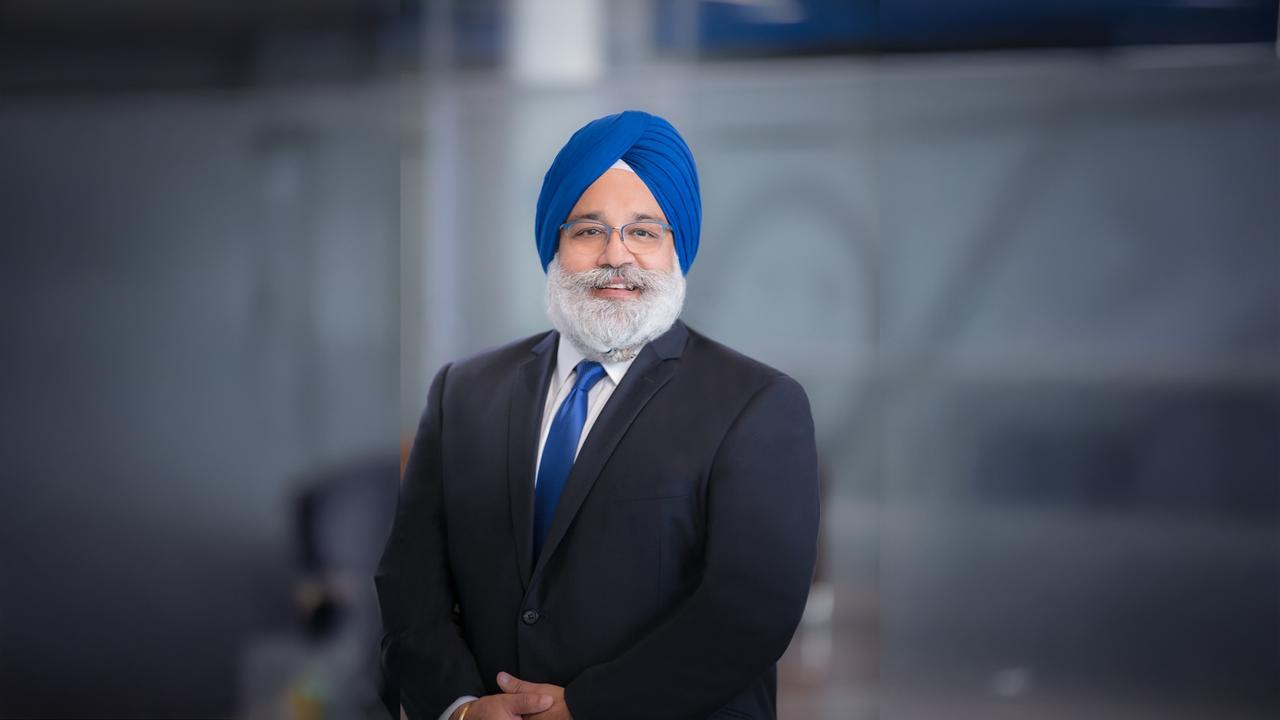
Savi Soin, President Qualcomm India
India is at a crossroads. On one side, its roads are swelling with vehicles fuelled by a surge in automotive sales. On the other, they are burdened with some of the world’s highest accident rates. As the country inches closer to a connected mobility future, a silent transformation is unfolding - one where cars aren’t just vehicles, but intelligent entities exchanging real-time data with everything around them. At the heart of this shift is Qualcomm.

People Also Search
How is Qualcomm's collaboration with Qorix enhancing software-defined vehicle development?
What advancements in two-wheeler safety are being implemented by companies like Ather Energy?
What role does AI play in the Indian government's traffic management and road safety initiatives?
What safety measures are being introduced for trucks and e-rickshaws in India?
What is the significance of Honda's milestone in selling ADAS-enabled cars in India?
In an exclusive interaction with Times Now, Savi Soin, President of Qualcomm India, offered deep insights into how the company is redefining mobility in India through cutting-edge platforms, strategic OEM partnerships, and perhaps most importantly, a strong push for Vehicle-to-Everything (V2X).
You’ve been closely involved in driving Qualcomm’s mobility and connectivity vision globally. What is it that excites you about a market like India?
The Indian market is witnessing not just exponential growth in vehicle sales but also a palpable shift in customers' expectations, with them wanting technology that offers connectivity, safety, entertainment, and AI-driven experiences. This has opened vast opportunities for advanced digital technologies and future-ready automotive platforms.
In addition, the diverse landscape and complex driving conditions make integrated safety and convenience technologies essential. Over the last years, we at Qualcomm have been actively involved in developing technology for advanced driver-assistance systems (ADAS) and connected car experiences, including emergency braking, adaptive cruise control, immersive infotainment, and premium cockpit solutions, across segment. This comes on the back of solid collaborative with some of the leading Indian OEMs. Through our ongoing partnership, we have built pioneering digital cockpit architectures, which leverage the powerful Gen 4 chipsets, multi-display 4K environments, strong AI capabilities, and seamless connectivity. As a result, vehicles can be improved on an ongoing basis through regular software and feature updates, thus providing increasing value to consumers over the course of their lifecycle.
The adoption of high-speed 4G and 5G, coupled with satellite solutions, makes India a frontrunner for deployiing automotive innovation and lays the foundation for important technologies such as V2X, making Indian roads safer. We at Qualcomm are focused on creating "digital living spaces" that are smarter, safer, and always on.
Why is V2X, and how does it matter to consumers?
V2X is a short-range communication operating at 5.9 GHz where vehicles exchange data with other vehicles (V2V), infrastructure (V2I) and vulnerable road users (V2VRU) The combination of technology and dedicated spectrum enables mostly interference-free direct communication without relying on cellular towers or core networks. V2X enhances road safety as it is a non-line-of-sight sensor that operates consistently in all weather conditions, delivering a deterministic understanding of surrounding road users’ location and movements.
What specific Indian transportation challenges (e.g., traffic congestion, road safety, urban logistics) does V2X aim to address?
In 2022, India recorded 168,491 road fatalities and 443,366 reported road injuries. On top of this, it is estimated that 2 – 3 million road injuries are unreported. The road safety problem is indeed large and complex, and we at Qualcomm believe that V2X should be part of the solution.
As a collateral benefit, V2X aims to significantly boost road safety and traffic flow by providing travellers with real-time information in a reliable manner. It can warn drivers about dangers they cannot immediately see. V2V includes features such as Intersection Movement Alert (IMA), Forward Collision Warning (FCW), Blind Spot Alert (BSA). V2I includes features like Traffic Light Information and Red-Light Violation Warning.
Additionally, V2X helps ease congestion by linking vehicles with intelligent traffic systems, enabling real-time updates that optimise traffic flow, reduce wait times, and create green corridors for emergency vehicles. It can also guide drivers toward faster routes, boosting fuel efficiency and cutting emissions.
Is the existing spectrum policy in India aligned with global standards for V2X (e.g., 5.9 GHz band)? What changes are needed?
India’s current spectrum policy is only partially aligned with global standards for V2X,
5.9 GHz band. The National Frequency Allocation Plan (NFAP-2022) permits the use of the 5875-5925 MHz band for Intelligent Transport Systems, but only on a conditional basis. This means the spectrum is not exclusively reserved for V2X, which limits its reliability for safety-critical applications. Importantly, delicensing of the V2X spectrum under the umbrella of safety spectrum, will slingshot the deployment of V2X technology at scale.
What partnerships has Qualcomm formed in India to advance V2X with automakers, Tier-1 suppliers, or the government?
Our V2X advancement in India is built on strategic partnerships across the entire automotive ecosystem. Through our recent Autotalks acquisition, we've strengthened our position significantly - this gives us production-ready, automotive-qualified and purpose-built V2X solutions that are already being deployed with major Indian partners.
Firstly, V2X technology is part of Snapdragon Digital Chassis offerings with V2X capabilities directly integrated into their vehicle architectures. These aren't just connectivity solutions; we're enabling life-saving communication between vehicles and infrastructure.
Secondly, we work with Tier-1 suppliers to ensure our V2X technologies are offered across India's diverse automotive landscape - from passenger vehicles to two-wheelers.
There are also deployments happening, as we have recently collaborated with Mahindra on incorporating V2X in their recently launched EV cars: XeV 9e & Be 6 with features like Intersection Movement Assist, Forward Collision Warning, Blind Zone Alert etc.
This will be a transformative year for V2X deployment in India. The combination of our global automotive footprint with India-specific partnerships positions us to accelerate adoption across all vehicle segments. The potential for cooperative safety solutions in Indian traffic conditions is immense, and we're excited about expanding this further.
What role can V2X play in improving road safety for vulnerable road users (VRUs) like two-wheelers and pedestrians in India?
In India, where two-wheelers and pedestrians make up a significant share of road fatalities, Vehicle-to-Everything (V2X) technology offers a powerful solution to protect vulnerable road users (VRUs). V2X enables real-time, direct communication between vehicles, infrastructure, and VRUs—without relying on cellular networks. This is crucial in India’s dense, mixed-traffic environments, where two-wheelers often navigate through tight spaces and share roadways with fast-moving vehicles. By alerting drivers to the presence of VRUs—especially in blind spots, at intersections, or during poor visibility—V2X can prevent collisions before they occur. V2X also allows emergency vehicles to broadcast their approach, giving riders and pedestrians time to react safely.
Given India’s high rate of road injuries and fatalities, especially among youth, V2X should be seen not just as a tech upgrade but as a public safety imperative. As India moves toward connected mobility, V2X could become the digital seatbelt for its most vulnerable road users.
Looking ahead: smarter vehicles, safer roads
Qualcomm envisions a future where cars are not just modes of transport, but intelligent, evolving digital living spaces. Vehicles that are always connected. Systems that learn and update. Technologies that communicate with their surroundings to prevent the next collision or reduce the next traffic jam.For Savi Soin and the team at Qualcomm, V2X is the key to that future. With the right mix of ecosystem support, regulatory alignment, and technological deployment, India could soon become a global leader in connected mobility and a much safer place to drive, walk, and ride.
Log in to post a comment.
End of Article
Trending
Volkswagen Virtus Facelift Teased Ahead of India Launch: Here's What to Expect
TVS Unveils Four New Models at EICMA 2026, Including Three Electric Scooters

Mercedes-Benz GLC EV Launched in India at Rs 78.50 Lakh: Gets 94kWh Battery, 490bhp Power

Honda Alpha EV Set to Launch in India on December 2: Expected Design, Features and Range

Hero Vida UBX 06 Electric Motorcycle Debuts at EICMA 2026: Features, Range and More

Royal Enfield Shotgun 650 ‘Son of a Gun’ Unveiled at EICMA 2026, Only 100 Units to Be Made

BMW M 1000 RS Unveiled at EICMA 2026, Limited to 1,000 Units Worldwide
Popular

STAY UPDATED Get the latest news from Times Drive