New Delhi


Qualcomm’s Snapdragon for India Auto Day 2025: Powering India's Leapfrog Moment in the Auto Tech Revolution
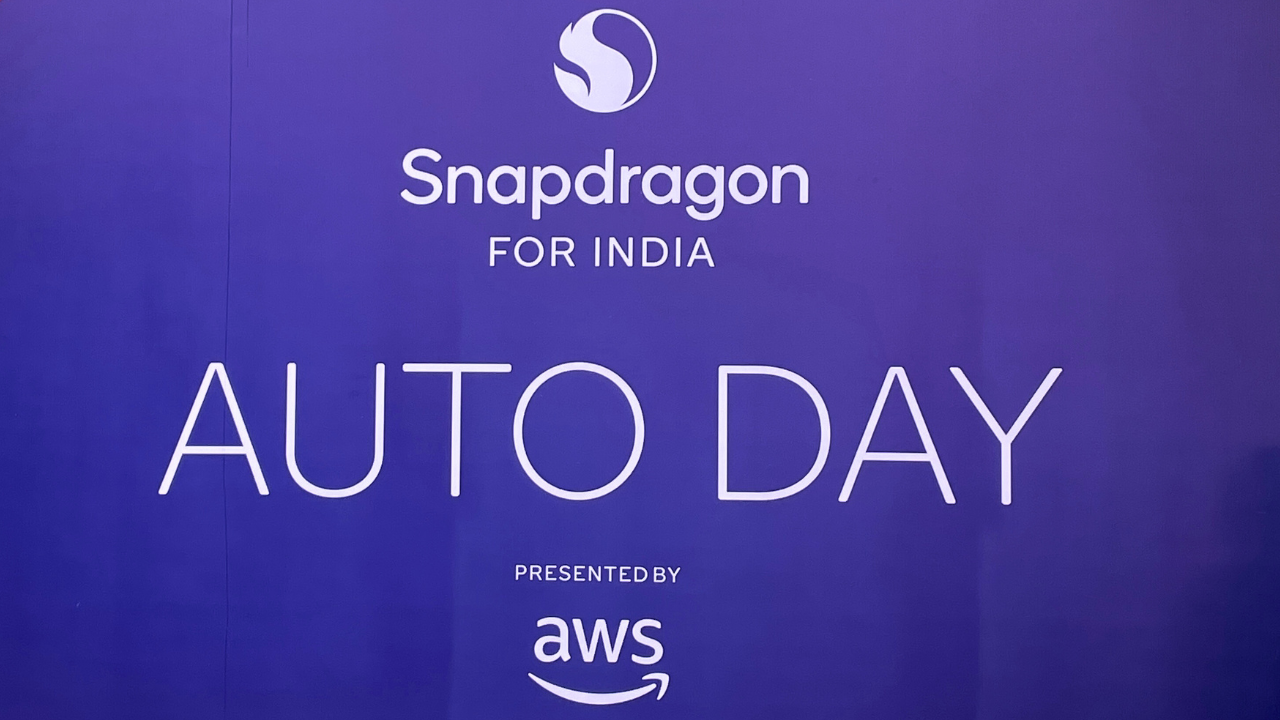
At the first edition of Snapdragon for India Auto Day, Qualcomm showcased the company's dedication to India’s automotive sector. The event highlighted new technologies, partnerships with major car manufacturers, and an emphasis on cleaner fuel and road safety laid by the Road Transport & Highways Minister of India Nitin Gadkari.

Times Drive Desk
Updated Aug 18, 2025, 06:48 PM IST
Qualcomm’s Snapdragon for India Auto Day 2025: Powering India's Leapfrog Moment in the Auto Tech Revolution
"What is the calculus of innovation? The calculus of innovation is really quite simple: Knowledge drives innovation, innovation drives productivity, productivity drives economic growth," stated scientist William Brody. Innovation affects human existence. At the first edition of the Snapdragon for India Auto Day by Qualcomm, this quote resonated with the industry veterans. In the ever-evolving world of automotive technology, Qualcomm has made a mark as an innovator by being the one that provides solutions for automakers globally.

People Also Search
How does Qualcomm's V2X technology enhance road safety in India?
What role does the Snapdragon Digital Chassis play in the development of software-defined vehicles?
What are the expected features of Qualcomm's localised ADAS stack and its significance?
How is Tata Elxsi collaborating with Qualcomm to advance automotive software development?
What measures are being taken by the Indian government to enhance road safety?
Snapdragon for India Auto Day 2025 took place on July 30, 2025, at Bharat Mandapam in New Delhi. At the action-packed show, Qualcomm gave everyone an outlet to look at its vast applications across the automotive and tech sectors. Savi Soin, Senior Vice President and President of Qualcomm India, spoke about the chipmaker's dedication to India's automotive transformation. What stood out was Soin’s outlook on the two decades of the brand’s presence in India, emphasising a three-part strategy: innovating in India for global markets, creating experiences for Indian consumers, and fostering collaborations across the local automotive ecosystem.
Soin's address conveyed a sense of pride as he mentioned that India is home to over 22,000 Qualcomm engineers, which is the highest compared to any other location. As per Soin, this shows the nation's engineering capabilities and its drive for innovations in both domestic and international markets.
Additionally, he spoke about India's shift from a smartphone market focused on cost to one that has a focus on innovation and being feature-loaded. He also mentioned that India is a centre for digital experiences, including smart glasses, connected vehicles, and AI-powered cockpit solutions. "India is not low-end anymore," Soin stated, focusing on Qualcomm delivering experiences custom-built for India, across all vehicle types, be it commercial or passenger vehicles, or even across four- and two-wheeler segments.
India's Automotive Growth
Hisashi Takeuchi, MD and CEO of Maruti Suzuki India, discussed the outlook for India's automotive future. He spoke about Maruti Suzuki's arrival in India over four decades ago, when consumer mobility was in its early stages and described the market's growth, stating that India’s automotive market could grow to over six million strong by 2030.
Moreover, Takeuchi brought to light Maruti Suzuki’s partnership with Qualcomm, which began in 2022 with connected car features first being offered in the Baleno. He affirmed India's role as a hub for hardware design, with Qualcomm at the forefront of innovation to improve customer experience.
“Mobility in India is fast evolving as Indians are not just seeking transportation but continue to seek feature-rich cars that are high on safety as well as environment-friendly cars. In addition to that, we will be investing in a diverse range of powertrains including battery electric vehicles (BEV), Hybrid cars, Internal combustion engine (ICE) with CNG and Ethanol-blended fuel, among others,” Hisashi Takeuchi, MD and CEO, Maruti Suzuki India, stated.
Connected Mobility: Mahindra's Perspective
Velusamy R, President – Automotive Technology and Product Development at Mahindra & Mahindra, highlighted the role of Qualcomm’s chipsets in Mahindra’s connected vehicle development at the event. Velusamy emphasised India’s ability to advance in automotive technology due to its market size and talent. "Q is the new IQ for cars," Velusamy said, attributing this to the joint engineering teams of Qualcomm and Mahindra for building localised solutions.
Regarding customer preferences, Velusamy noted a shift towards visual cues over audio cues when it comes to the car conveying information to the modern-day driver. Elaborating, he observed that customers are now preferring head-up displays over digital instrument clusters, which, as a result, helps them keep their eyes on the road.
“Feature-rich cars often attract kids. Customers want more screens in their cars nowadays. Additionally, features like auto park assist and Advanced Driver Assisted System (ADAS) have become essential. This generation of customers is a tech-thirsty generation,” Velusamy R said.
The current generation of customers wants more screens to spend leisure time watching movies or having an audio-visual experience in the form of music videos, he added. In addition to that, he said the current crop of customers wants more features like ADAS and auto park assist in order to make their driving experience less stressful.
Localised ADAS and Software-Defined Vehicles
Furthermore, Qualcomm announced plans to build a localised ADAS stack in India. The initiative aims to make automotive safety features more accessible for the domestic market by bringing the overall cost of the feature down, thanks to localisation. The ADAS program is designed to support features like lane keeping, collision avoidance, traffic sign recognition, and pedestrian detection, using AI models trained on Indian driving conditions.
Nakul Duggal, Group General Manager, Automotive and Industrial & Embedded IoT Qualcomm Technologies, Inc., stated that development for this "Made-for-India" ADAS platform began in 2024, with commercialisation expected within five years. Duggal stressed the importance of this local approach, saying, "This is a market with unique infrastructure, regulatory and driving challenges. To address them effectively, ADAS solutions must be built, trained and tested locally, not adapted from global templates.”
Duggal added that India’s complex traffic patterns and mixed vehicle usage make it imperative to collect local data and build region-specific perception stacks. “Every market requires different sensor configurations and rule sets. You can’t import that logic from another geography,” he affirmed.
The initiative includes partnerships with Indian OEMs, component suppliers and engineering teams to co-develop and validate the stack. Qualcomm intends to expand local investment in infrastructure and R&D to support the rollout.
Laxmi Rayapudi, Vice President- Product Management at Qualcomm Technologies, described how a car has changed into a software-defined machine, integrating compute, connectivity, and AI systems. He underlined that Qualcomm began with telematics two decades ago, expanded to infotainment and cluster systems, and added ADAS six years ago. This system, across the car, functions as a unified compute platform.
Rayapudi also talked about a request from OEMs: to separate hardware from software, stating that Qualcomm's response is a cloud-based virtual System-on-Chip (SoC) environment, which allows developers to build and test applications without needing physical hardware. This shift supports a growing developer base working across different generations of Snapdragon platforms. The hardware abstraction helps them focus on building features without concern for underlying silicon differences.
Road Safety and Green Mobility Initiatives
Beyond technology, Snapdragon for India Auto Day 2025 focused on road safety. Nitin Gadkari, Minister for Road Transport and Highways (MoRTH), concluded the event by emphasising the Indian automotive industry's role in reducing air pollution, improving road safety, and increasing the use of hydrogen fuel. Speaking to auto industry leaders, startups, and global tech executives present at the event, Gadkari highlighted the automotive sector’s contribution to India’s economy, including job creation and GST revenue, and its role in helping India become the world’s third-largest automotive market.
“Road safety is non-negotiable,” the minister stated, noting that 45% of road deaths in India involve two-wheelers. He emphasised the importance of building safer roads and vehicles, enhancing enforcement, and educating the public about traffic laws. Gadkari mentioned government efforts, stating, “We have identified 77 high fatality stretches across national highways and are investing Rs 40,000 crore to eliminate accident-prone black spots.”
Log in to post a comment.
End of Article
Quick Price CompareMaruti Suzuki Eeco Cargo Price in India
- Popular Cities
- Similar Brands
Trending

Suzuki Unveils 2027 GSX-10R and SV-7S At EICMA 2026: Engine, Features and India Launch Details
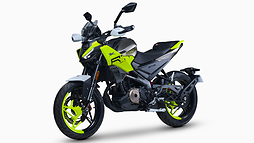
TVS RTR 125 Unveiled at EICMA 2026 with Liquid-Cooled Engine

Norton Urban Roadster 450 Unveiled at EICMA 2026: Gets 46bhp Engine, TFT Display and More

Royal Enfield Flying Flea S6 Electric Unveiled at EICMA 2026, Launch in 2027

Royal Enfield Continental GT 750 Unveiled at EICMA 2026; Gets 743cc Engine, Faired and Unfaired Versions

Ducati Unveils Five New Motorcycles at EICMA 2026, Diavel V4 S and DesertX Rally Among Highlights

Royal Enfield Himalayan 750 Makes Global Debut at EICMA 2026; India Launch Soon?
Popular

STAY UPDATED Get the latest news from Times Drive