New Delhi


Snapdragon for India Auto Day 2025: Qualcomm Highlights Path to Software Defined Vehicles
At the Snapdragon for India Auto Day 2025, Qualcomm's Laxmi Rayapudi discussed the evolution of vehicles into software-defined machines, emphasizing a centralized compute architecture that integrates infotainment, driver assistance, and connectivity. Qualcomm's Flex platform unifies various functionalities while enabling cloud connectivity for enhanced services and diagnostics. The shift towards decoupling hardware from software is supported by a virtual SoC environment, allowing developers to innovate across generations. Key trends include ongoing vehicle development post-production, consistent application compatibility and the integration of AI to streamline user interfaces.

Times Drive Desk
Updated Jul 30, 2025, 03:29 PM IST
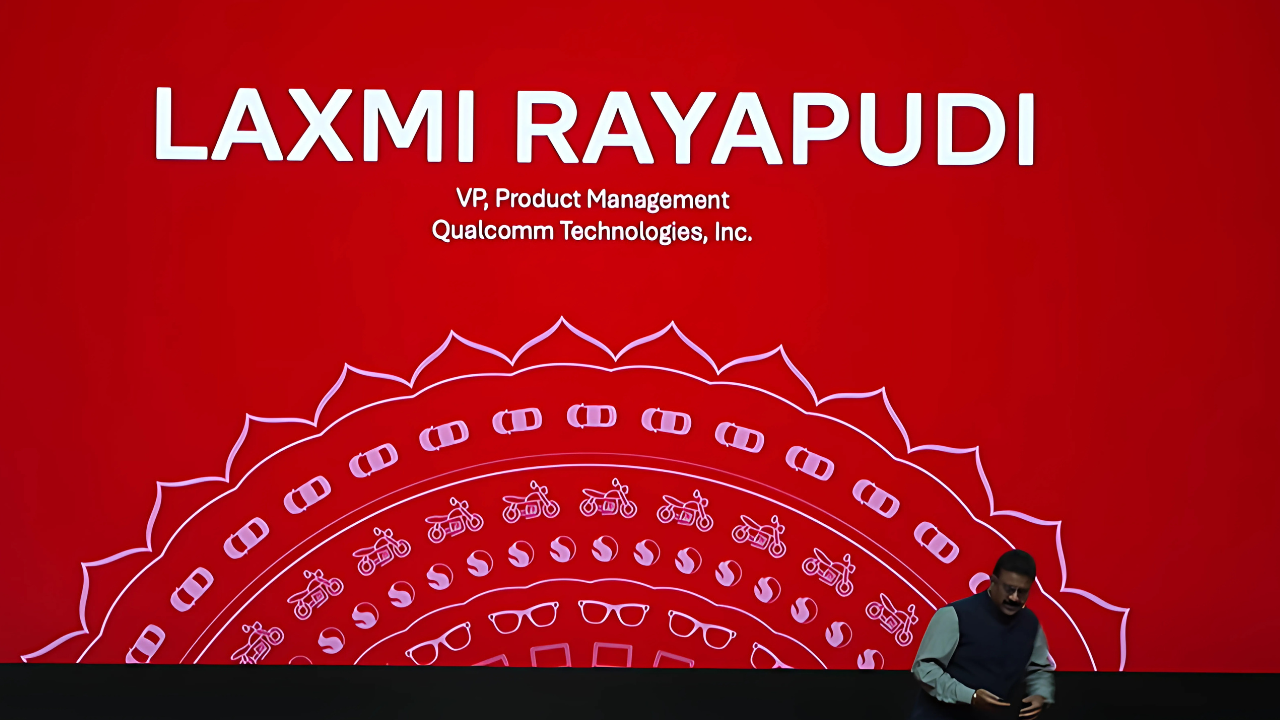
Snapdragon for India Auto Day 2025: Qualcomm Highlights Path to Software Defined Vehicles
Photo : TIMES DRIVE
At the Snapdragon for India Auto Day 2025, Laxmi Rayapudi, Vice President of Product Management at Qualcomm Technologies, walked the audience through how the car, as we know it, is now a software-defined machine—with compute, connectivity, and AI systems stitched across its chassis.

People Also Search
What specific technologies does Mahindra plan to implement in its upcoming Born Electric (BE) range using Qualcomm's Snapdragon chipsets?
How is Qualcomm's approach to developing a localized ADAS stack significant for the Indian market?
What role does Vehicle-to-Everything (V2X) technology play in improving road safety in India?
How does Tata Elxsi's partnership with Qualcomm aim to accelerate software development for SDVs?
What advancements in automotive technology does Qualcomm foresee for the Indian market in the next decade?
Software-First Approach to Vehicle Architecture
Rayapudi opened by stating, “Cars aren’t cars anymore,” referring to how infotainment, driver assistance, and connectivity systems now converge on a central compute platform. The architecture has moved from fragmented ECUs to domain and zonal compute, and now to Qualcomm’s Flex platform, which brings together IVI, ADAS, clusters and chassis controllers on a single SoC.
This isn’t a new shift. According to Rayapudi, Qualcomm started with telematics two decades ago, expanded to infotainment and cluster systems, and then added ADAS six years ago. That stack—spread across the car—now operates as a unified compute platform.
Cloud Hooks and Digital Twin Capabilities
With connectivity built into the chassis, Rayapudi said the next step was enabling a feedback loop between the car and the cloud. The idea is to make all sensor data and contextual information available for digital twin use cases—allowing OEMs to deliver services or diagnostics post-sale. Qualcomm’s roadmap includes cloud interfaces for this purpose.
Virtual SoC and the Push for Separation
As OEMs transition from one hardware generation to the next, Rayapudi said there’s now a clear ask: decouple hardware from software. In response, Qualcomm has been offering a cloud-based virtual SoC environment, allowing developers to build and test applications without needing physical hardware.
This shift also supports a growing developer base working across different generations of Snapdragon platforms. The hardware abstraction lets them focus on building features rather than worrying about underlying silicon differences.
Three Industry Shifts Driving SDV Adoption
Rayapudi pointed to three key changes in how automakers are approaching software:
1. Post-SOP Development: OEMs are no longer treating start-of-production as the end of development. Instead, they want to build, test, and deploy features dynamically, even after vehicles are on the road. This has led to Qualcomm working with partners like Amazon and Google to create cloud-native platforms that support this model.
2. Generational Continuity: As carmakers move across platform generations—from Gen 3 to Gen 5—they want application development to stay forward-compatible. This means APIs and development environments must remain stable across hardware cycles.
3. AI as the Interface: Rayapudi said cars—and humanoids—are the only machines that sense, infer, and act in the physical world in real time. In vehicles, that creates complexity with multiple HMIs and displays in the cockpit. Qualcomm’s view is to use embedded AI as the primary interface, reducing driver interaction friction while keeping compute local.
He explained how sensor data is stored as time series in cognition memory and prompts are processed by local or cloud-hosted LLMs. The goal is to ground responses and reduce hallucinations—particularly in critical driving environments.
Is SDV a Reality?
According to Rayapudi, SDVs are no longer a concept in development but a system architecture already being deployed. With growing developer ecosystems and cross-tier platform strategies, Qualcomm aims to provide tools for automakers to manage both critical and non-critical automotive workloads using unified compute solutions.
Log in to post a comment.
End of Article
Trending
Suzuki Unveils 2027 GSX-10R and SV-7S At EICMA 2026: Engine, Features and India Launch Details
TVS RTR 125 Unveiled at EICMA 2026 with Liquid-Cooled Engine

Norton Urban Roadster 450 Unveiled at EICMA 2026: Gets 46bhp Engine, TFT Display and More
Royal Enfield Flying Flea S6 Electric Unveiled at EICMA 2026, Launch in 2027

Royal Enfield Continental GT 750 Unveiled at EICMA 2026; Gets 743cc Engine, Faired and Unfaired Versions

Ducati Unveils Five New Motorcycles at EICMA 2026, Diavel V4 S and DesertX Rally Among Highlights

Royal Enfield Himalayan 750 Makes Global Debut at EICMA 2026; India Launch Soon?
Popular

STAY UPDATED Get the latest news from Times Drive