New Delhi


Tata Motors Targets 30 Product Interventions Across PV And EV Segments By FY30
Tata Motors just announced 30 exciting new vehicles by 2030, including the iconic Sierra's comeback in EV and petrol versions. Plus 23 updates to current models like Nexon and Harrier. Here's everything coming to Indian roads.

Keshav Rajput
Updated Jun 16, 2025, 02:56 PM IST
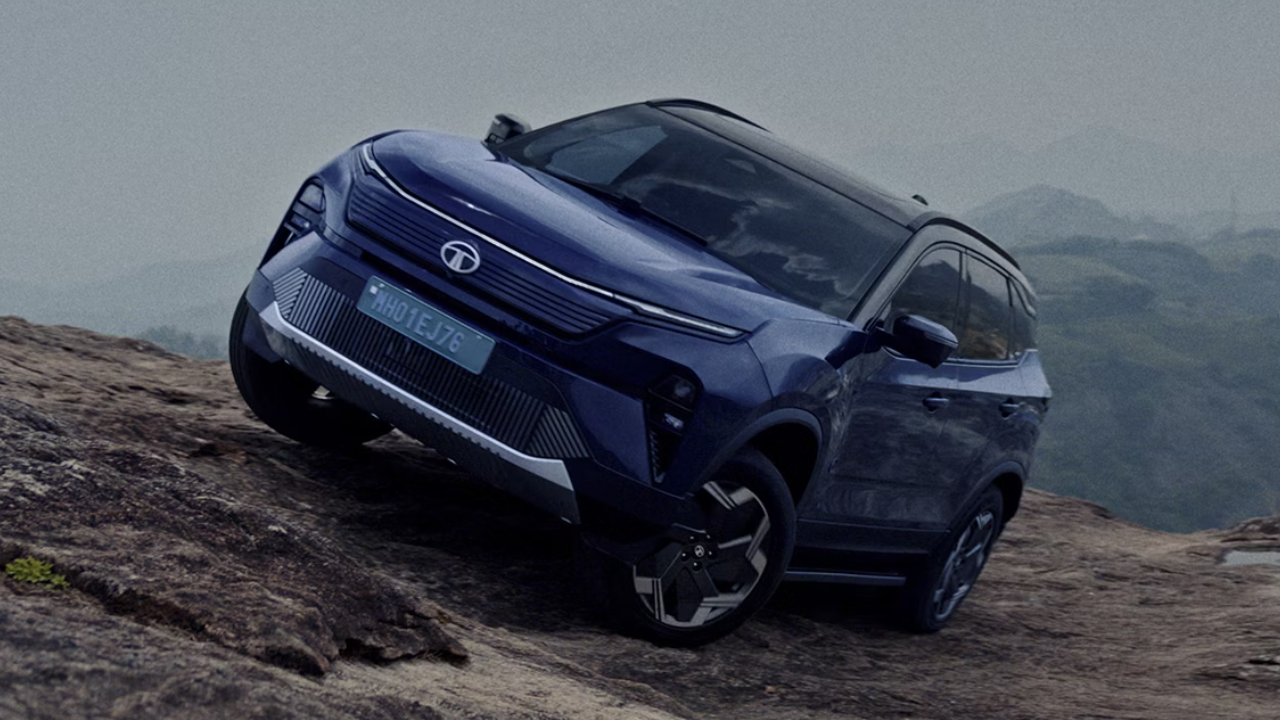
Tata Motors To Launch 30 New Passenger And Electric Vehicles By FY30 As Part Of Segment-Wide Expansion
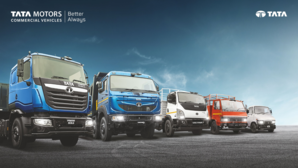
During its Investor Day 2025 presentation, Tata Motors confirmed it will launch a total of 30 products, including 7 new nameplates and 23 updates by the end of FY30. These additions will cover multiple segments, including hatchbacks, SUVs, and electric vehicles (EVs). Among the planned new models are the Sierra (expected in both ICE and EV formats) and two bespoke EVs currently identified as “Product X” and “Product Y” under the Avinya architecture. Refreshes are scheduled for mass-market models such as the Tiago and Altroz, while larger SUVs like the Harrier and Safari will see multiple powertrain updates, including EV and CNG variants.
Also Read: Cruiser Bikes Under Rs 6 Lakhs
Tata Motors' 30-Vehicle Plan
- 7 completely new car models
- 23 updates to existing vehicles
- Sierra returns in ICE and EV formats
- Two mystery EVs called "Product X" and "Product Y"
- Major updates for Tiago, Altroz, Harrier, and Safari
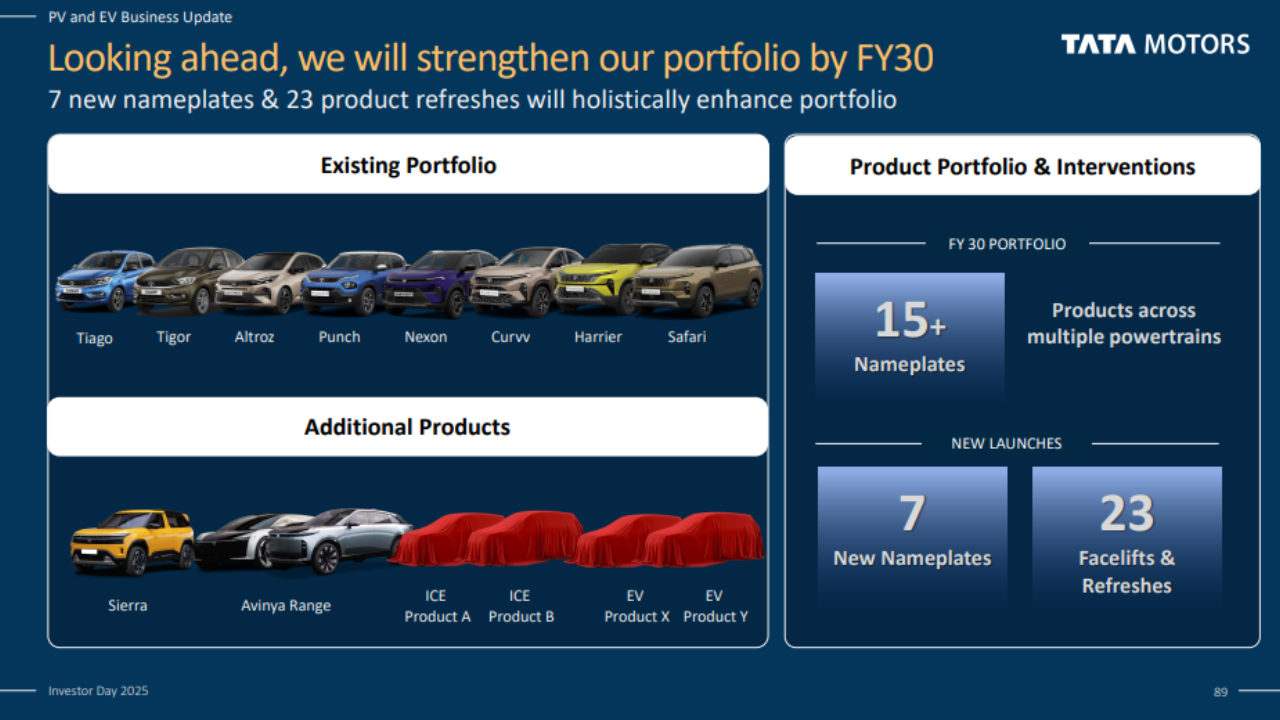
Tata Motors Future Product lineup
Tata Motors Develops Software Defined Vehicles for Future Readiness
Tata Motors is preparing for a future where their cars will be more like smart devices on wheels, known as Software Defined Vehicles (SDVs). These cars will offer advanced features like improved safety systems that help with driving, the ability to get new features and fixes automatically through over-the-air updates, personalized and interactive dashboards, and stronger internet connectivity. Tata Motors is using special testing methods like Hardware-in-Loop (HIL) and Software-in-Loop (SIL) systems, which essentially allow them to test car software and hardware components in a simulated environment before putting them into actual vehicles.
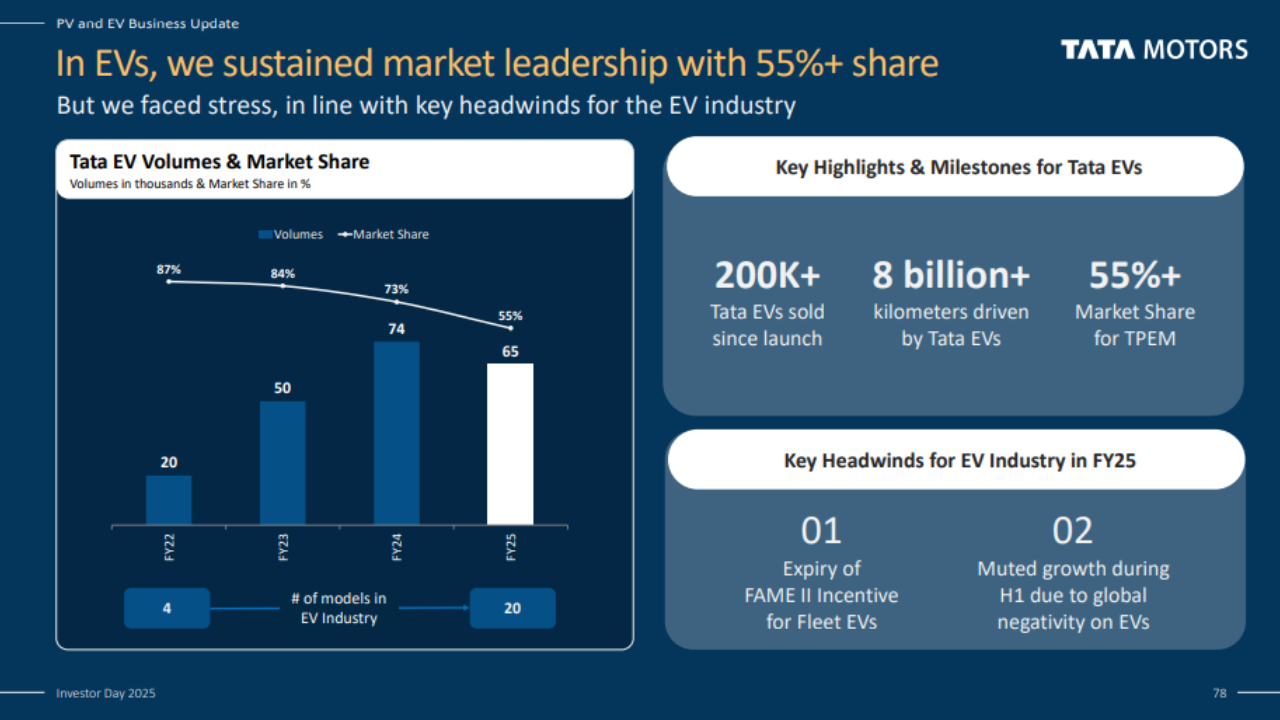
Tata Motors EV Market Strategy and Segment Targeting
Tata Motors’ EV Strategy to Focus on Range, Cost and Network Growth
In the EV segment, Tata Motors aims to build on its existing leadership, where it currently holds a 55%+ market share. Despite a slowdown in growth due to factors like the expiry of the FAME II subsidy for fleet buyers and global EV pessimism in early FY25, Tata’s EV volumes grew to over 74,000 units.
To accelerate adoption, the company plans to launch higher-range models (400 km+) and reduce EV ownership costs through structural changes and cost engineering. Bespoke EVs are in development and Tata Motors intends to expand its Tata.ev charging network with more than 500 high-speed chargers and a broader network of dedicated Tata.ev stores. Fleet-specific strategies include total cost of ownership optimization and dedicated servicing hubs.
Tata Motors Aligns Product Strategy with SUV and MPV Market Growth
The Indian passenger vehicle market is undergoing a shift toward larger body styles. SUVs and MPVs are projected to account for over 70% of sales by FY30. In FY25, SUV sales already accounted for 55% of the market, while hatchbacks fell to 24%. Tata Motors plans to align its portfolio with this trend by focusing most new launches in the SUV and MPV categories.
In FY25, Tata Motor's SUV sales rose by 11% in terms of Y-o-Y basis, driven by strong demand for models like the Punch and Nexon. The newly launched Curvv Coupe SUV is also expected to strengthen the brand’s presence in the crossover sub-segment.
Tata Motors Strengthens CNG Vehicle Offering
Tata Motors is also focusing on the CNG adoption as the automaker recorded a 53% Y-o-Y growth in CNG vehicle volumes in FY25, reaching approximately 139,000 units. The introduction of twin-cylinder technology and new offerings like the Nexon CNG are aimed at increasing adoption among private buyers.
Also Read: Japanese Bikes Under 2 Lakhs
Tata Motors to Expand Retail and Service Network by FY30
The automaker also shared some details around its retail expansion, Tata Motors said that they are planning to increase its retail footprint to more than 1,500 outlets by FY30. Workshop bay capacity to be ramped up, with over 1,000 additional bays being added in key hotspot cities. Additionally, they are also modernising over 450 service centres to enhance diagnostic accuracy and efficiency using digital tools and real-time technical support.
Tata Motors Sets FY30 Profitability and Efficiency Targets
By FY30, Tata Motors wants to reach a 10% EBITDA margin from its combined passenger vehicle (PV) and electric vehicle (EV) businesses. To grow, the company plans to launch more new models, improve how it serves customers, expand in smaller cities (Tier 2 and Tier 3), and run its operations more efficiently.
Tata Motors Aligns with Emissions Regulations and Sustainability Targets
Tata Motors is aligning its portfolio and operations with upcoming regulations, including the CAFE III and IV emission standards, which will require significant reductions in fleet emissions. EVs and low-emission powertrains like CNG will be necessary to meet these targets. The company is also aiming for 100% renewable energy in its operations and net-zero emissions by 2040.

- When is the Tata Sierra launching?
Expected 2026-27 in both petrol and electric versionsWill existing Tata cars get cheaper?
Yes, especially EVs through cost engineering and higher range modelsHow many new EVs is Tata launching?
At least 4-5 dedicated EVs, including mysterious "Product X" and "Product Y"
Log in to post a comment.
End of Article
Trending
VinFast VF MPV 7 EV Gets a Price Cut of Over 4 Lakh: Check New Price
Volkswagen Virtus Facelift Teased Ahead of India Launch: Here's What to Expect

Which Are the Best CNG Cars Under Rs 10 Lakh in India?

Mercedes-Benz GLC EV Launched in India at Rs 78.50 Lakh: Gets 94kWh Battery, 490bhp Power

Honda Alpha EV Set to Launch in India on December 2: Expected Design, Features and Range
5 Most Affordable Cars with Sunroofs to Buy This Diwali
Car Dashboard Warning Lights: What Each Symbol Means and What to Do
Popular

STAY UPDATED Get the latest news from Times Drive