New Delhi


Volvo Cars Will Get Google Gemini AI This Year, Even Before Mercedes, BMW, Audi Or Others
Volvo Cars is enhancing its collaboration with Google by integrating Gemini, Google's conversational AI, into its vehicles, starting with the Volvo EX90 in 2025. Gemini will replace the existing Google Assistant, allowing drivers to interact via voice commands for tasks like composing messages and accessing vehicle information. Additionally, Volvo will serve as a reference platform for Android Automotive OS development.

Atul Bandhu
Updated May 21, 2025, 03:40 PM IST
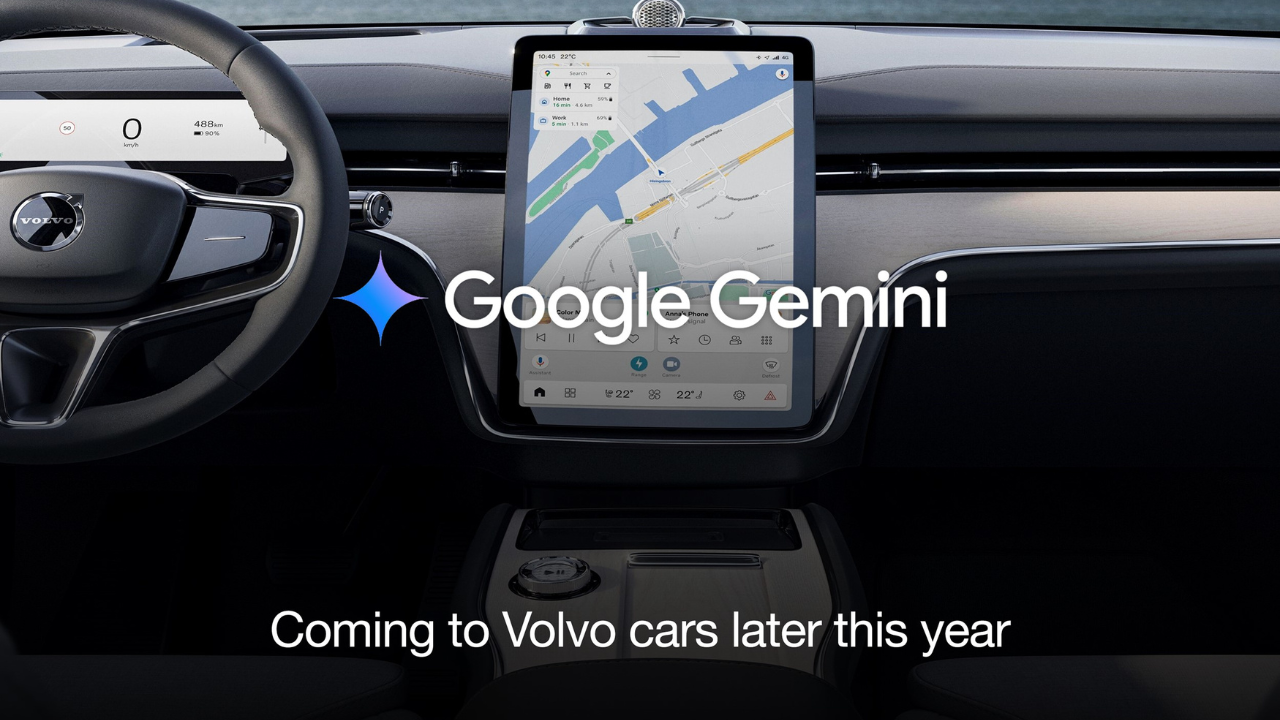
Volvo Cars Will Get Google Gemini AI In 2025
Photo : TIMES DRIVE
Volvo Cars has announced the expansion of its partnership with Google to bring Gemini, Google’s conversational AI, into its vehicles. The integration was demonstrated at Google I/O 2025 in the Volvo EX90. Gemini will replace the current Google Assistant in Volvo vehicles with Google built-in systems later in 2025.
Volvo X Android Auto
As part of the partnership, Volvo Cars will now serve as one of Google’s reference hardware platforms for Android Automotive OS development. This means Google will use Volvo vehicles to test new features and updates before they are added to the main Android codebase.
This arrangement allows Volvo Cars to receive early access to Android features and performance changes. The collaboration is intended to support faster development and deployment of connected systems across the vehicle software ecosystem.
Early Access For Volvo Users
Through this role as a reference platform, Volvo drivers will be among the first to use upcoming Android Automotive OS features. The updates will be available in Volvo vehicles with Google built-in systems before wider rollout to other vehicle manufacturers.
How Users Can Benefit From The Use Of Gemini AI
Using Google Gemini AI assistant drivers will be able to use to compose and translate messages, access information from the vehicle’s manual and ask location-related questions using voice commands. This system is designed to allow voice-based interaction without requiring physical input while driving. The addition of this system will allows drivers to access multiple features without taking their eyes off the road. Hence this utility feature also enhances the safety and can be considered as a modern equivalent of seat-belt in a technology driven world.
Management’s Viewpoint
Patrick Brady, Vice President of Android for Cars, Google, “For years, Google and Volvo Cars have collaborated closely to bring cutting-edge technology to connected cars. We're excited to deepen this partnership, accelerating the pace of innovation that will not only improve the driving experience for Volvo customers but also set new benchmarks for the automotive industry”.
Alwin Bakkenes, head of global software engineering at Volvo Cars, “We strive to deliver human-centric technology, and a stunning customer experience is an essential part of this. Through this partnership with Google, we are able to bring the very latest features and capabilities from the leading consumer eco-system into our products first. With our expanding partnership, we’re collaborating on cutting-edge solutions that shape the future of connected cars”.
Log in to post a comment.
End of Article
Trending

Tata Sierra Dark Edition Launched at Rs 13.99 Lakh: Here's What’s Different

Tata Tigor To Be Renamed Aeries, Launch Set For September 25

2026 Mahindra Thar Facelift to Launch Tomorrow: What to Expect?
BMW M Neue Klasse Concept Patented in India, Set to Debut as an Electric Sedan

Tata Sierra Legend Series Variants Explained: What Each Trim Offers

5 Most Affordable Cars You Can Buy in India

Maruti Suzuki e Vitara vs Mahindra BE 6 Spec Comparison: What’s Different?
STAY UPDATED Get the latest news from Times Drive