New Delhi


Honda CB125 Hornet Vs Bajaj Pulsar N125 Spec Comparison: What's Different?
Honda has launched the CB125 Hornet, a new contender in the 125cc motorcycle market, featuring a bold design and advanced specifications. It boasts a 123.94cc engine delivering 11 bhp and 11.2 Nm of torque, with rapid acceleration. In contrast, the Bajaj Pulsar N125, known for its performance, has a slightly larger engine but offers less acceleration data. The Hornet features premium suspension and safety systems, while the Pulsar has a simpler setup. Both bikes have distinct designs and connectivity features, appealing to different rider preferences.

Keshav Rajput
Updated Jul 26, 2025, 07:57 AM IST
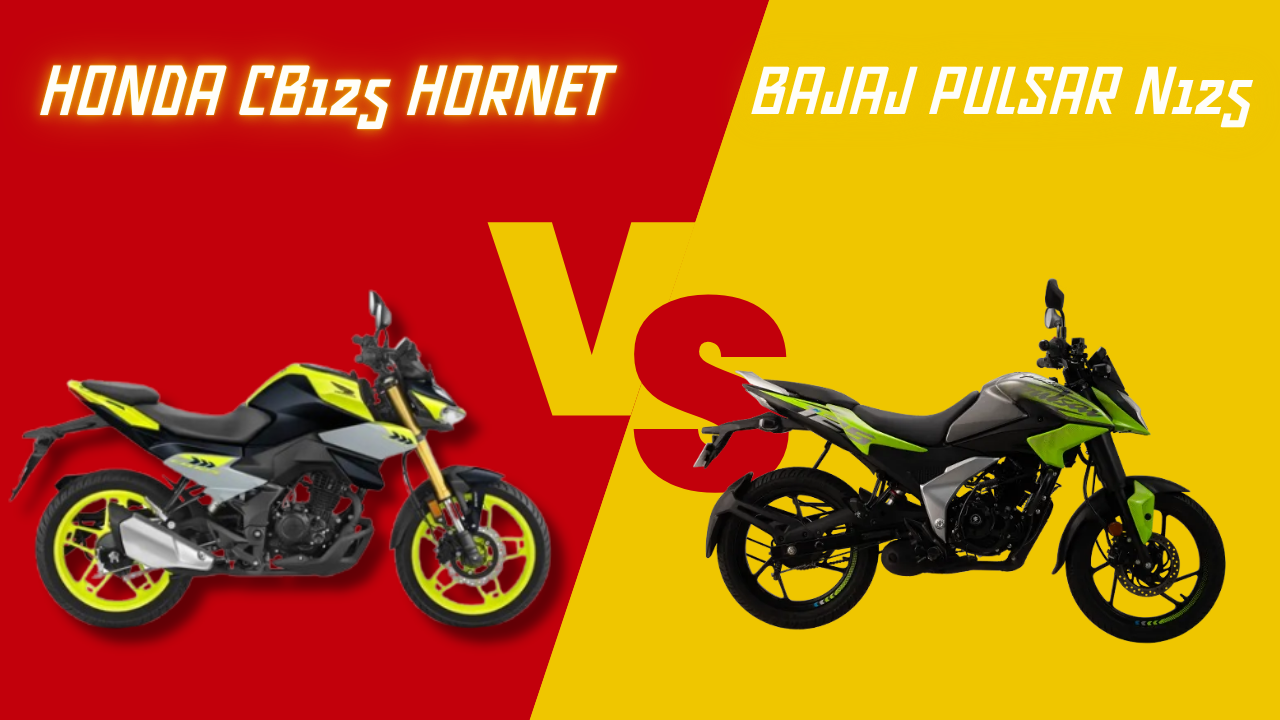
Honda CB125 Hornet Vs Bajaj Pulsar N125 Spec Comparison: What's Different?
Honda has entered the 125cc bike segment with its new CB125 Hornet. This new bike brings a bold design, modern features and premium parts. On the other hand, the Bajaj Pulsar N125 is already a popular choice in this segment, known for its performance and easy handling. With Honda now joining the race, here’s a look at how the two bikes compare on paper. Here’s a detailed spec comparison to understand how they stack up against each other.

People Also Search
How does the Bajaj Pulsar N125's engine compare to that of the Hero Xtreme 125R in terms of specifications?
What are the key differences in suspension systems between the Honda CB125 Hornet and the TVS Raider 125?
What safety features differentiate the Bajaj Pulsar N125 from the Honda CB125 Hornet?
How do the digital displays of the Honda CB125 Hornet and Bajaj Pulsar N125 compare in terms of features?
What can be expected in terms of pricing and market positioning for the Bajaj Pulsar N125 compared to its competitors?
Honda CB125 Hornet Vs Bajaj Pulsar N125: Engine
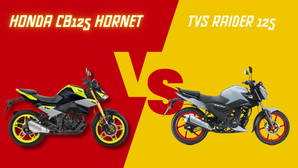
The Honda CB125 Hornet is powered by a 123.94cc single-cylinder, fuel-injected engine producing 11 bhp at 7500 rpm and 11.2 Nm of torque at 6000 rpm paired with a 5 speed gearbox and weighs 124 kg. Honda claims it is the fastest in its class with a 0 to 60 kmph time of just 5.4 seconds. In comparison, the Bajaj Pulsar N125 uses a 124.58cc air-cooled, single-spark engine that delivers 11.8 bhp at 8500 rpm and 11 Nm at 6000 rpm. It too features a 5-speed transmission and weighs slightly more at 127.5 kg. Despite its higher power output, the Pulsar's acceleration times haven't been officially revealed.
Honda CB125 Hornet Vs Bajaj Pulsar N125: Suspension and Braking
The CB125 Hornet stands out with premium upside-down front forks (USD) and a 5-step adjustable rear monoshock. It is built on a diamond-type frame. On the other hand, the Pulsar N125 features a simpler telescopic front setup and monoshock rear, both with 125 mm of travel. Both bikes get a 240 mm disc at the front and a 130 mm drum at the rear. However, the Hornet comes equipped with a single-channel ABS while the Pulsar uses a Combined Braking System (CBS), offering different approaches to safety.
Honda CB125 Hornet Vs Bajaj Pulsar N125: Tyres and Dimensions
Front Tyre setups on both motorcycles are similar with 80/100-17 size . The CB125 Hornet gets a wider 110/80-17 rear tyre, while the Pulsar uses a narrower 100/90-17. Both feature tubeless tyres. The Hornet is longer and has a larger wheelbase (1330 mm vs 1295 mm). While its ground clearance is 166 mm, the Pulsar offers a higher 180 mm, useful for rough roads.
Honda CB125 Hornet Vs Bajaj Pulsar N125: Design and Features
In terms of design, The Honda CB125 Hornet comes with an aggressive streetfighter look with sharp tank shrouds, a split seat, golden USD forks and full LED lighting. It gets a 4.2-inch TFT display with Bluetooth and Honda RoadSync app support, offering navigation, call/SMS alerts, music control, a USB Type-C charging port, engine stop switch and side-stand cut-off. The Bajaj Pulsar N125 follows a futuristic design language with floating body panels and hexagonal accents. It is available in seven color options and offers two digital display variants a basic LCD and a larger version that supports call/message notifications via Bluetooth, though with limited connectivity features compared to the Honda.
Log in to post a comment.
End of Article
Trending

EV Diwali 2026: 5 Most Affordable Electric Cars You Can Buy in India

5 Most Affordable Hybrid Cars You Can Buy in India This Diwali
5 Most Affordable Cars with Sunroofs to Buy This Diwali
Which Are the Best Bikes Under Rs 1 Lakh
Which Are the Most Affordable Superbikes in India

New Car Delivery Checklist: How to Do a Pre-Delivery Inspection (PDI) Step by Step
Car Dashboard Warning Lights: What Each Symbol Means and What to Do
Popular

STAY UPDATED Get the latest news from Times Drive