New Delhi


Honda CB750 Hornet vs Kawasaki Z650: A Mid-Weight Naked Bike Showdown
Honda CB750 Hornet vs Kawasaki Z650: Honda has introduced the CB750 Hornet in India, competing with the Kawasaki Z650 in the mid-weight streetfighter market. The Hornet features a 755cc engine, delivering 90.5 bhp and a top speed of 205 km/h, while the Z650’s 649cc engine produces 67.31 bhp. The Hornet’s advanced chassis and suspension prioritize agility, whereas the Z650 focuses on comfort. Additionally, the Hornet includes modern features like a TFT display and riding modes, contrasting with the Z650's more traditional setup.

Keshav Rajput
Updated May 27, 2025, 01:12 PM IST

Honda CB750 Hornet vs Kawasaki Z650: A Mid-Weight Naked Bike Showdown
Honda has brought the CB750 Hornet to India, intensifying competition in the mid-weight streetfighter segment currently occupied by models like the Kawasaki Z650. Both bikes cater to performance-focused riders looking for a balance between everyday usability and spirited riding. Here’s a detailed comparison covering performance, features, dimensions and value.

People Also Search
How does the Honda CB750 Hornet compare to the Honda CB1000 Hornet SP in terms of engine specifications?
What advanced features does the Honda CB1000 Hornet SP offer compared to the CB750 Hornet?
What are the differences in suspension systems between the Honda CB750 Hornet and the Kawasaki Z650?
What are the pricing and availability details for the Honda CB750 Hornet and its variants?
How do the Honda CB750 Hornet and CB1000 Hornet SP fare in terms of technology and electronic aids?

Honda CB750 Hornet vs Kawasaki Z650: Engine and Performance
Honda CB750 Hornet vs Kawasaki Z650: Engine and Performance
The Honda CB750 Hornet is powered by a 755cc liquid-cooled, SOHC, 8-valve parallel twin engine with a 270° crank. It produces 90.5 bhp at 9,500 rpm and 75 Nm of torque at 7,250 rpm paired to a 6-speed transmission and features an assisted slipper clutch. Top speed is claimed at 205 km/h, making it the more performance-oriented option. On the other hand, the Kawasaki Z650 uses a 649cc DOHC parallel twin engine that makes 67.31 bhp at 8,000 rpm and 64 Nm at 6,700 rpm paired to a 6-speed gearbox and wet multi-disc clutch, but lacks a slipper clutch as standard.
Also Read: Tata Nexon vs Kia Syros

Honda CB750 Hornet
Honda CB750 Hornet vs Kawasaki Z650: Chassis and Suspension
The Hornet rides on a diamond steel frame, suspended by a 41mm Showa SFF-BP USD front fork and Prolink rear monoshock, providing 130 mm and 150 mm of travel respectively. The setup is tuned for agile street handling and occasional sporty rides.
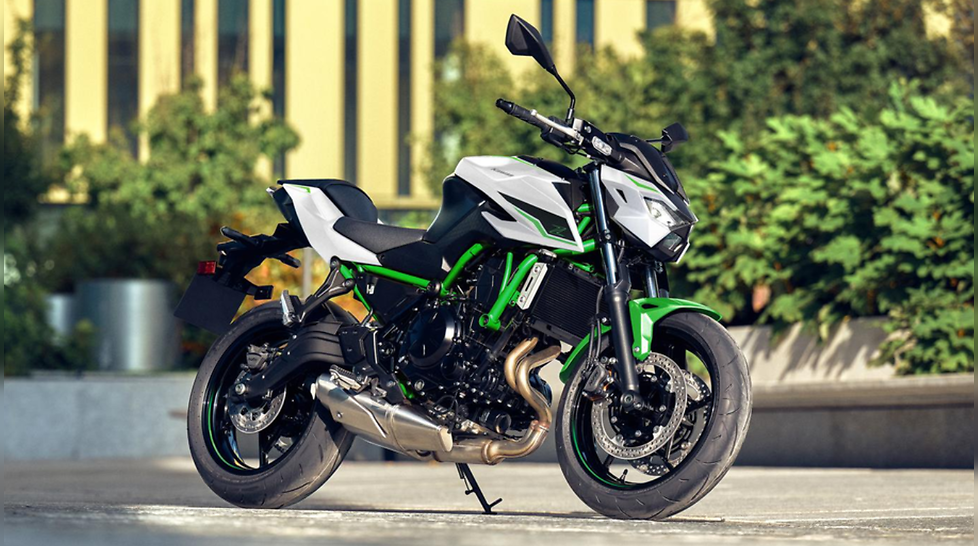
Built around a trellis frame, the Z650 uses a 41mm telescopic front fork and a horizontal back-link monoshock with preload adjustability. The front and rear travel is slightly less than the Hornet, at 125 mm and 130 mm, offering a more comfort-biased ride.
Also Read: Two-Wheelers Launched In April 2025

Kawasaki Z650
Honda CB750 Hornet vs Kawasaki Z650: Braking and Tyres
Braking duties are handled by 296 mm twin discs at the front with radial-mounted Nissin four-piston calipers and a 240 mm disc at the rear. The bike comes equipped with Michelin Road 6 tyres on 17-inch cast aluminium wheels, which provide excellent grip and feel. The Z650 uses 300 mm petal discs with dual-piston calipers at the front and a 220 mm rear disc. Tyres are Dunlop Sportmax Roadsport 2, also mounted on 17-inch wheels. While competent, the braking setup on the Hornet is more performance-focused.
Honda CB750 Hornet vs Kawasaki Z650: Features and Technology
The Hornet stands out with a 5-inch full-colour TFT display, traction control, four riding modes (Sport, Standard, Rain and User), self-cancelling indicators and all-LED lighting. Connectivity is supported via Honda RoadSync and while it lacks cruise control, a bidirectional quickshifter is available as an accessory. It also features a full-colour TFT screen with smartphone connectivity via RIDEOLOGY THE APP and a notable Economical Riding Indicator for fuel efficiency. While it doesn’t get traction control or riding modes, it offers a comfortable pillion seat and a redesigned headlamp cowl for improved aesthetics.
Also Read


Log in to post a comment.
End of Article
Trending

5 Highest-Selling Car Brands in India: October 2026
Which Are the Best Bikes Under Rs 2 Lakh in India?

Which Are the Best 7-Seater Cars Under Rs 10 Lakh in India?
Which Are the Best Bikes Under Rs 1.5 Lakh in India

Which Are the Best CNG Cars Under Rs 10 Lakh in India?

EV Diwali 2026: 5 Most Affordable Electric Cars You Can Buy in India

5 Most Affordable Hybrid Cars You Can Buy in India This Diwali
Popular
STAY UPDATED Get the latest news from Times Drive