New Delhi


MoPNG Addresses Ethanol Blending Concerns for Vehicle Owners with a Fact Check: This is What the Govt Said
The Ministry of Petroleum and Natural Gas (MoPNG) has clarified the safe usage of Ethanol-blend Petrol (E20) in vehicles amid concerns raised by media. The government referenced numerous studies indicating no significant negative impact on vehicle performance or engine integrity when using E20, stating that any minor reduction in mileage can be mitigated through proper engine tuning. Ethanol's environmental benefits were emphasized, noting its potential to lower CO2 emissions significantly. Additionally, the MoPNG assured that safety standards for E20 are well-established.

Saptak Bardhan
Updated Aug 4, 2025, 09:21 PM IST
MoPNG Addresses Ethanol Blending Concerns for Vehicle Owners with a Fact Check: This is What the Govt Said
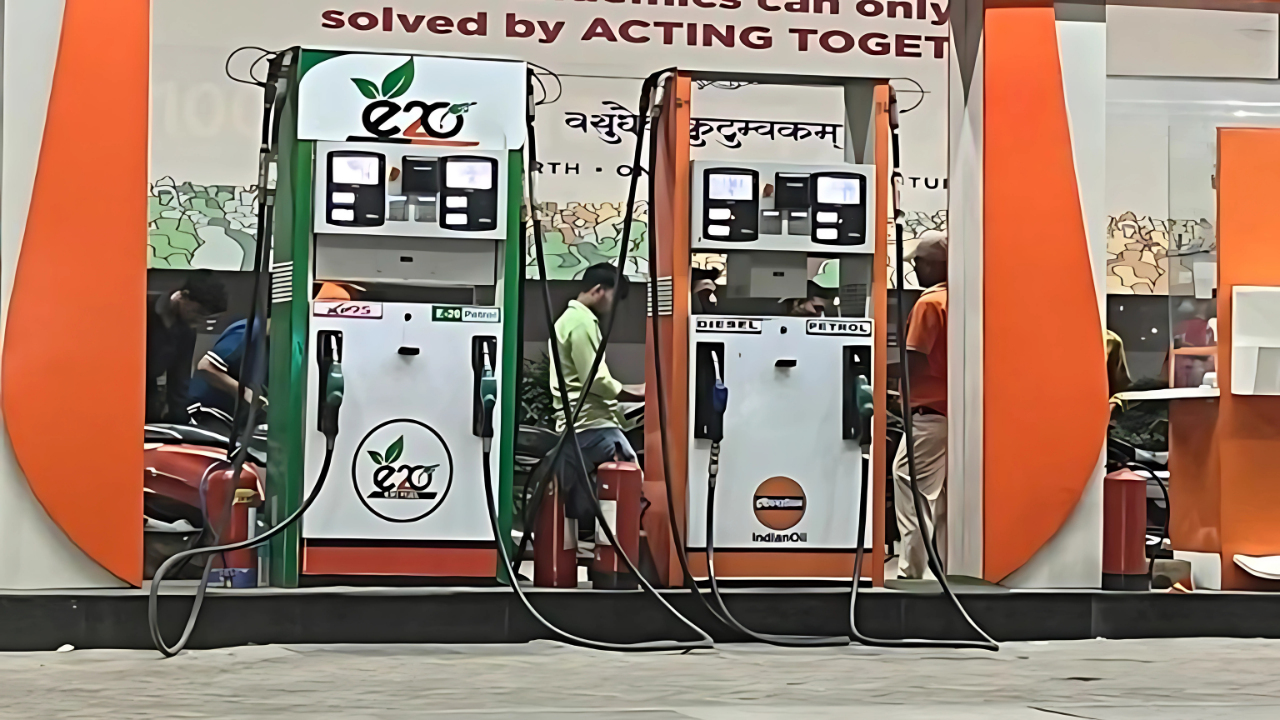
The Ministry of Petroleum and Natural Gas (MoPNG) on Monday clarified the use cases of Ethanol-blend Petrol across vehicles on X (formerly Twitter). The government has addressed concerns which have been recently highlighted in media reports regarding the usage of E20 petrol, citing tests and studies from Indian and international entities supporting the usage of second-generation biofuels in India. Responding to online narrative and popular media reports of Ethanol-blend petrol harming vehicles or causing undue hardship to consumers, the government underlined that these claims are not based on real facts and lacks technical foundation.
“The implementation of E20 in India has followed a phased and widely consulted approach, involving coordination between ministries, vehicle manufacturers, fuel retailers, standards agencies etc,” the MoPNG stated in its clarification on X.
The Ministry stated that international studies on the effect of using Ethanol-Petrol Blends on mechanical, energy and environmental performance of vehicles through testing of carbureted and fuel-injected vehicles every 10,000 km during their first 1,00,000 km showed statistically no significant differences in power and torque generated and fuel consumption.
“Material compatibility and drivability tests by Automotive Research Association of India (ARAI), Indian Institute of Petroleum (IIP) and Indian Oil Corporation (R&D) have confirmed that legacy vehicles also showed no significant variations, performance issues or abnormal wear-and-tear when operated with E20. Moreover, E20 fuel passed hot and cold startability tests without any engine damage,” said MoPNG’s X post.
The MoPNG clarified that while Ethanol is lower in energy density than petrol, it results in a marginal decrease in mileage, estimated at one to two percent for four-wheelers that are designed for E10 and calibrated for E20 while it ranges from three to six percent in others.
In addition to that, the government stated that the drop in efficiency is marginal can be further minimised through improved engine tuning and use of E20-compatible materials, which automobile manufacturers have already adopted. The Society of Indian Automobile Manufacturers (SIAM) has confirmed that E20-compliant vehicles with upgraded components began rolling out from April 2023.
“Ethanol replaces petrol, a fossil fuel and reduces CO2 emissions. India’s ethanol blending programme is through feedstock diversification. Ethanol is increasingly being produced from not only sugarcane but also from surplus rice, maize, damaged foodgrains, and agricultural residues, especially under the push for second-generation (2G) biofuels. This makes ethanol blending not only technically viable, but environmentally sustainable as well. A study on life cycle emissions of ethanol done by Niti Aayog has assessed that GHG emissions in case of sugarcane and maize based ethanol use is less by 65% and 50%, respectively, than that of petrol,” added the MoPNG post on X.
The Ministry further stated that one of the benefits of using E20 fuel is that Ethanol has a higher-octane number than petrol (~108.5 vs 84.4), which means ethanol-petrol blends can be used as a high-octane fuel for modern engines. This improves performance and ride quality, especially in vehicles designed for E20 fuel. Additionally, ethanol's high heat of vaporization lowers the intake manifold temperature, increasing air-fuel mixture density and improving the engine's efficiency.
“Safety standards for E20, including corrosion inhibitors and compatible fuel system materials, are well established through BIS specifications and Automotive Industry Standards. Replacement of some rubber parts/ gaskets could be advised in certain older vehicles after prolonged use of say 20,000 to 30,000 kms. This replacement is inexpensive and easily done during regular servicing of the vehicle,” MoPNG highlighted on X.
Log in to post a comment.
End of Article
Trending

EV Diwali 2026: 5 Most Affordable Electric Cars You Can Buy in India

5 Most Affordable Hybrid Cars You Can Buy in India This Diwali

5 Most Affordable Cars with Sunroofs to Buy This Diwali

Which Are the Best Bikes Under Rs 1 Lakh
Which Are the Most Affordable Superbikes in India

New Car Delivery Checklist: How to Do a Pre-Delivery Inspection (PDI) Step by Step

Car Dashboard Warning Lights: What Each Symbol Means and What to Do
Popular





STAY UPDATED Get the latest news from Times Drive