New Delhi


Petrol vs Diesel vs CNG vs Electric: Which Car Fuel Type Is Right for You?
Compare petrol, diesel, CNG and electric cars on running cost per km, purchase price, refuelling access and maintenance to pick the right fuel type.

Updated Oct 26, 2026, 09:26 AM IST
Petrol vs Diesel vs CNG vs Electric: Which Car Fuel Type Is Right for You?
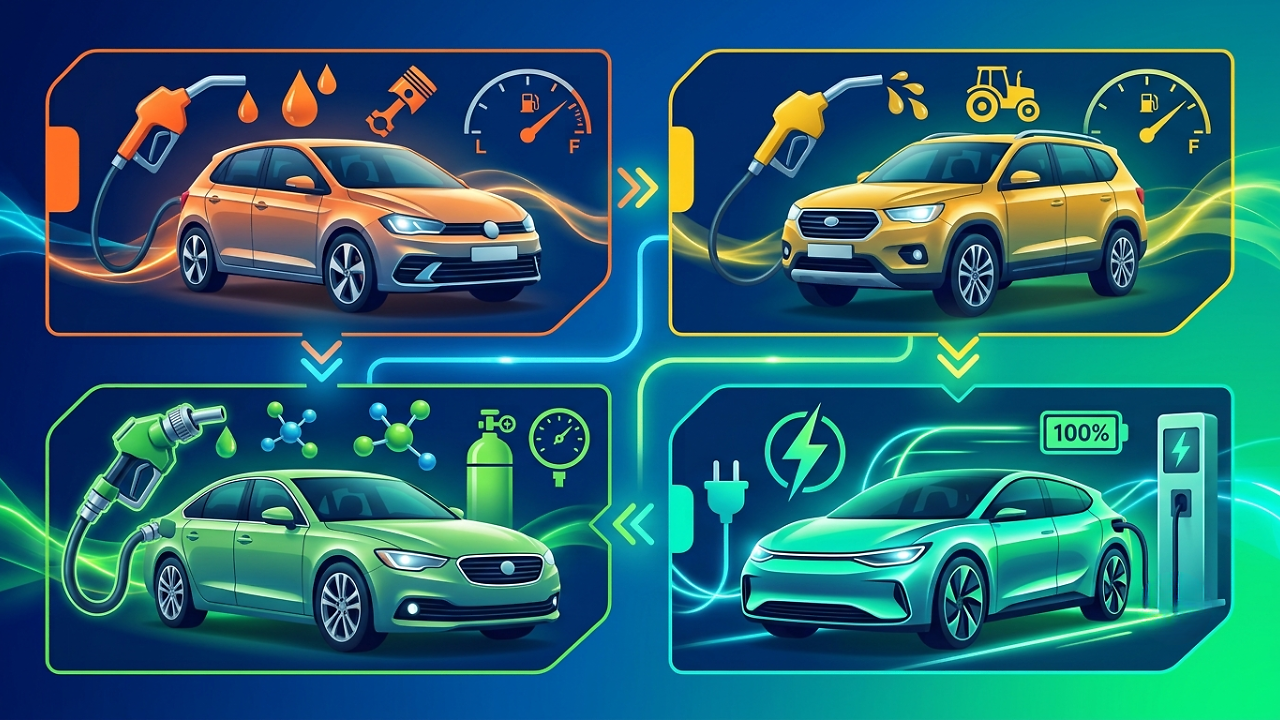
Looking to buy a new car but can’t decide between petrol, diesel, CNG and an EV? Petrol suits buyers who want flexibility and a lower entry price; CNG can reduce fuel spending for high-mileage users with convenient stations; diesel can suit frequent highway drivers, depending on the model and local rules; and an EV can have a low energy cost when home charging is available. There is no universal winner: compare daily distance, on-road price, route, charging access and ownership period.
Key Highlights
- Petrol: A flexible option for mixed city and highway use, with broad model choice and widely available refuelling.
- Diesel: Worth evaluating for high annual mileage and regular long trips, after accounting for its purchase premium, servicing and applicable local rules.
- CNG: Worth considering for regular city running when stations are convenient and the boot-space compromise is acceptable.
- Electric: Attractive for predictable daily travel when home or workplace charging is available and the vehicle's usable range fits the routine.
- Hybrid: A separate option for buyers who want to reduce petrol use without depending on external charging in a conventional strong hybrid.
How do petrol, diesel, CNG and electric cars compare on running cost?
For a transparent illustration, this comparison uses Delhi retail prices available on 26 October 2026: petrol Rs 102.12 per litre, diesel Rs 95.20 per litre and CNG Rs 86.98 per kg. These are location-specific prices, not national averages. The EV example uses Rs 6.50 per kWh as an illustrative electricity energy charge; a Delhi household's actual bill depends on its distribution company, consumption slab, surcharges, taxes and fixed charges.The following efficiency figures are assumptions for a simple calculation, not comparable test results: petrol 15 kmpl, diesel 18 kmpl, CNG 25 km/kg and an EV drawing 0.161 kWh from the wall per kilometre, including assumed charging losses.
| Powertrain | Efficiency used for illustration | Price assumption | Estimated energy cost per km | Important limitation |
| Petrol | 15 kmpl | Rs 102.12/litre | Rs 6.81 | Actual mileage depends on the car and route |
| Diesel | 18 kmpl | Rs 95.20/litre | Rs 5.29 | Not a same-model comparison with the petrol example |
| CNG | 25 km/kg | Rs 86.98/kg | Rs 3.48 | Real-world economy and local CNG price vary |
| Electric | 0.161 kWh/km from the wall | Rs 6.50/kWh | Rs 1.05 | Public charging can cost more; tariff slabs vary |
This table compares energy cost only, not total cost of ownership. It does not include purchase price, loan interest, insurance, scheduled servicing, tyres, battery warranty, charger installation, resale value or any cost of detours to refuel or charge. Do not use the table alone to declare one fuel type cheapest to own.
How do you calculate running cost per km?
Use the price you actually pay and a realistic efficiency figure for your regular route.- Petrol: petrol price per litre ÷ real-world km per litre.
- Diesel: diesel price per litre ÷ real-world km per litre.
- CNG: CNG price per kg ÷ real-world km per kg.
- Electric: electricity price per kWh × wall-side kWh consumed per kilometre.
For example, at Rs 102.12 per litre and 15 kmpl, the petrol energy cost is Rs 6.81/km. At Rs 86.98 per kg and 25 km/kg, CNG costs Rs 3.48/km. At Rs 6.50/kWh and 0.161 kWh/km, the EV example costs about Rs 1.05/km. Replace each assumption with figures for your car and local prices.
For EVs, wall-side consumption is preferable because charging losses mean the energy billed can be higher than the energy discharged from the battery. If you rely on public charging, use those tariffs instead of a home electricity rate.
At what distance does a costlier fuel type pay off?
A lower running cost does not automatically mean lower ownership cost. The purchase premium must be recovered through savings, and the result depends on how much you drive and how long you keep the car.Break-even formula:
Purchase-price premium ÷ saving per kilometre = kilometres needed to recover the premium.
A real-world illustration is available within the Maruti Suzuki Swift range. The manufacturer's current Delhi price listing shows the Swift VXi petrol at Rs 6,67,900 and Swift VXi CNG at Rs 7,57,400 (ex-showroom). The CNG variant therefore carries an indicative ex-showroom premium of Rs 89,500. Maruti Suzuki lists claimed efficiency of 24.80 kmpl for the petrol manual and 32.85 km/kg for the CNG variant. At the Delhi prices used above, the calculation gives about Rs 4.12/km for petrol and Rs 2.65/km for CNG, a difference of roughly Rs 1.47/km. The simple break-even distance is therefore around 61,000 km.
This is a calculation from claimed efficiency, not a real-world guarantee. It excludes on-road price differences, finance, maintenance, any petrol use before or after CNG operation, and resale value. Actual break-even can be earlier or later. Check that the exact variants and prices are still available when buying.
How can you estimate your own break-even point?
- Get written on-road quotes for comparable variants in your city.
- Use realistic fuel economy from your normal route, not only the certified figure.
- Apply current local petrol, diesel, CNG or electricity prices.
- Calculate the per-kilometre saving.
- Divide the actual purchase-price premium by that saving.
- Add financing, maintenance, insurance, charger installation and resale considerations.
If the calculated saving per kilometre is zero or negative, the higher-priced option will not recover its premium through energy costs alone.
What are the trade-offs in boot space, refuelling and maintenance?
| Factor | Petrol | Diesel | CNG | Electric |
| Purchase price | Often a lower entry point within a model range | May cost more than petrol equivalent | Usually priced above a comparable petrol variant | Can carry an upfront premium; model and incentives matter |
| Refuelling or charging | Widely available and quick | Widely available and quick | Convenient only if stations fit the route | Most convenient with home/work charging; public charging requires planning |
| City use | Flexible for mixed short and long trips | Suitability depends on engine and usage pattern | Can suit high daily running | Suits predictable daily travel if charging is accessible |
| Highway use | Easy to refuel on most routes | Can suit high annual highway distance | Check station availability on the route | Plan around usable range, charger locations and charging time |
| Luggage space | Usually no alternative-fuel hardware compromise | Usually no alternative-fuel hardware compromise | Cylinder packaging can reduce usable boot space | Depends on vehicle packaging |
| Maintenance | Conventional engine servicing | Engine and emissions systems may add cost | Engine plus CNG-system checks | Fewer routine powertrain service items, but tyres and other parts still need maintenance |
| Main question | What will my real fuel cost be? | Does my annual distance justify the premium? | Are stations convenient and is the boot enough? | Can I charge reliably at a price that makes sense? |
Which fuel type is suitable for city driving?
Petrol is a flexible choice for mixed city use when the initial budget matters. CNG can lower the cost of frequent commuting if stations are nearby and the boot-space trade-off works for the household. An EV can be convenient for daily city travel when overnight charging is possible and its usable range comfortably covers the routine trip.
Diesel can work in the city, but consider the model's intended use, annual distance, emissions-system requirements and rules applicable where it will be driven. Frequent short trips may not suit every modern diesel powertrain equally well.
Is diesel still worth buying in India?
Diesel may make sense for some drivers with high annual mileage, regular highway journeys or a specific vehicle requirement. However, a lower fuel cost per kilometre does not guarantee lower total ownership cost.Compare the diesel variant's price premium with the petrol version, then account for servicing, emissions-system maintenance, resale prospects and any current local restrictions. Rules can vary by location, vehicle category and date, so check the regulations that apply to the vehicle you plan to buy and where you will use it.
Can an electric car be used for highway trips?
Yes, if its real-world range, charging speed and the charging network suit the route. Check charger locations and operating status before departure, allow for charging time, and keep a backup stop in the plan. Highway speed, temperature, load, air-conditioning and road conditions can reduce range compared with a certified figure.Home charging can make running costs lower than relying on public fast chargers. If home charging is not possible, map the chargers near home, work and regular destinations before buying. Also check whether your parking arrangement and housing society permit charger installation.
How does CNG affect boot space and practicality?
CNG can suit high-mileage drivers, but a cylinder and its associated hardware can reduce usable luggage space in many cars. The impact depends on the model and factory-fitted layout. Inspect the boot with the luggage you normally carry and check rear-seat folding if that matters to you.Prefer a factory-fitted system over an unapproved conversion. Confirm warranty and insurance coverage, follow the manufacturer's service schedule and consider the distance to a CNG station. Low fuel cost is less useful if refuelling regularly adds a detour or long queue.
Does fuel type affect resale value?
It can influence buyer demand, but resale also depends on model, age, condition, local demand, fuel prices, regulations, service history and warranty. EV buyers may ask about battery health and remaining warranty; CNG buyers may check system history and required inspections; diesel buyers may consider local restrictions.Do not assume lower running costs guarantee stronger resale value. Check current listings and actual transactions for the specific model, variant and city.
Where do hybrids fit in this comparison?
A conventional strong hybrid combines a petrol engine with electric assistance and does not normally need external charging. It can reduce petrol consumption in stop-start traffic, but it still uses petrol and may cost more than a conventional variant. A plug-in hybrid is different: its economics depend on charging frequency and electric-only use.A hybrid can suit buyers who want lower fuel use but cannot reliably charge an EV at home. Compare the exact model's price premium, real-world efficiency, warranty and boot space rather than assuming all hybrids deliver the same savings.
Which fuel type should you choose?
| Driving pattern | First option to consider | What could change the decision |
| Low or moderate annual distance, mixed routes | Petrol | A substantial increase in annual kilometres or a strong alternative-fuel saving |
| High daily city distance and convenient CNG access | CNG | Boot-space needs, station queues or a small cost advantage after purchase premium |
distanceCompare diesel and petrol variants Purchase premium, maintenance, regulations and model choice Daily commute with reliable home charging Electric Public-charging dependence, regular long trips or high charging tariffs Wants lower petrol use without external charging Strong hybrid Upfront premium and real-world efficiency on the driver's route
Frequently Asked Questions (FAQs)
How many kilometres per day make a CNG car worthwhile?
There is no universal threshold. Compare the CNG variant's actual price premium with its expected saving per kilometre. The result changes with fuel prices, real-world economy, annual distance, financing and how long you keep the car.Is diesel still worth buying in India?
It can be for some high-mileage or highway-focused drivers, depending on the model and local regulations. Compare the purchase premium, servicing, resale and usage pattern before deciding.
Can an electric car be used for highway trips?
Yes. Check real-world range, charging speed, charger availability and backup stops for the specific route. Speed, temperature, load and air-conditioning can reduce range.Does fuel type affect resale value?
Yes, it can influence demand, but model, condition, location, age, service history, regulations and battery or CNG-system condition also matter. Check current values for the exact variant.
Where do hybrids fit in this comparison?
Conventional strong hybrids can reduce petrol use without requiring external charging. They may suit drivers who lack reliable EV charging access, but the purchase premium and actual fuel savings need to be compared.Log in to post a comment.
End of Article
Trending

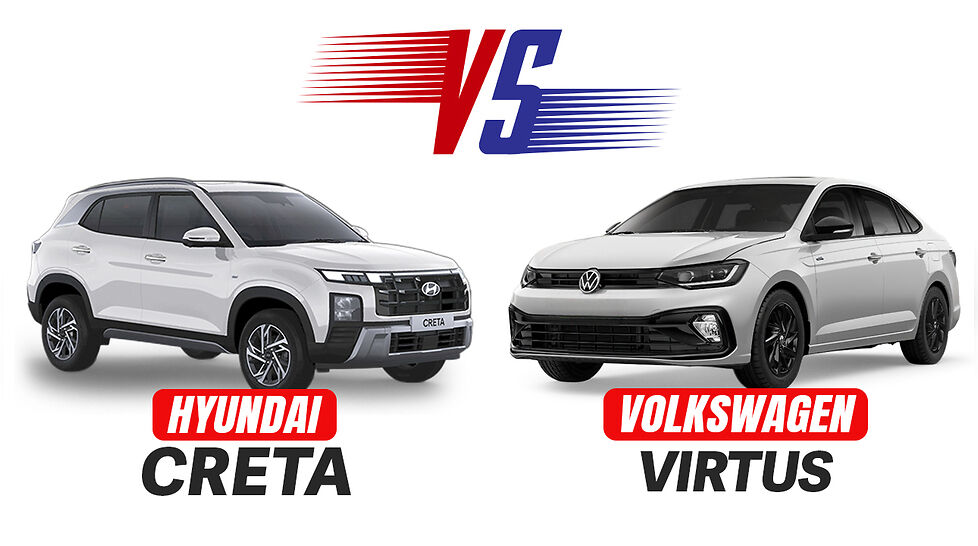
Hyundai Creta vs Volkswagen Virtus Spec Comparison: What's Different?

Which Are the Most Affordable Cruiser Bikes in India

Renault Duster Hybrid vs Toyota Urban Cruiser Hyryder Hybrid Spec Comparison: What's Different?

Best Cars Under Rs 8 Lakh in India in 2026: Price, Mileage, Safety and Features

Kia Seltos vs Mahindra Scorpio-N Spec Comparison: What's Different?

Hero Splendor Plus vs Honda Shine 100 Spec Comparison: What’s Different?

Which Are the Most Affordable 400cc+ Bikes in India
Popular


STAY UPDATED Get the latest news from Times Drive