New Delhi


What Is E20 Petrol? Here’s What You Should Know About this Ethanol-blended Fuel
The Ministry of Petroleum and Natural Gas addressed concerns over E20 petrol, which consists of 20% ethanol and 80% petrol, emphasizing its safety. Ethanol, a biofuel sourced from crops like sugarcane, helps reduce carbon emissions and supports rural economies. India's ethanol blending program aims to lessen dependence on fossil fuels and crude oil imports, potentially saving significant foreign exchange. However, E20 may cause minor fuel economy declines and material corrosion issues in older vehicles, necessitating component replacements after extensive use.

Saptak Bardhan
Updated Aug 5, 2025, 03:55 PM IST
What Is E20 Petrol? Here’s What You Should Know About this Ethanol-blended Fuel
The Ministry of Petroleum and Natural Gas on Monday addressed the concerns raised by media reports regarding Ethanol-blended petrol fuel i.e. E20. With media reports stating that E20 might eventually become a pain point for customers, the Ministry of Petroleum and Natural Gas on X (formerly Twitter) stated that the Ethanol-blended fuel is safe to use with media reports lacking foundation.

People Also Search
What initiatives is the Indian government implementing to achieve the 20% ethanol blending target by 2025-26?
How has ethanol blending in petrol impacted foreign exchange savings for India?
What are the benefits of using flex-fuel vehicles in India?
What role does the agricultural sector play in India's biofuel production plans?
How does the Indian government plan to tackle pollution caused by the transport sector?
Let’s see what E20 Petrol actually is and what are the things you should know about this blended fuel:
What is E20 Petrol?
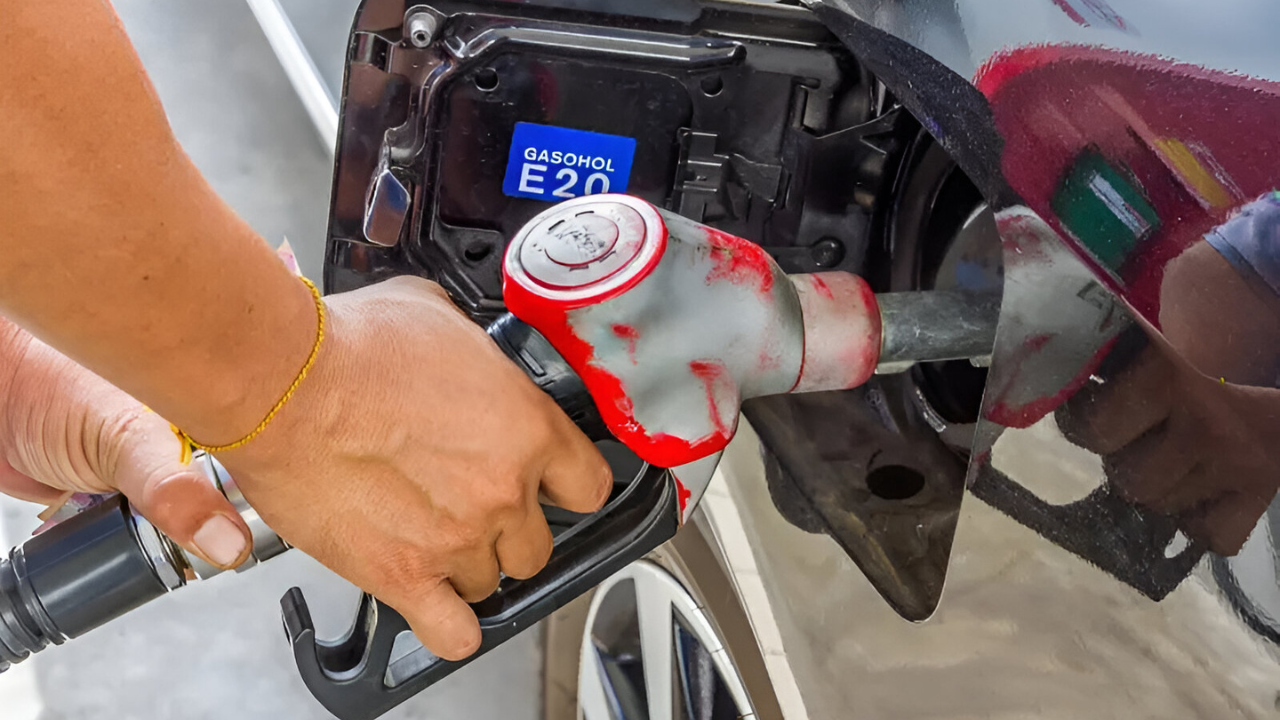
E20 Petrol is a blend of 20% ethanol and 80% petrol. Ethanol is a biofuel derived from sugarcane, corn or maize using the process of fermentation.
How is Ethanol extracted in India?
India is turning crop stubble from sugarcane, corn and maize, among other crops into biofuel. In addition to that, the government has further instructed damaged foodgrains and agricultural residue to be used to make biofuel especially Ethanol. Nitin Gadkari, Minister of Road and Transport Highways had earlier stated that 400 such projects are focused on turning crop waste or stubble into ethanol.Things you should know about E20 Petrol
Ethanol is being considered as a replacement for petrol which is a fossil fuel and can reduce carbon emissions by the Indian government with an aim of introducing E100 vehicles capable of running on 100% ethanol. In addition to that, India’s ethanol blending program is through feedstock diversification, under the push for second-generation (2G) biofuels. A study on life cycle emissions of Ethanol done by Niti Aayog has assessed that Greenhouse Gas (GHG) emissions in the case of sugarcane and maize based ethanol use are less by 65% and 50%, respectively, than that of petrol.Another advantage of using E20 petrol is that Ethanol has a higher-octane number than petrol (~108.5 vs 84.4) which translates to ethanol-petrol blends can be used as a high-octane fuel for modern engines. This further improves performance and ride quality, especially in vehicles designed for E20 fuel. Additionally, ethanol's high heat of vaporization lowers the intake manifold temperature, increasing air-fuel mixture density and improving the engine's efficiency.
Moreover, utilising Ethanol-blended fuel in India has already saved more than Rs. 1.40 lakh crore in foreign exchange through petrol substitution. Ethanol blending supports the rural economy, with expeditious payment of over Rs. 1.20 lakh crore to farmers, thereby creating income and employment opportunities in the agricultural and biofuel sectors. E20 blending strengthens India’s energy security by reducing dependence on crude oil imports which resulted in an expenditure of a whopping $137 billion in FY24.
However, there are minor disadvantages to using the E20 petrol blend including a minor fuel economy decline and material corrosion, among others. Since Ethanol is lower in energy density than petrol, it results in a marginal decrease in mileage estimated at one to two percent for four-wheelers that are designed for E10 and decreases further to three to six percent for vehicles not designed for Ethanol-blended fuel.
Older vehicles might be required to replace some rubber parts and gaskets after prolonged use of 20,000 to 30,000 km, owing to material corrosion which can be a pain point for vehicle owners.
Log in to post a comment.
End of Article
Trending

EV Diwali 2026: 5 Most Affordable Electric Cars You Can Buy in India

5 Most Affordable Hybrid Cars You Can Buy in India This Diwali

5 Most Affordable Cars with Sunroofs to Buy This Diwali

Which Are the Best Bikes Under Rs 1 Lakh
Which Are the Most Affordable Superbikes in India

New Car Delivery Checklist: How to Do a Pre-Delivery Inspection (PDI) Step by Step
Car Dashboard Warning Lights: What Each Symbol Means and What to Do
Popular





STAY UPDATED Get the latest news from Times Drive