New Delhi


Brake The Habit - Give Your Horn A Break, Don't Honk Near Hospitals & Schools
The article discusses the negative impacts of honking in traffic, highlighting its harmful effects on patients in hospitals and students in schools. Honking contributes to noise pollution, increases stress, and disrupts focus, ultimately reflecting impatience among drivers. It emphasizes the need for empathy and encourages drivers to reconsider their use of horns, advocating for a more peaceful shared road environment. The “Brake The Habit” initiative aims to raise awareness about the importance of reducing unnecessary noise for the well-being of others.

Times Drive Desk
Updated Oct 27, 2025, 09:11 AM IST
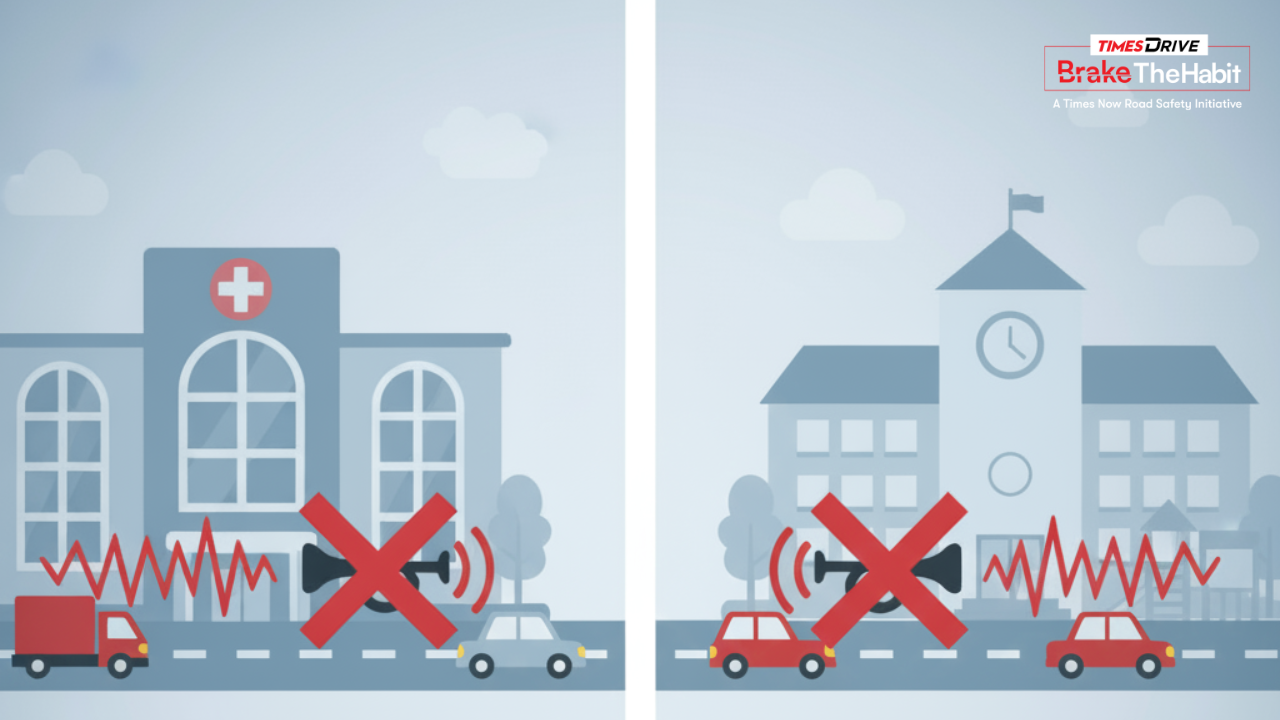
Brake The Habit - Give Your Horn A Break, Don't Honk Near Hospitals & Schools
In the rush of everyday traffic, honking has almost become second nature to many drivers. A red light turns green, someone hesitates for a second and the horn blares. But as part of the “Brake The Habit” initiative, it’s time we pause and think: what does this noise actually cost us?

People Also Search
What are some common distractions that lead to unsafe driving habits?
How does the misuse of hazard lights during adverse weather conditions affect road safety?
What are the dangers associated with wrong-side driving?
Why is it important to use turn signals consistently while driving?
What are some effective strategies to reduce road rage while driving?
Honking isn’t just an irritation; it’s an invisible form of harm. Near hospitals, that sharp sound can be distressing for patients recovering from surgery, newborns trying to rest or elderly people battling anxiety and high blood pressure. For someone lying on a hospital bed, every sudden honk outside can feel like a jolt - disturbing sleep, increasing stress and slowing down recovery.
The story isn’t much different near schools. Constant honking disrupts the learning environment - young minds struggle to focus, teachers raise their voices to be heard and the entire atmosphere of calm concentration is lost. Imagine a student preparing for an important exam, only to be distracted every few minutes by an impatient driver’s horn. It may seem small, but these repeated interruptions chip away at focus, creativity and peace of mind.
Beyond the walls of hospitals and classrooms, unnecessary honking reflects impatience and a disregard for others’ well-being. It contributes to noise pollution, triggers stress among pedestrians and can even startle other drivers, leading to accidents. Ironically, honking rarely helps anyone reach their destination faster - it only adds to chaos.
Road safety is not just about following signals or wearing helmets. It’s about empathy - understanding that the road is shared space. Every honk should have a purpose, not be an outlet for frustration. So the next time you’re tempted to press that horn, ask yourself - is a few seconds’ delay worth disturbing someone’s recovery or a child’s concentration? Let’s “Brake The Habit.” Silence can save more than just your peace of mind - it can save lives.
Also Read

Log in to post a comment.
End of Article
Trending

Flying Car: Tesla Reveals New Roadster with Mind-Bending SpaceX Technology

BMW F 450 RR Revealed: Gets 48hp Engine, Sporty Design and Advanced Safety Features

Maruti Suzuki Brezza Facelift Crosses 1 Lakh Bookings in India

BS7 Emission Norms Proposed for April 2029: What Can Change for Cars in India?

Maruti Suzuki Brezza Crosses 15 Lakh Sales Milestone in India

BSA Gold Star 650 Gets Two New British Heritage-Inspired Colour Options in India

Ferrari Luce EV to Debut in India on October 17 with 1,050PS Power and 530 km Range
Popular





STAY UPDATED Get the latest news from Times Drive