New Delhi


Brake The Habit: Headlights Are for Visibility, Not Vanity, Stop Using High Beam Everywhere
Driving at night in India poses significant challenges primarily due to the misuse of high beam lights, which can temporarily blind drivers. This temporary blindness can result in missing critical obstacles such as pedestrians or stalled vehicles, especially at speeds like 60 km/h. The situation worsens with aftermarket lighting, which often exceeds brightness limits and creates dangerous glare. Adopting basic safety practices—such as using low beams when necessary and maintaining headlamps—can greatly improve safety for all road users and enhance visibility.

Times Drive Desk
Updated Nov 20, 2025, 04:11 PM IST
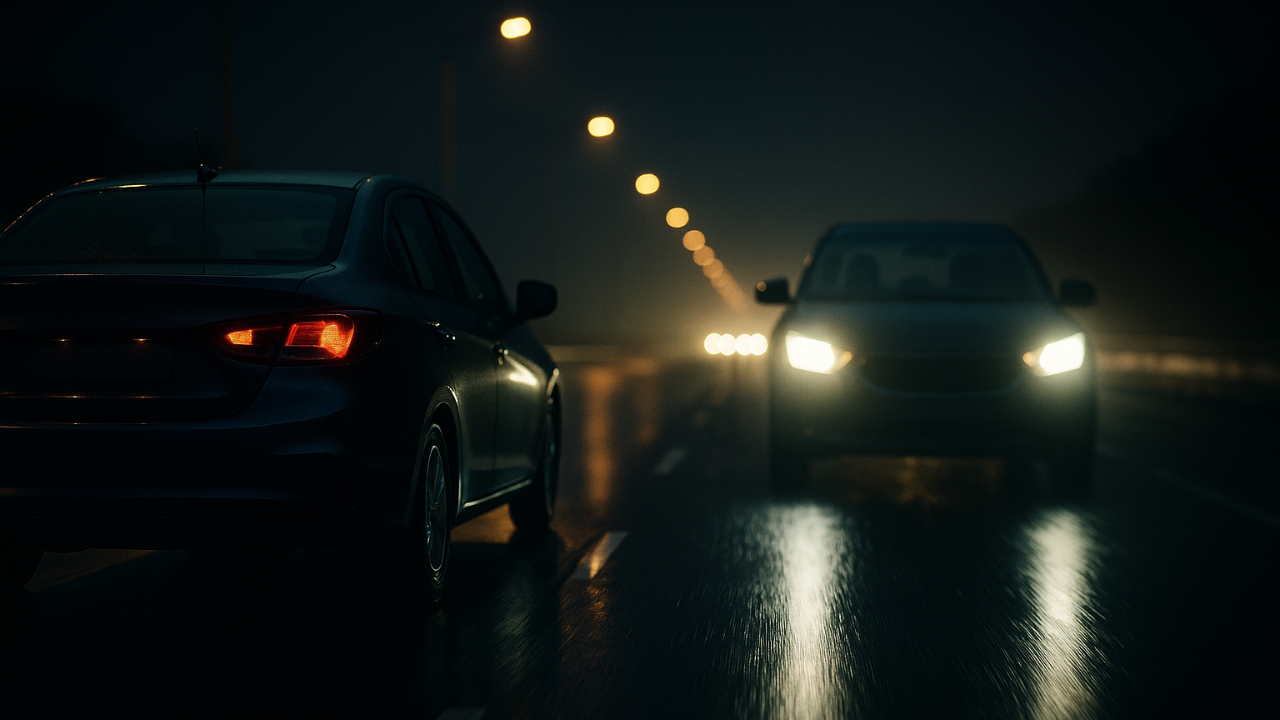
Brake The Habit: High Beam Isn’t a Flex, It is a Threat
Photo : TIMES DRIVE
Night driving in India tests patience more than anything else, sometimes not because of the roads, but because of what’s coming at you from the opposite lane. The habit of using high beam lights in your vehicle has always quietly become one of the biggest safety risks on our highways and city streets. And the numbers behind it tell their own story.
A driver temporarily blinded by glare loses vision for a few seconds. At 60 kmph, that’s roughly 50 metres of driving without a clear view of the road. In real-world terms, that distance is enough to miss a pedestrian crossing, an animal stepping onto the road, or a stalled vehicle sitting just ahead. Yet high beam continues to be treated like a setting that must always stay on irrespective of traffic, surroundings, or conditions.
High beam has a defined purpose: it’s meant for better reach on empty stretches where visibility is low and there’s no oncoming traffic. But its misuse is most visible on crowded roads, two-lane highways, narrow village routes, and inside city limits, places where the glare causes the most harm. Two-wheeler riders are the first to suffer. Their eyes take longer to recover from sudden brightness, and unlike cars, they don’t have the luxury of a reinforced cabin or multiple safety systems. A split second of blindness leaves very little room to react.
The problem is amplified by another trend, i.e. aftermarket LED and HID installations. Many of these exceed legal brightness limits and often lack proper beam cutoff. Instead of projecting a focused light, they scatter brightness in all directions. The result is a glare field that affects not just oncoming traffic, but also pedestrians and even the driver using them. Factory-fitted headlamps, on the other hand, are aligned and calibrated for controlled illumination. Tampering with this setup rarely maintains that balance.
The fixes are straightforward. Switch to low beam setting, the moment you see an oncoming vehicle. Use the beam adjuster in city limits. Avoid illegal lighting upgrades, no matter how tempting the brightness looks in showrooms or online videos. Also don’t forget the basics like cleaning headlamps regularly helps maintain proper light output without needing to overcompensate.
It can be said that good lighting etiquettes aren’t about compromising on visibility but are about ensuring that everyone gets enough of it. Seeing clearly is important, but so is letting others see too. This simple shift in behaviour can make night driving safer for all of us.
Log in to post a comment.
End of Article
Trending

BMW F 450 RR Revealed: Gets 48hp Engine, Sporty Design and Advanced Safety Features

Maruti Suzuki Brezza Facelift Crosses 1 Lakh Bookings in India
BS7 Emission Norms Proposed for April 2029: What Can Change for Cars in India?

Maruti Suzuki Brezza Crosses 15 Lakh Sales Milestone in India

BSA Gold Star 650 Gets Two New British Heritage-Inspired Colour Options in India
Ferrari Luce EV to Debut in India on October 17 with 1,050PS Power and 530 km Range

Mahindra XUV 3XO CNG Launched in India: Top 5 Highlights
Popular





STAY UPDATED Get the latest news from Times Drive