New Delhi


End-of-Life Vehicle Disposal Rules 2025: New Scrapping Guidelines Announced
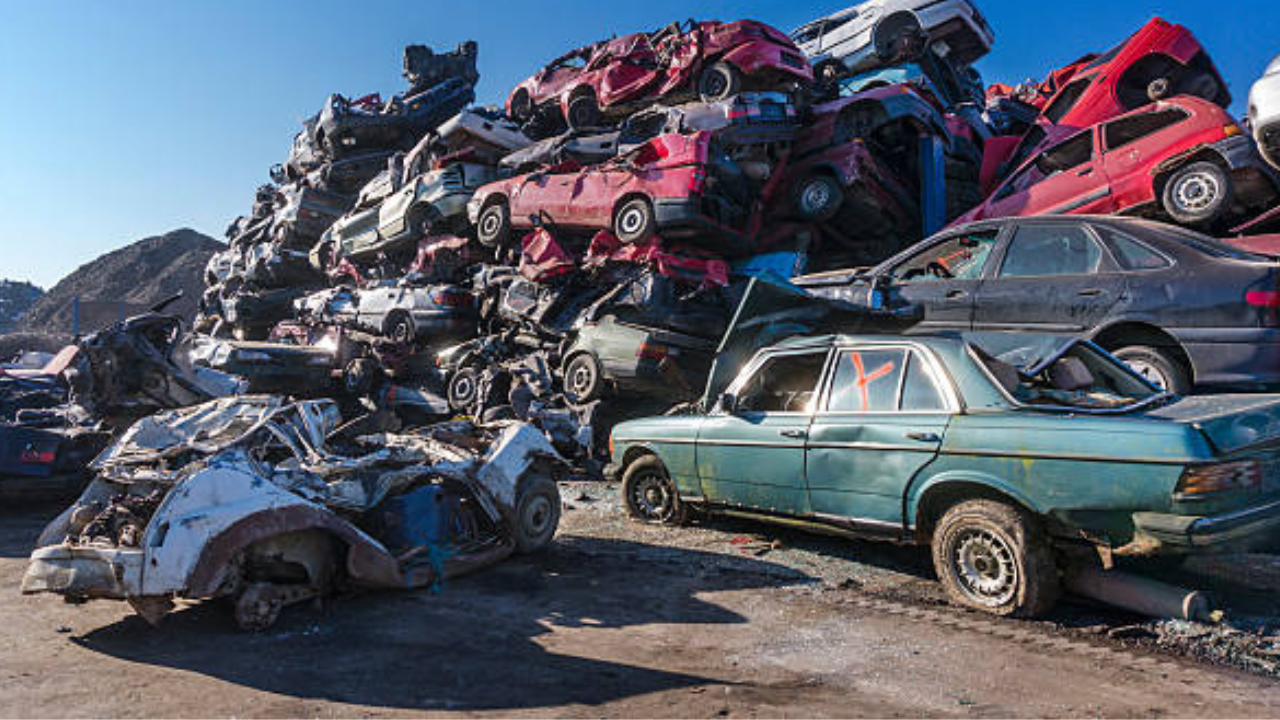
The Ministry of Environment, Forest and Climate Change (MoEF&CC) has introduced the End-of-Life Vehicles (ELV) Rules, 2025, to regulate the disposal of old vehicles. The rules, based on the extended producer responsibility (EPR) principle, mandate vehicle manufacturers to meet annual scrappage targets for transport vehicles over 15 years old and non-transport vehicles over 20 years old. Compliance will be monitored by the Central and State Pollution Control Boards, with penalties for violations.

Keshav Rajput
Updated Feb 4, 2025, 05:15 PM IST
End-of-Life Vehicle Disposal Rules 2025: New Scrapping Guidelines Announced
The Ministry of Environment, Forest and Climate Change (MoEF&CC) has introduced the End-of-Life Vehicles (ELV) Rules, 2025, to regulate the disposal of old vehicles.
The rules are based on the principle of extended producer responsibility (EPR) where producers of vehicles are given mandatory EPR targets for scrapping of end-of-life vehicles. The rules cover all types of transport and non-transport vehicles, except agricultural tractor, agricultural trailer, combine harvester and power tiller.
The new ELV Rules, effective from January 2025, require vehicle manufacturers to meet annual targets for scrapping old vehicles. Transport vehicles older than 15 years and non-transport vehicles older than 20 years will be subject to mandatory scrapping. Manufacturers must ensure proper disposal through designated collection centers or registered scrapping facilities.
Registered Vehicle Scrapping Facilities (RVSFs) and Collection Centers
RVSFs will handle unfit vehicles and process them for material recovery. These facilities must comply with environmental safety regulations by sending recyclable components to authorized recyclers and disposing of hazardous waste at designated facilities. Collection centers set up by manufacturers will direct vehicles to RVSFs for proper disposal.
Regulatory Oversight and Compliance Monitoring
The Central Pollution Control Board (CPCB) and State Pollution Control Boards (SPCBs) will oversee compliance with the ELV Rules. They will conduct periodic inspections, audits, and take action against violations. Non-compliance may result in suspension or cancellation of registrations, and violators may face environmental compensation penalties.
Vehicle Scrapping Policy and Related Regulation
The Ministry of Road Transport and Highways (MoRTH) has implemented a Vehicle Scrapping Policy to phase out old and unfit vehicles. As of January 2025, 84 RVSFs are operational. The Motor Vehicles (Registration and Functions of Vehicle Scrapping Facility) Rules, 2021, provide guidelines for the registration and functioning of these facilities.
Additionally, MoRTH has introduced incentives such as waiving registration fees for buyers who submit a Certificate of Deposit from an ELV. Motor vehicle tax concessions of up to 25% for non-transport vehicles and 15% for transport vehicles are also in place.
EV Adoption and Government Initiatives
MoRTH has issued multiple notifications like exemption to the Battery-Operated Transport Vehicles and Transport Vehicles running on Ethanol and Methanol fuels from the requirements of permit, to issue registration mark for the Battery-Operated Vehicles to be in Yellow colour on Green background for the transport vehicles and for all other cases, in White in colour on Green background and more.
Ministry of Heavy Industries launched ‘PM Electric Drive Revolution in Innovative Vehicle Enhancement (PM E-DRIVE) Scheme' on 29th September, 2024 for promotion of electric mobility in the country with and outlay of Rs 10,900 crore over a period of two years. The scheme provides subsidies or demand incentives worth Rs.3,679 crore to e-2Ws, e-3Ws, e-ambulances, e-trucks and other emerging EVs. It will support 24.79 lakh e-2Ws, 3.16 lakh e-3Ws, and 14,028 e-buses.
Recently, MoRTH has issued a draft notification proposing a 50% rebate on motor vehicle tax for new vehicle purchases made after scrapping older vehicles that comply with BS-II or earlier emission norms. Under the new proposal, the rebate will be doubled to 50% for both personal and commercial vehicles that are either BS-I-compliant or manufactured before BS emission norms were implemented.
Kartick Nagpal, President, Rosmerta Technologies, said, “The introduction of the End-of-Life Vehicles (ELV) Rules, 2025, marks a significant step towards creating a structured and environmentally responsible vehicle scrappage ecosystem in India. By incorporating the Extended Producer Responsibility (EPR) principle, the government is ensuring that vehicle manufacturers play a proactive role in sustainable disposal and recycling. As a leading player in the vehicle scrappage industry, Rosmerta Technologies fully supports this initiative and is committed to contributing towards its effective implementation. Our state-of-the-art Registered Vehicle Scrapping Facility (RVSF) aligns with these new guidelines, providing an eco-friendly solution for vehicle owners looking to responsibly dispose of their old vehicles. We believe that these regulations will accelerate the adoption of organized scrappage infrastructure, enhance road safety, and contribute to India’s vision of sustainable mobility.”
Log in to post a comment.
End of Article
Trending

KTM 450 RC Unveiled at EICMA 2026: Gets 56bhp Parallel-Twin Engine, India Launch Ruled Out

VinFast VF MPV 7 EV Gets a Price Cut of Over 4 Lakh: Check New Price

Volkswagen Virtus Facelift Teased Ahead of India Launch: Here's What to Expect

TVS Unveils Four New Models at EICMA 2026, Including Three Electric Scooters

Mercedes-Benz GLC EV Launched in India at Rs 78.50 Lakh: Gets 94kWh Battery, 490bhp Power

Honda Alpha EV Set to Launch in India on December 2: Expected Design, Features and Range

Hero Vida UBX 06 Electric Motorcycle Debuts at EICMA 2026: Features, Range and More
Popular


STAY UPDATED Get the latest news from Times Drive