New Delhi


IEC 2025: Rising tariffs and rapid tech change test India’s auto component exports, says Vinnie Mehta
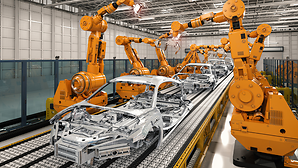
India is benefiting from the global supply chain realignment, influenced by geopolitical changes and the “China plus one” strategy, according to Vinny Mehta of ACMA. However, rising trade barriers and rapid tech advancements pose challenges for the automotive components sector. The Covid-19 pandemic revealed vulnerabilities in supply chains, prompting reassessment of dependency on single geographies. Despite strong export figures, new tariffs threaten competitiveness.

Keshav Rajput
Updated Dec 17, 2025, 07:40 PM IST

Vinnie Mehta, Director General, ACMA
India is emerging as a key beneficiary of the ongoing restructuring of global supply chains, driven by geopolitical shifts and the accelerating “China plus one” strategy, but rising trade barriers and rapid technological change are creating fresh challenges for the automotive components industry, Vinny Mehta, director general, Automotive Component Manufacturers Association of India (ACMA) said at India Economic Conclave 2025.

People Also Search
What is the target export value for India's auto component industry by 2030, and what strategies are suggested to achieve this goal?
How did the recent Free Trade Agreement (FTA) between India and the UK impact the auto industry?
What role do global capability centers (GCCs) play in India's automotive sector?
What are the key expectations from the automotive industry for the upcoming Union Budget 2025?
What impact did the recent US tariffs on auto components have on Indian exporters?
Speaking at the IEC2025, Mehta said the Covid-19 pandemic was a defining moment for global manufacturing, exposing deep vulnerabilities in supply chains that were never stress-tested at such scale. He noted that even low-cost components such as semiconductors had the potential to halt entire production lines, forcing manufacturers to reassess their dependence on single geographies and rethink risk management strategies.
“The biggest learning was not to take anything for granted in the supply chain,” Mehta said, adding that companies now need to thoroughly analyse vulnerabilities and identify what can be produced domestically or sourced from trusted partner countries.
While India has benefited from global manufacturers diversifying away from China, Mehta cautioned that the world is becoming increasingly protectionist. He highlighted the impact of rising tariffs on Indian auto component exports, particularly to the US and Europe, which together account for a significant share of the industry’s overseas shipments. In FY24, India exported $23 billion worth of auto components out of a total industry turnover of $80 billion, with the US alone accounting for $6.6 billion. New tariffs, he said, have made several Indian components uncompetitive in key markets.
Against this backdrop, Mehta underlined the importance of free trade agreements, while stressing that India must strengthen its bargaining position by building scale, technology capability and domestic resilience.
Investment in R&D
On technology, Mehta said the future competitiveness of the auto component industry will be defined less by cost advantages and more by technological capability, as vehicles rapidly transition towards software-defined architectures. He noted that vehicle development cycles have shrunk from around five years to nearly 12 months, placing immense pressure on the supply chain to deliver technologically advanced and cost-competitive products at much faster speeds.
However, Mehta flagged low investment in research and development as a structural concern. The Indian auto component industry spends about 0.7 percent of its turnover on R&D, broadly in line with India’s overall R&D spending as a share of GDP, but significantly lower than global peers. He attributed this partly to the high cost of capital in India, which makes companies more risk-averse, especially when developing new products.
GCC and global standard quality products
He also pointed to the growing role of global capability centres (GCCs) in India, noting that over 60 GCCs are dedicated to the automotive sector, many focused on auto components. While these centres are creating world-class engineering capabilities, Mehta said much of the intellectual property remains overseas, and urged Indian component makers to build their own large-scale engineering and R&D centres.
On quality, Mehta said Indian tier-one component manufacturers are largely at par with global standards, but added that greater attention is needed to upgrade tier-two suppliers, as consistency and reliability are critical for global competitiveness. He warned that recalls and quality failures can have severe financial and reputational consequences, particularly in safety-critical components.
EV adoption across segments
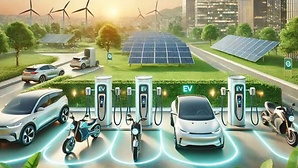
Turning to electric vehicles, Mehta said India’s EV transition is progressing unevenly across segments. While electric buses and three-wheelers have gained momentum and two-wheelers are nearing a tipping point, passenger vehicle penetration remains low but is expected to rise as product offerings improve and more mass-market players enter the segment. Falling battery costs and the emergence of new chemistries, he said, will further support adoption, although challenges remain around charging infrastructure, financing and domestic cell manufacturing.
With low vehicle penetration levels and significant headroom for growth, he said India is well positioned to scale up production, attract investment and play a larger role in global automotive supply chains over the coming decade.
Also Read

Log in to post a comment.
End of Article
Trending
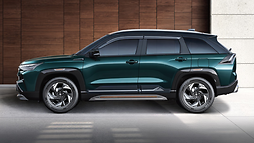
Maruti Suzuki Victoris Aurum Edition Launched in India: What's New?

Denza India Debut on November 13: D9 MPV and Z9 GT Expected
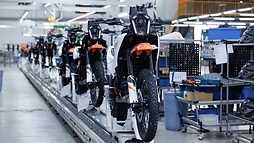
KTM Opens New Motorcycle Plant in Brazil, to Produce 10 KTM and Husqvarna Models

MoRTH Proposes New Driving Licence Rules: Colour Coding, 75% Test Score and More
Ultraviolette to Launch 4 New Electric Two-Wheelers in Next 12 Months

Updated Bajaj Pulsar NS200 Launched in India at Rs 1.60 Lakh: What’s New?
2027 Yamaha MT-125 Unveiled with New Design to Match Its Bigger Siblings
Popular

STAY UPDATED Get the latest news from Times Drive