New Delhi


IEC 2025: Maruti Suzuki bets on localisation, customisation to drive India’s EV transition, Says Partho Banerjee
At the India Economic Conclave 2025, Maruti Suzuki's Partho Banerjee emphasized the importance of tailoring electric vehicles (EVs) to Indian needs, addressing consumer concerns like range, infrastructure, and resale value. The company is focusing on localization and customer-specific customization rather than hastily entering the market. Despite the availability of numerous EV models, only 4% of passenger vehicle sales are electric, indicating a need for further adoption.

Keshav Rajput
Updated Dec 18, 2025, 04:55 PM IST
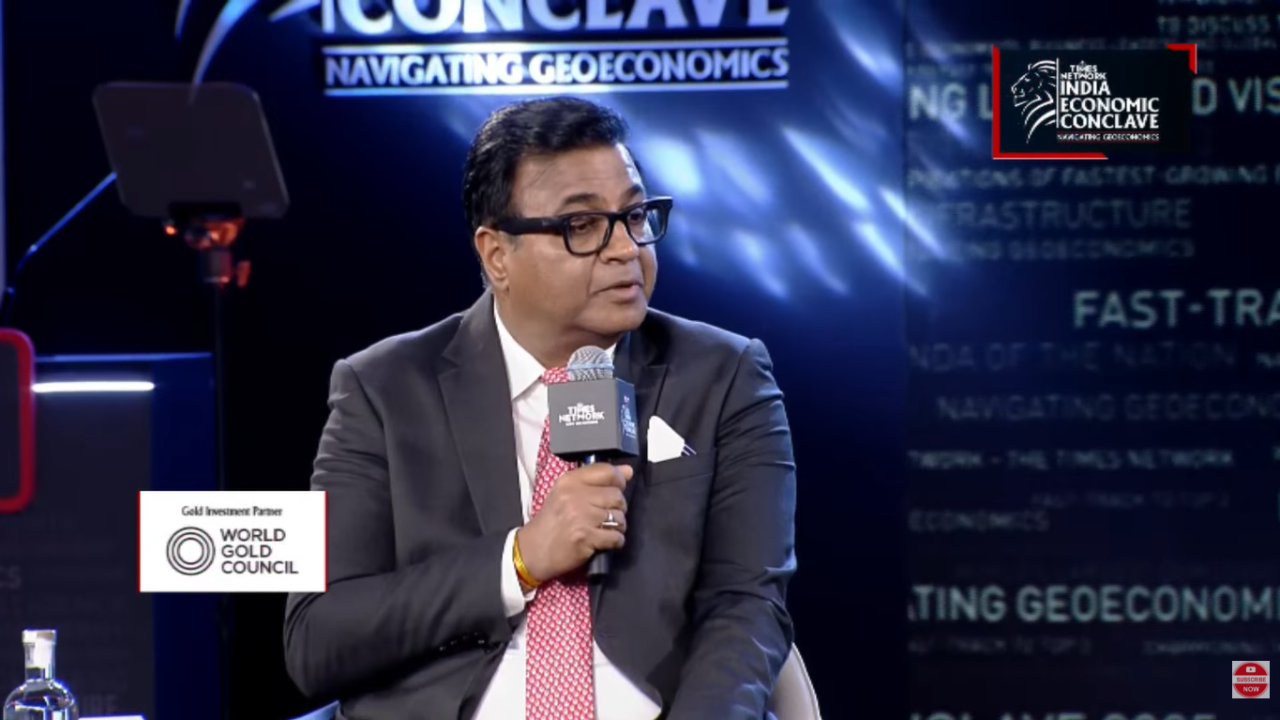
Partho Banerjee, Senior Executive Officer, Marketing & Sales, Maruti Suzuki India
At the India Economic Conclave 2025, Partho Banerjee, Senior Executive Officer, Marketing and Sales, Maruti Suzuki India, said the country’s largest carmaker believes EV adoption will scale only when products are designed specifically for Indian conditions and address core consumer concerns such as range, charging infrastructure, after-sales support and resale value.

People Also Search
What are the key features of Maruti Suzuki's first high-range electric vehicle launching in 2025?
How does Maruti Suzuki plan to enhance its EV charging infrastructure by 2030?
What role does the Indian government play in supporting EV production through the 2025 Union Budget?
What are the expected production milestones for Maruti Suzuki in the coming years?
What future plans does Maruti Suzuki have regarding small electric vehicles?
Maruti Suzuki India is anchoring its electric vehicle (EV) strategy around deep localisation and customer-centric customisation rather than rushing products to market, outlining automakers roadmap for mass adoption of electric mobility in India.
“Being a market leader, we cannot afford to offer only a partial solution. We need to play across all technologies: EVs, hybrids, CNG and ICE across all segments,” Banerjee said. He noted that despite more than a dozen EV models being available, electric cars account for just about 4 percent of total passenger vehicle sales, highlighting the gap between early adoption and mass acceptance.
Banerjee said Maruti Suzuki has deliberately prioritised learning from early market experiences before launching its own EVs in India. Customer research, he said, shows four key barriers to EV adoption: uncertainty around real-world driving range, limited charging infrastructure beyond cities, concerns over service readiness, and unclear resale values linked to battery life.
Focusing on Make in India
To address these issues, Maruti Suzuki is investing heavily in localisation and ecosystem development. The company has EV-enabled around 1,500 workshops across 1,100 cities and brought multiple charge point operators under a single digital platform, enabling seamless charger discovery, booking and payment. Over 70 percent of fast chargers in the country are now integrated into this network, Banerjee said.
Local manufacturing is central to this strategy. Maruti Suzuki’s first electric SUV, the e Vitara, is being produced in Gujarat and exported to global markets including the UK and Japan, reinforcing India’s role as a manufacturing hub for world-class EVs. “A vehicle made in India and running on UK roads is testimony to how far localisation and quality standards have progressed,” Banerjee said.
Alongside localisation, the company is focusing on customisation and personalisation, but in a segment-specific manner. While premium and mid-SUV segments allow for higher levels of personalisation, Banerjee said affordability and accessibility remain critical for expanding car ownership in a market where penetration is still just 34 cars per 1,000 people.
“Each segment has a role to play: hatchbacks, sedans, SUVs and MPVs. One size does not fit all,” he said, adding that enabling first-time buyers to transition from two-wheelers to four-wheelers is essential for long-term industry growth.
Maruti Suzuki plans to offer customers a choice of powertrains and formats rather than pushing a single technology.
The company is expected to begin test drives and bookings for its electric offerings in the domestic market in the coming months, marking the next phase of its calibrated entry into India’s EV space.
Log in to post a comment.
End of Article
Trending

Maruti Suzuki Brezza Facelift Crosses 1 Lakh Bookings in India
BS7 Emission Norms Proposed for April 2029: What Can Change for Cars in India?

Maruti Suzuki Brezza Crosses 15 Lakh Sales Milestone in India

BSA Gold Star 650 Gets Two New British Heritage-Inspired Colour Options in India
Ferrari Luce EV to Debut in India on October 17 with 1,050PS Power and 530 km Range

Mahindra XUV 3XO CNG Launched in India: Top 5 Highlights
Mahindra XUV 3XO CNG Launched at Rs 9.99 Lakh with Dual-Cylinder Technology
Popular





STAY UPDATED Get the latest news from Times Drive