New Delhi


Maruti Suzuki Celerio Scores Three-Star Safety Rating in Global NCAP Crash Test
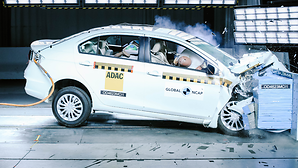
The Maruti Suzuki Celerio equipped with six airbags has received a three-star rating for adult occupant protection in the latest Global NCAP crash tests. The assessment highlights mixed protection levels, along with concerns related to structural stability and child occupant safety.

Keshav Rajput
Updated Dec 23, 2025, 01:52 PM IST
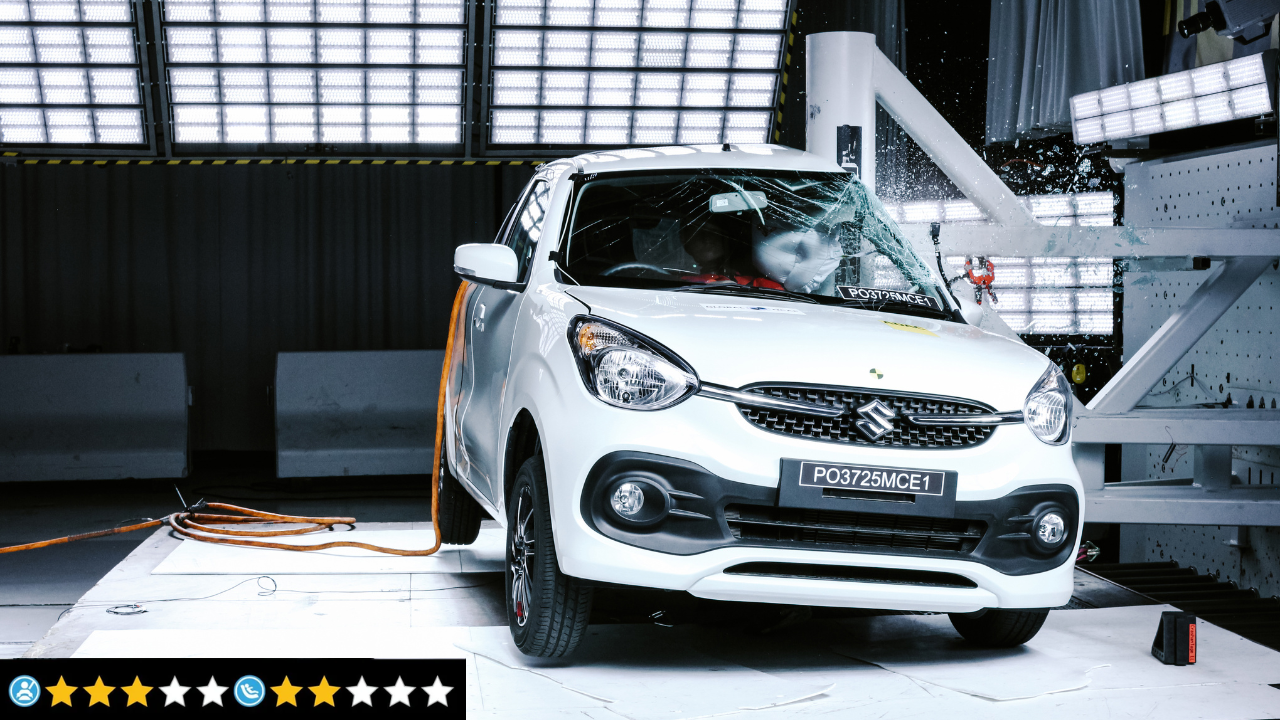
Maruti Suzuki Celerio Scores Three-Star Safety Rating in Global NCAP Crash Test
Global NCAP has released the crash test results for the six-airbag version of the Maruti Suzuki Celerio. The findings were published in 2025 as part of the organisation’s ongoing safety assessment programme for the India market. The tested model is a Made-in-India hatchback and the rating applies to vehicles produced under the specified VIN range. The two-airbag version scored a lower two-star rating under the same assessment programme.

People Also Search
How does the safety rating of the Maruti Suzuki Celerio compare to that of the Maruti Suzuki Ciaz?
What are the notable safety features of the Maruti Suzuki Victoris that contribute to its five-star rating?
How did the Maruti Suzuki Baleno perform in safety ratings compared to the Celerio?
What safety concerns were highlighted in the crash test results of the Maruti Suzuki Ertiga?
What advancements did the new Maruti Suzuki Dzire introduce in terms of safety compared to its predecessor?
Side Impact Performance
During side impact testing, protection for the head and chest was rated as marginal, while abdomen protection was considered adequate. Pelvis protection showed better results. In the side pole impact test, head and pelvis protection was rated as good, but chest and abdomen protection remained marginal.
Child Occupant Protection
The child safety assessment showed repeated head exposure in both frontal and side impact tests. In the frontal crash, the child restraint systems used for the 18-month-old and three-year-old dummies did not prevent head contact. Neck and chest protection in these tests was rated as poor.
In the side impact test, the restraint used for the younger child provided protection. However, the restraint for the three-year-old was not able to fully control head movement. This affected the overall child occupant protection score, which was lower than the adult safety score.
Adult Occupant Protection
In the frontal offset crash test, protection levels for adult occupants differed across body areas. Head and neck protection for both the driver and front passenger was rated as adequate to good. Chest protection for the driver showed weaker results, while knee protection for both front occupants was rated as marginal.
Global NCAP also noted that the footwell area was unstable during the frontal impact. The bodyshell was rated as unstable and was found to be incapable of withstanding additional load beyond the test conditions.
Also Read
Log in to post a comment.
End of Article
Trending
BMW F 450 RR Revealed: Gets 48hp Engine, Sporty Design and Advanced Safety Features
Maruti Suzuki Brezza Facelift Crosses 1 Lakh Bookings in India

BS7 Emission Norms Proposed for April 2029: What Can Change for Cars in India?

Maruti Suzuki Brezza Crosses 15 Lakh Sales Milestone in India
BSA Gold Star 650 Gets Two New British Heritage-Inspired Colour Options in India
Ferrari Luce EV to Debut in India on October 17 with 1,050PS Power and 530 km Range

Mahindra XUV 3XO CNG Launched in India: Top 5 Highlights
Popular





STAY UPDATED Get the latest news from Times Drive