New Delhi


MoRTH Proposes Bharat NCAP 2.0 Draft With Five-Pillar Assessment and Stricter Safety Criteria
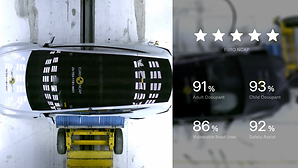
The Ministry of Road Transport and Highways has unveiled the draft for Bharat NCAP 2.0, enhancing India's car safety rating program. This updated framework introduces a five-pillar assessment structure focusing on crash protection, vulnerable road user protection, and more. New crash tests are mandated, including various impact scenarios. Vehicles must meet stricter eligibility criteria, including mandatory Electronic Stability Control and side airbags. The rating system also features higher thresholds for star ratings and new post-crash safety evaluations, emphasizing rescue and risk management.

Keshav Rajput
Updated Nov 22, 2025, 03:44 PM IST

MoRTH Proposes Bharat NCAP 2.0 Draft With Five-Pillar Assessment and Stricter Safety Criteria
The Ministry of Road Transport and Highways (MoRTH) has released the draft, which forms the basis for Bharat NCAP 2.0, the next phase of India’s voluntary car safety rating program. The updated structure expands the scoring method and introduces broader safety requirements for new passenger vehicles.

People Also Search
What impact will the introduction of ADAS testing have on Bharat NCAP ratings?
How does Bharat NCAP's safety rating system compare to Global NCAP's criteria?
What are the safety implications of the proposed acoustic alert system for electric vehicles?
What role do corporate and fleet owners play in promoting vehicle safety according to GNCAP?
How does Bharat NCAP's introduction of safety ratings for trucks and e-rickshaws contribute to road safety?
A New Five-Pillar Assessment Structure
The draft standard outlines a combined rating generated from five separate “assessment verticals,” each contributing to the final weighted score out of 100 points:- Safe Driving
- Accident Avoidance
- Crash Protection
- Vulnerable Road User Protection
- Post-Crash Safety
The weight distribution assigns the highest emphasis to crash protection (55%), followed by vulnerable road user protection (20%), safe driving (10%), accident avoidance (10%) and post-crash safety (5%).
Two New Crash Tests Added
The crash testing requirements are significantly expanded. The draft mandates five full-scale crash tests, including two entirely new ones.- Offset frontal impact at 64 km/h
- Full-width frontal impact at 50 km/h
- Side impact at 50 km/h
- New: Oblique pole side impact at 32 km/h
- New: Rear impact test at 50 km/h
Additional rules include:
- A model seeking three stars or more must achieve at least 55% of the crash protection score in Adult Occupant Protection.
- A model cannot receive five stars if any assessment vertical scores zero or if any injury measurement falls in the “red zone.”
Vulnerable Road User Protection: Pedestrian and Motorcyclist Focus
The second most heavily weighted area which is 20% - covers front-end pedestrian impact tests.These tests include:
- Legform impact to the bumper
- Adult and child headform impacts on the bonnet and windshield areas
The draft also allows optional scoring for Autonomous Emergency Braking (AEB) systems that detect pedestrians and motorcyclists. Total scoring potential: 56 points.
Optional tests now include AEB systems for:
- Adult pedestrian
- Child pedestrian
- Motorcycle rear-end moving scenario
Why it matters:
India has a high share of pedestrian and two-wheeler fatalities. These assessments bring Indian ratings closer to Euro NCAP’s safety philosophy.
Safe Driving: Driver-Assist Alerts
This vertical looks at up to eight alert-based driver-assist functions, such as:- Seat-belt reminder with occupant detection
- Driver drowsiness warning
- Forward collision warning
- Lane departure warning
- Blind spot detection or visualization
- Rear cross-traffic alert
- Traffic sign recognition
- Hill-hold assist
Only five technologies can contribute to scoring in this vertical, which carries a total of 25 points.
New Mandatory Safety Requirements for Eligibility
A major change is that not every vehicle can be tested, even if the manufacturer wants it to be.The draft lists several conditions that disqualify a vehicle model from receiving a star rating unless met:
- Electronic Stability Control (ESC) must be standard
- Side head-protection devices (such as curtain airbags) must be standard
- No side-facing seats
Why it matters:
Earlier, ESC and curtain airbags affected scoring but were not required for eligibility. Their mandatory status pushes entry-level variants toward critical safety features.
Post-Crash Safety: New Emphasis on Rescue and Secondary Risks
Bharat NCAP 2.0 adds a new vertical to assess the vehicle’s ability to support occupants after a crash. It covers:- Energy management for fire and electrical hazards
- Ease of occupant extrication
- Optional systems like multi-collision braking and SOS/E-Call
This section carries a 5% weight, with up to 20 points available.
New Scoring Rules and Higher Star Cut-Offs
The rating cut-offs in Bharat NCAP 2.0 are stricter. For vehicles assessed between 2027–2029, the weighted score thresholds are:- 5-star: 70
- 4-star: 60
- 3-star: 50
New restrictions on achieving 5 stars:
- No vertical is allowed to score zero, or the rating drops to four stars.
- No dummy injury measurement can fall in the red zone before modifiers.
New AOP minimum requirement:
To earn 3 stars or above, a vehicle must score at least 55% of the Crash Protection Adult Occupant Protection score.
New Testing and Validation Controls
The draft introduces more detailed sampling and retest rules to maintain integrity:- Vehicles should ideally be selected from dealer stock, not special batches.
- Production-spec status is required; prototype parts are not allowed.
- Star rating is withheld if a safety component fails unexpectedly until the issue is investigated.

Log in to post a comment.
End of Article
Trending
Maruti Suzuki Victoris Aurum Edition Launched in India: What's New?
Denza India Debut on November 13: D9 MPV and Z9 GT Expected
KTM Opens New Motorcycle Plant in Brazil, to Produce 10 KTM and Husqvarna Models

MoRTH Proposes New Driving Licence Rules: Colour Coding, 75% Test Score and More
Ultraviolette to Launch 4 New Electric Two-Wheelers in Next 12 Months
Updated Bajaj Pulsar NS200 Launched in India at Rs 1.60 Lakh: What’s New?
2027 Yamaha MT-125 Unveiled with New Design to Match Its Bigger Siblings
Popular

STAY UPDATED Get the latest news from Times Drive