New Delhi


Six Japanese Firms Launch Initiative For Car-To-Car Recycling Of End-Of-Life Vehicles
The BlueRebirth Council, comprising DENSO, Toray, Nomura Research Institute, Honda, MATEC, and REVER, seeks to enhance the recycling of materials from end-of-life vehicles (ELVs). The initiative emphasizes automated precision dismantling, leveraging AI and sensor technologies to improve the dismantling process and address labor shortages. Initially, the council will engage in discussions and technological development to establish a cohesive value chain. Ultimately, they aim to achieve a Car-to-Car recycling model by 2035, promoting sustainable resource reuse in the automotive sector.
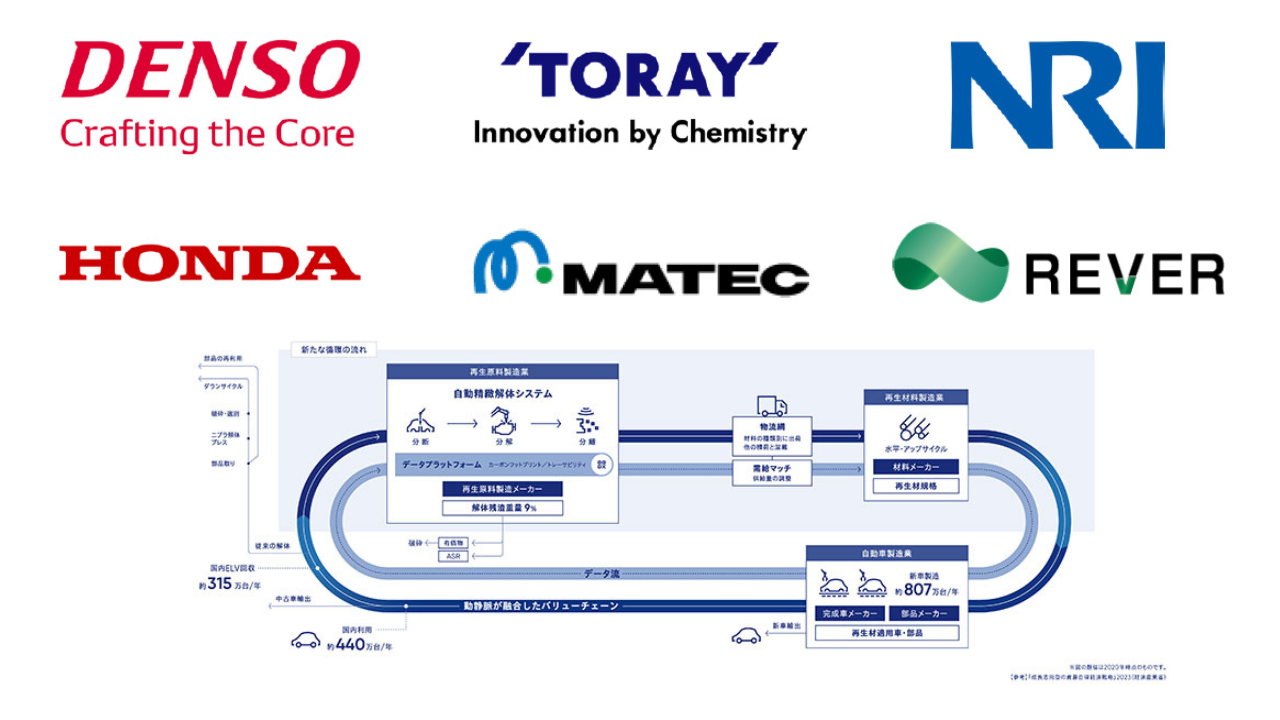
Six Japanese Firms Launch Initiative For Car-To-Car Recycling Of End-Of-Life Vehicles

People Also Search
Toyota's initiative for recycling end-of-life vehicles focuses on reusing vehicle parts and recycling raw materials to minimize waste and promote a circular economy. In contrast, their EV battery recycling project emphasizes automating battery pack disassembly to enhance reuse and recycling of battery components. Both initiatives aim to reduce environmental impact but target different aspects of vehicle lifecycle management.
The ELV Rules 2025 aim to regulate the disposal of old vehicles based on extended producer responsibility (EPR). They mandate vehicle manufacturers to meet annual scrapping targets for old vehicles, ensuring proper disposal through registered facilities. The rules target transport vehicles older than 15 years and non-transport vehicles older than 20 years, promoting environmentally safe disposal and material recovery.
Joint ventures like the one between LG Energy Solution and Toyota Tsusho are crucial for building a sustainable battery recycling infrastructure. By collaborating, they can pool resources and expertise to develop efficient processes for extracting valuable materials from used batteries, such as lithium, nickel, and cobalt. This cooperation enhances recycling capabilities and supports the creation of a closed-loop system for battery production.
Mitsubishi Fuso is establishing a pilot facility to recover materials from used electric vehicle batteries, focusing on reusing components like anodes, cathodes, and electrolytes. This initiative aims to tackle the increasing volume of used batteries by developing processes that facilitate their recycling and reuse, ultimately contributing to cost reduction and sustainability in the electric vehicle sector.
Jaguar-Land Rover is pioneering closed-loop recycling of polyurethane seat foam, successfully reintegrating it into new seat production. This innovative approach minimizes waste and reduces carbon emissions by recycling materials back into the manufacturing process. Such advancements highlight the automotive industry's commitment to sustainability and circular economy practices, setting new benchmarks for environmental responsibility.
Shift from Shredding to Precision Dismantling
Long-Term Goal: Car-to-Car Recycling by 2035
Log in to post a comment.
Trending

KTM 450 RC Unveiled at EICMA 2026: Gets 56bhp Parallel-Twin Engine, India Launch Ruled Out
VinFast VF MPV 7 EV Gets a Price Cut of Over 4 Lakh: Check New Price

Volkswagen Virtus Facelift Teased Ahead of India Launch: Here's What to Expect

TVS Unveils Four New Models at EICMA 2026, Including Three Electric Scooters

Mercedes-Benz GLC EV Launched in India at Rs 78.50 Lakh: Gets 94kWh Battery, 490bhp Power

Honda Alpha EV Set to Launch in India on December 2: Expected Design, Features and Range

Hero Vida UBX 06 Electric Motorcycle Debuts at EICMA 2026: Features, Range and More
Popular



STAY UPDATED Get the latest news from Times Drive