New Delhi


Global Electric Three-Wheeler Sales Exceed 1 Million In 2024: IEA
India continued to lead the global electric three-wheeler market in 2024, according to the International Energy Agency’s Global EV Outlook 2025. The country saw notable increases in both sales and market share, even as global trends showed mixed results across electric vehicle categories.

Keshav Rajput
Updated May 19, 2025, 09:06 PM IST
Global Electric Three-Wheeler Sales Exceed 1 Million In 2024: IEA
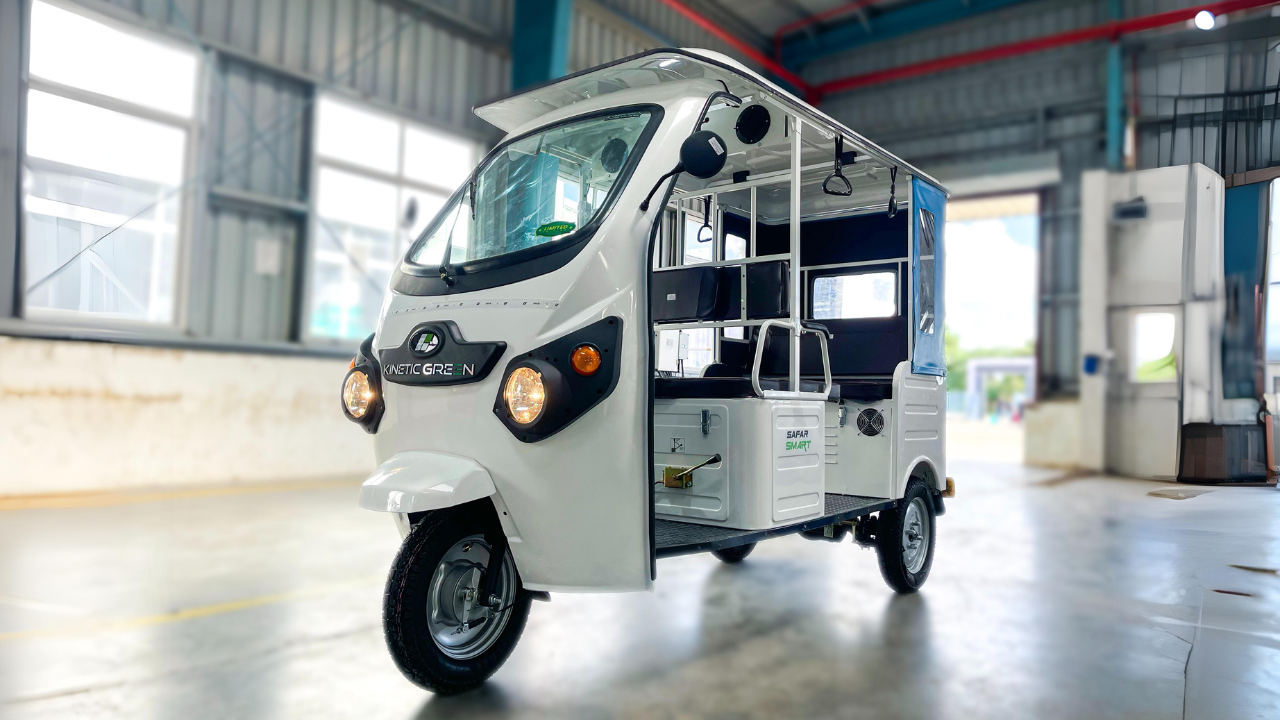
According to the International Energy Agency’s Global EV Outlook 2025 report, electric three-wheeler (3W) sales increased by over 10% globally in 2024, crossing 1 million units, even as overall 3W sales declined by 5%. The electric share rose from one-fifth in 2023 to nearly one-quarter in 2024.
India continued as the largest market for electric 3Ws for the second year in a row. Sales reached close to 700,000 units, marking a year-on-year growth of nearly 20%. This led to a 57% share of electric models in total domestic 3W sales, up 3% from the previous year.
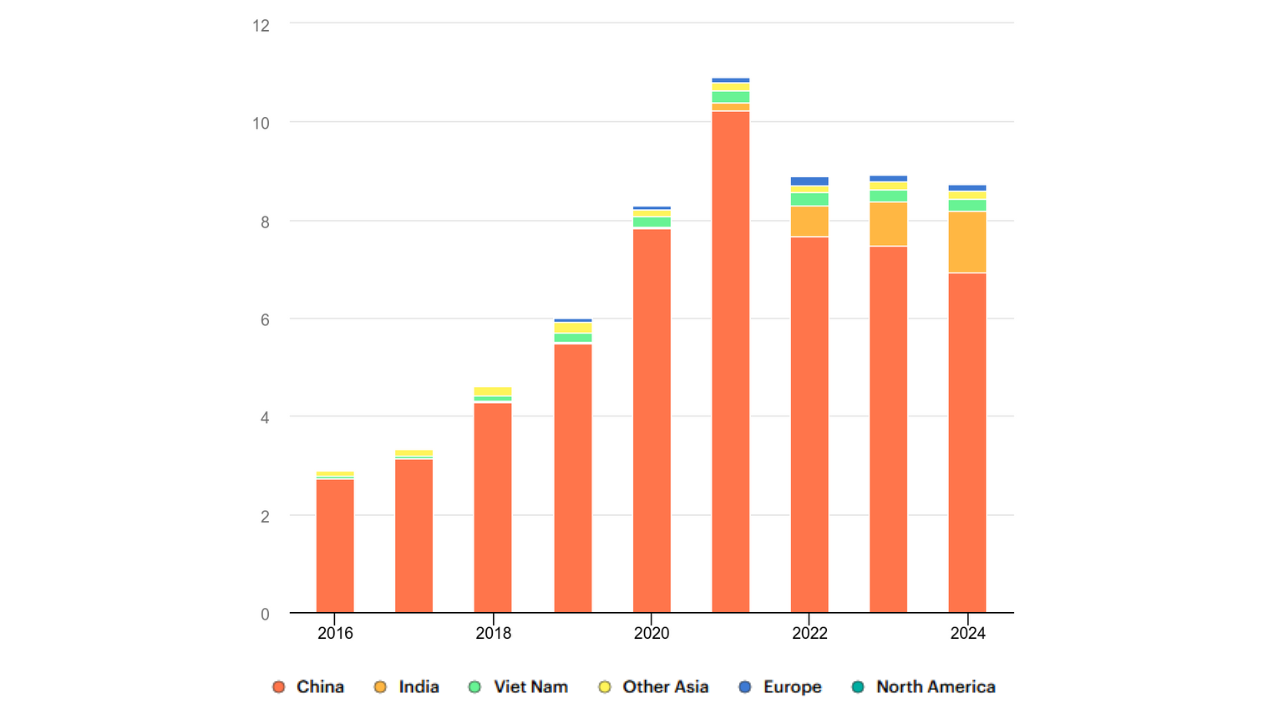
Electric three-wheeler sales by region, 2016-2024. (Graph: IEA)
India and China together accounted for more than 90% of global 3W sales. While China’s electric 3W market remained at under 15% for the third year, India’s figures increased due to measures such as the PM E-DRIVE scheme , which aims to deploy over 300,000 electric 3Ws for commercial use.
Also Read: Kia Carens Clavis First Drive Review
Electric Two and Three-Wheelers Continue to Dominate
Two and three-wheelers (2/3Ws) remained the most widely electrified category in road transport in 2024. Electric models made up over 9% of the global fleet, and the sales share remained at around 15%. Total global sales of electric 2/3Ws reached 10 million units.
While China saw a decrease in electric 2/3W sales, India and Southeast Asia showed stable growth. These regions represented about 80% of total global sales in 2024. In India and Southeast Asia, 2/3Ws are frequently used for daily transport. Removable batteries, home charging and battery swapping systems supported the usage of electric vehicles for tasks such as delivery and ride services.
India’s Electric Two-Wheeler Market Sees Higher Participation
India’s electric two-wheeler (2W) market had 220 manufacturers in 2024, up from 180 in 2023. However, four companies made up 80% of the 1.3 million electric 2Ws sold in the country. This represented 6% of all 2W sales.
Also Read: Honda Rebel 500 India Launch
Although electric 2Ws cost more than internal combustion engine (ICE) models, new models with lower prices and financial support from the government helped maintain demand. The PM E-DRIVE policy, which replaces earlier subsidy programmes, offers up to INR 5,000 per kilowatt-hour for lithium-ion battery-equipped 2Ws.
This policy, set to run until March 2026, has a total budget of USD 1.3 billion. It aims to support the sale of 2.5 million electric 2Ws.
On the production side, the 80 biggest OEMs had a combined output capacity of 10 million electric 2Ws in 2024, significantly higher than domestic sales. This figure could increase to 17 million based on current manufacturer plans.
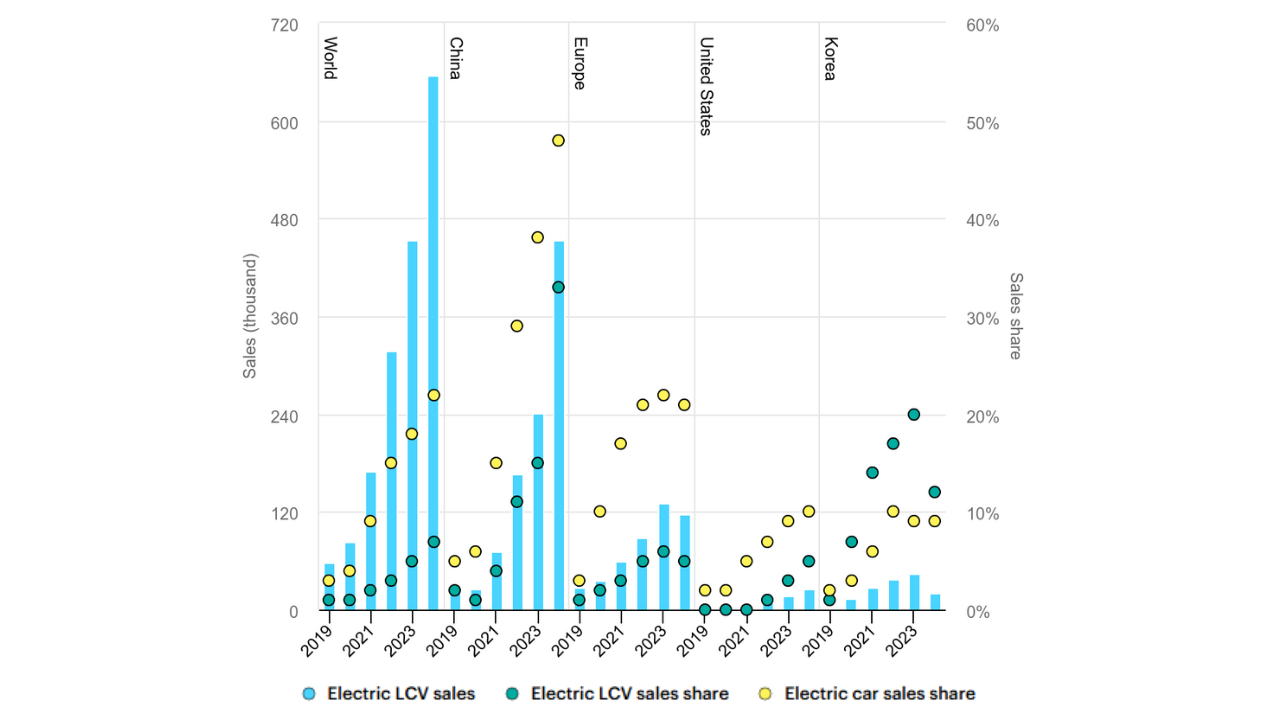
Electric light commercial vehicle sales and sales shares, 2019-2024. (IEA)
Electric Light Commercial Vehicle Sales Increase
Global sales of electric light commercial vehicles (LCVs) rose by over 40% in 2024, crossing 600,000 units. The electric share of the LCV market reached 7%, up from 5% in 2023.
China led with around 450,000 units sold, reflecting a near 90% increase from 2023. Europe, the second-largest market, saw a decline of around 10%, with sales falling below 120,000 units. The United States became the third-largest market for electric LCVs, with over 25,000 units sold and a year-on-year growth rate of 55%.
Mitull Batraa, Co-founder & CEO, Udaan E Vehicles, said, “ India’s rise as the global leader in electric three-wheeler (E3W) adoption is not just a policy outcome—it’s a product of practical innovation, deep market understanding, and stakeholder commitment across the board. Having been part of the mobility and manufacturing space for over 15 years, I’ve seen various technological waves come and go, but what’s happening with electric three-wheelers today is different. It’s not just about cleaner vehicles—it’s about building a smarter, more resilient mobility ecosystem for the future.”
Rajiv Tuli, General Secretary, Electric Vehicles Manufacturers’ Society (EVMS), said, “If there is one segment driving the EV boom in India, it is the electric three-wheeler. In FY2024, sales touched an all-time high of nearly 6.32 lakh units, up 57% from the previous year (FY2023 was reported as 4.02 lakh units). Vahan data shows that electric three-wheelers now make up 54% of total three-wheeler sales, meaning every second vehicle sold in this category runs on electricity. Notably, a large part of this momentum comes from MSMEs. These small enterprises have taken the lead in building, assembling, financing, and even repairing e-rickshaws. They have made it possible for the average person to consider e-rickshaws as a low-cost and reliable source of income. From manufacturing hubs in Uttar Pradesh and West Bengal to assembly units in Bihar and Jharkhand, the backbone of this sector lies in India's hinterlands."
Also Read
Log in to post a comment.
End of Article
Trending
VinFast VF MPV 7 EV Gets a Price Cut of Over 4 Lakh: Check New Price

Mercedes-Benz GLC EV Launched in India at Rs 78.50 Lakh: Gets 94kWh Battery, 490bhp Power

Honda Alpha EV Set to Launch in India on December 2: Expected Design, Features and Range
Hero Vida UBX 06 Electric Motorcycle Debuts at EICMA 2026: Features, Range and More
New Mini Cooper SE India Launch on November 27: Expected Price, Range, Battery, Features and More
Which Are the Most Affordable Electric Scooters in India in 2026?
How Long Do Electric Car Batteries Last in India? Life, Degradation and Warranty Explained
Popular

STAY UPDATED Get the latest news from Times Drive