New Delhi


Your Next EV May Get Aadhaar-Like ID for its Battery as per Govt's New Proposal, Here's Why
The Ministry of Road Transport and Highways has proposed the Battery Pack Aadhaar system to enhance the tracking and recycling of electric vehicle batteries. Each battery will receive a unique 21-character identification number, linking it to an online record from production to disposal. Manufacturers must visibly label batteries with this number and upload data to a government portal. The initiative will be rolled out in phases, initially focusing on identification and safety, with future expansions to include health and recycling data. Stakeholder consultations will guide the development of standards for implementation.

Keshav Rajput
Updated Jan 9, 2026, 12:04 PM IST
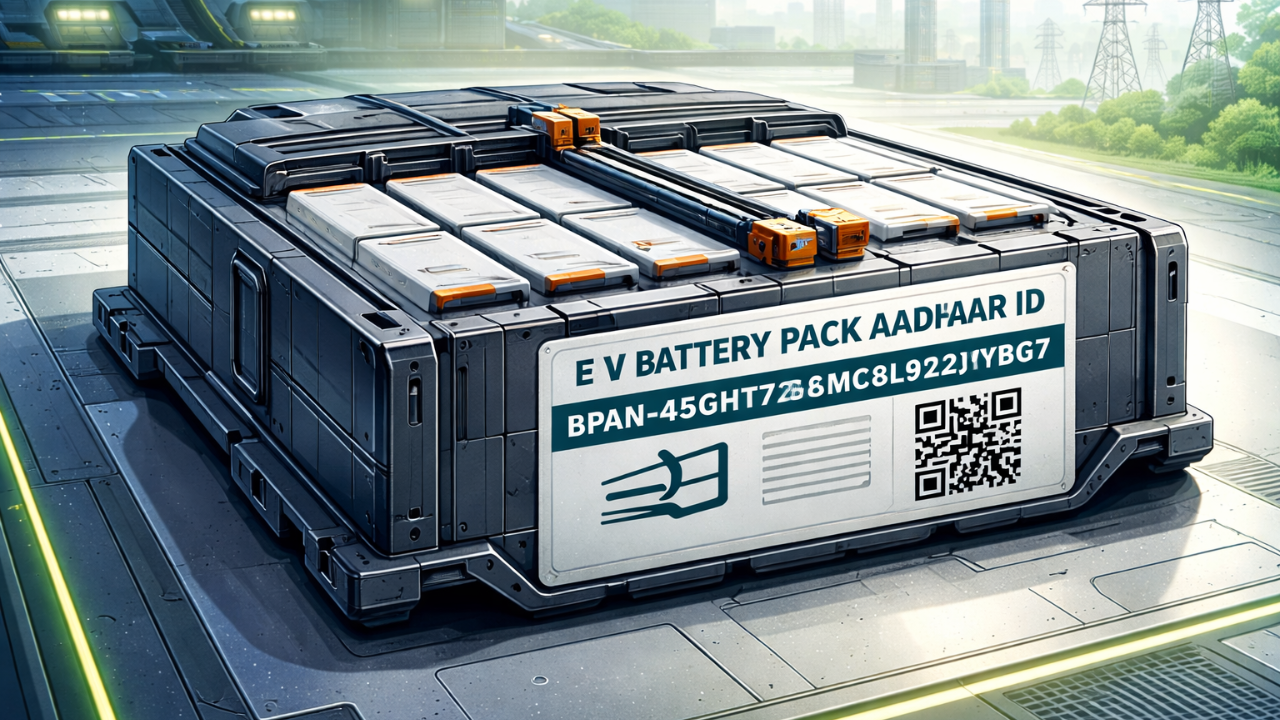
MoRTH Proposes Aadhaar-Like ID System for EV Batteries to Enable Lifecycle Tracking (Representative Image)
The Ministry of Road Transport and Highways has released draft guidelines for a system called Battery Pack Aadhaar. The proposal is part of the government’s e-mobility research roadmap and was issued in September 2025.

People Also Search
What impact has the FAME-II scheme had on electric vehicle registrations in India?
How has the government's PM E-DRIVE scheme contributed to the electric vehicle ecosystem in India?
What are the expected changes in EV penetration in India by FY 2025 based on current trends?
What are the key features of the Acoustic Vehicle Alerting System (AVAS) that will be mandatory for electric vehicles?
How has the government incentivized the establishment of charging infrastructure for electric vehicles?
Under the proposal, every battery used in electric vehicles will be given an identification number. The system is aimed at tracking, safety monitoring, and recycling of batteries across their lifespan.
What Battery Pack Aadhaar means
Battery Pack Aadhaar is a digital ID given to a battery pack. Each battery will get a 21-character Battery Pack Aadhaar Number (BPAN). This number connects the battery to an online record that stores information from when the battery is made until it is recycled or thrown away. The system helps track the battery during use, reuse, second-life use and recycling.
Responsibilities of manufacturers and importers
As per the draft guidelines, battery manufacturers and importers will be responsible for assigning the BPAN to every battery they introduce into the market or use themselves. The identification number must be visible on the battery pack and placed in a location where it is unlikely to be damaged. They will also be required to upload battery data to a government portal.
Phased rollout of the system
The Battery Pack Aadhaar framework will be introduced in stages. In the first phase, the focus will be on identification details and safety information. Later phases will include battery health data, material composition, recycling details and carbon footprint information. If a battery is repurposed or recycled and its attributes change, a new BPAN will need to be issued.
Focus on electric vehicle batteries
Electric vehicle batteries account for most of India’s lithium-ion battery demand, estimated at around 80 to 90 percent. Because of their scale and safety relevance, EV batteries are expected to be prioritised in the early stages of implementation. The guidelines also suggest extending the system to industrial batteries with a capacity above 2 kWh at a later stage.
Standard-setting and stakeholder input
The draft proposes that the Battery Pack Aadhaar framework be developed through the Automotive Industry Standard process under the Automotive Industry Standards Committee. This will allow consultations with battery makers, vehicle manufacturers, recyclers, testing agencies and regulators. The aim is to ensure that the system can be implemented across the battery lifecycle while aligning with automotive regulations.
Also Read

Log in to post a comment.
End of Article
Trending

Harley-Davidson X350T Unveiled at EICMA 2026: Gets Smaller 350cc Engine

Suzuki Unveils 2027 GSX-10R and SV-7S At EICMA 2026: Engine, Features and India Launch Details
TVS RTR 125 Unveiled at EICMA 2026 with Liquid-Cooled Engine
Norton Urban Roadster 450 Unveiled at EICMA 2026: Gets 46bhp Engine, TFT Display and More

Royal Enfield Flying Flea S6 Electric Unveiled at EICMA 2026, Launch in 2027

Royal Enfield Continental GT 750 Unveiled at EICMA 2026; Gets 743cc Engine, Faired and Unfaired Versions

Ducati Unveils Five New Motorcycles at EICMA 2026, Diavel V4 S and DesertX Rally Among Highlights
Popular





STAY UPDATED Get the latest news from Times Drive