New Delhi


Brake The Habit: Crossing Under Railway Barriers Is Not Worth the Risk
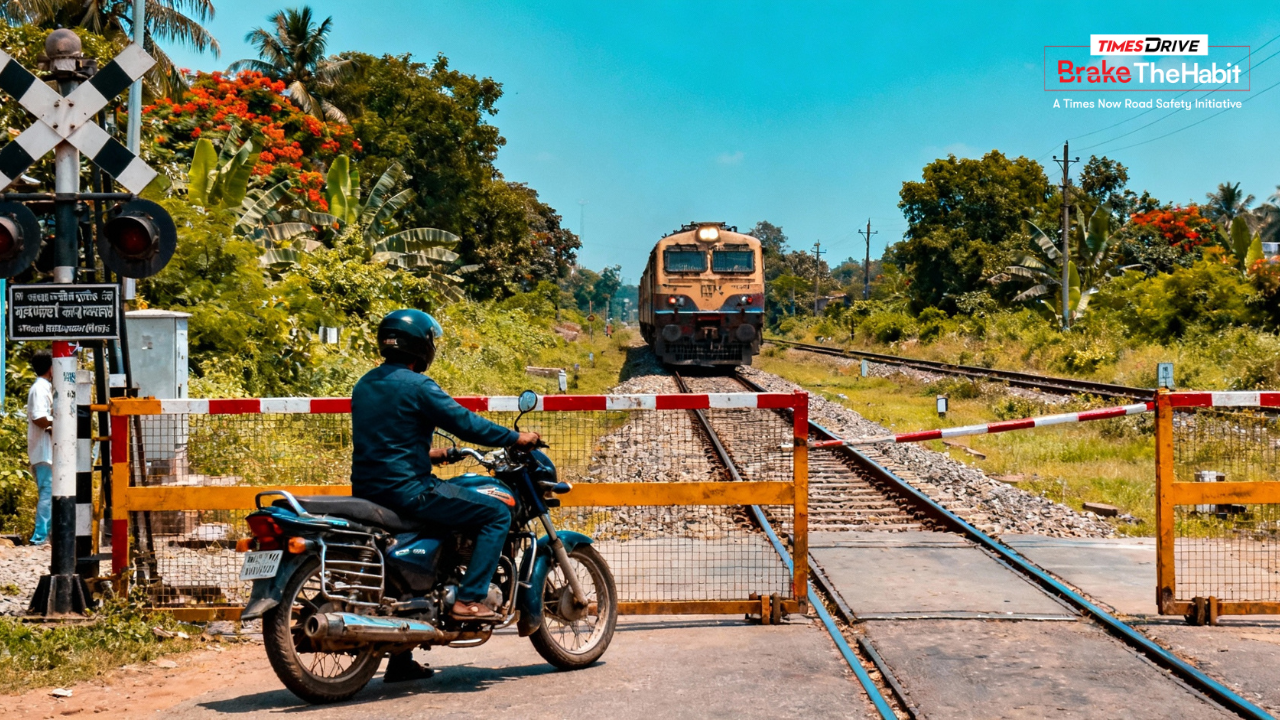
Navigating under a closing railway barrier might seem expedient, but it endangers lives, both of motorcyclists and railway passengers. Rushing through can lead to catastrophic accidents, including potential train derailments. Despite advancements in safety measures, human behavior remains a key concern. The Indian Railways emphasizes the importance of patience at crossings, as waiting allows trains to pass safely and protects against collisions. Motorcyclists are urged to respect these boundaries to enhance overall safety and prevent devastating consequences.

Times Drive Desk
Updated Nov 9, 2025, 09:59 AM IST
Brake The Habit: Crossing Under Railway Barriers Is Not Worth the Risk
Crossing under a closing barrier at a railway level crossing may seem like a shortcut, but it poses a grave threat to your life and to others travelling by rail. Even a moment’s impatience can trigger a chain of events with devastating outcomes. This article outlines why waiting is crucial and how following the rules strengthens safety for all.

People Also Search
What are the dangers of riding on footpaths for two-wheeler riders?
How can improper lane changes lead to accidents on the road?
What is the impact of not wearing helmets while riding two-wheelers?
Why is the use of indicators essential while driving?
What are the dangers associated with tripling on two-wheelers?
Why the risk extends beyond your two-wheeler
Every time a motorcyclist tries to slip under the barrier at a railway level crossing, they risk colliding with an oncoming train or triggering a derailment scenario. According to the Indian Railways and the Ministry of Road Transport & Highways (MoRTH), level crossings have long been identified as serious safety hazards. Reports show that even when gates are closed to protect road-users, some riders attempt to negotiate the barrier, putting themselves and railway passengers at risk.
The habit of rushing - consequences & scale
What might appear to be just a few seconds saved can end in a lifetime lost. Many level crossings have been upgraded with safety devices such as gate interlocking systems and automated signalling, yet the human factor remains critical. The Indian Railways has reported that more than 11,000 level crossing gates are now interlocked for safety. Ignoring signals or trying to sneak under a barrier not only risks death or serious injury, but also the derailment of a train — thereby affecting many lives beyond the immediate rider.
What waiting does - breaking the habit strengthens safety
Waiting patiently at a level crossing barrier is not just about obeying the rule — it is about respecting the boundary between road traffic and rail operations. By not going under a closing barrier on a two-wheeler, you:
- give the train the safe space it needs to pass
- prevent a collision that could affect dozens of passengers on board
- reduce the chance of costly damage to railway assets or infrastructure, which has wider implications for public safety
The simple step you can take today
When you approach a level crossing and the barrier begins to close, stop, switch off engine if needed, and wait until the barrier opens and the signal clears. This single act breaks the habit of rushing and honours the safety boundary set by the railway-road interface.
Also Read
Log in to post a comment.
End of Article
Trending

BMW F 450 RR Revealed: Gets 48hp Engine, Sporty Design and Advanced Safety Features

Maruti Suzuki Brezza Facelift Crosses 1 Lakh Bookings in India

BS7 Emission Norms Proposed for April 2029: What Can Change for Cars in India?

Maruti Suzuki Brezza Crosses 15 Lakh Sales Milestone in India

BSA Gold Star 650 Gets Two New British Heritage-Inspired Colour Options in India

Ferrari Luce EV to Debut in India on October 17 with 1,050PS Power and 530 km Range

Mahindra XUV 3XO CNG Launched in India: Top 5 Highlights
Popular





STAY UPDATED Get the latest news from Times Drive