New Delhi


Brake The Habit: Flashing Headlights Isn’t a Right of Way- Drive, Don’t Intimidate
Flashing headlights can lead to misunderstandings among drivers, often resulting in unnecessary accidents. While some believe it signals permission to pass, its primary function is to warn of hazards. Misuse of this practice can escalate into road rage and legal complications, as the law prioritizes official traffic rules over informal signals. To ensure safe driving, it's essential to understand traffic laws, make clear eye contact, drive predictably, and exercise patience by properly signaling intentions through clear gestures rather than relying on headlights.

Saptak Bardhan
Updated Nov 21, 2025, 09:01 PM IST
Brake The Habit: Flashing Headlights Isn’t a Right of Way- Drive, Don’t Intimidate
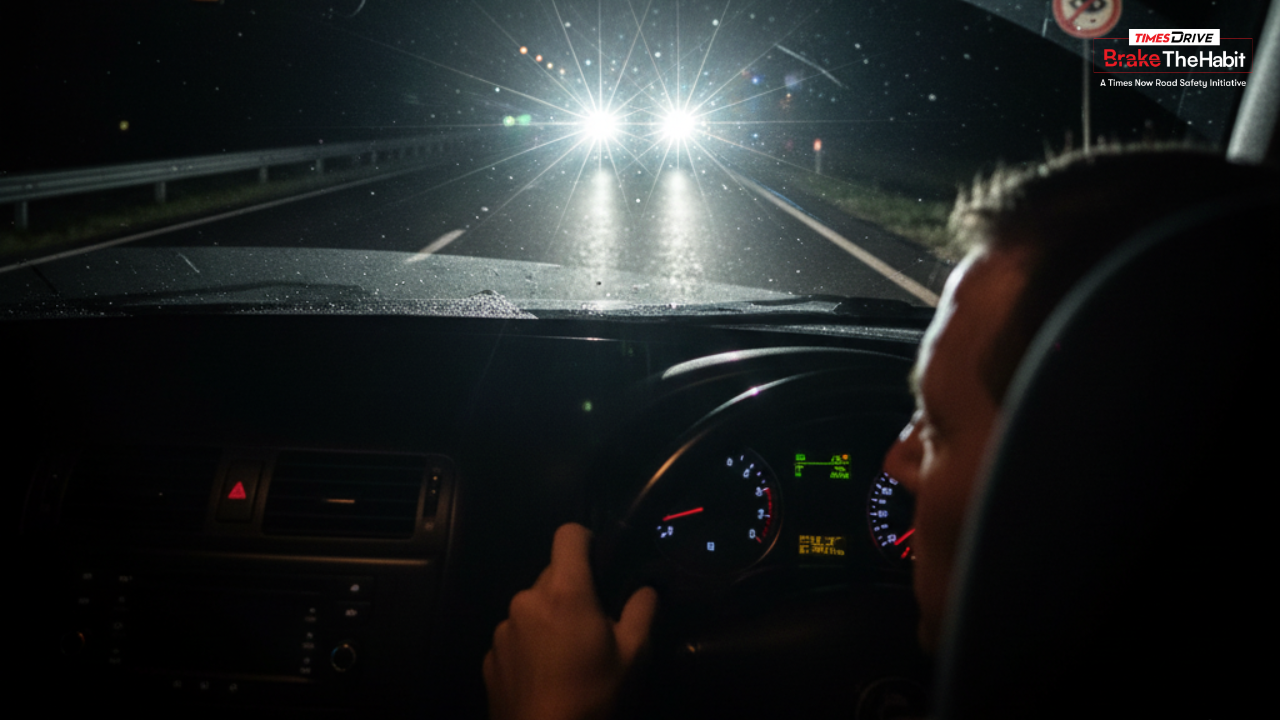
Flashing headlights has often led to a ego battle between two drivers resulting in accidents that shouldn't have happened. Flashing headlights while a vehicle approaches has different interpretations, it can mean that the approaching car is letting you pass but it can also mean that it is asking for a pass. This common habit continues to be majorly misinformed and creates confusion and intimidate other drivers.

People Also Search
What are some common misconceptions about using hazard lights during adverse weather conditions?
How does the misuse of indicators contribute to road safety issues?
What are the dangers of overtaking on blind turns, and what should drivers keep in mind?
Why is it important for two-wheeler riders to avoid using footpaths?
How does lane discipline affect overall traffic flow and safety?
The official driving handbooks state that flashing headlights typically serve one primary purpose: to warn other drivers of a hazard. This could be anything from an accident ahead, police presence, debris on the road, or even to signal that your own high beams are on while some drivers use a quick flash to acknowledge another driver.
Aggressive flashing can also be perceived as hostile, leading to aggression and road rage, potentially contributing to incidents which can often be fatal. Finally, there is serious Legal Liability: in the event of an accident, if you proceeded based on a flash of headlights and were struck, the other driver could argue they never explicitly yielded the right of way. The law typically relies on established traffic rules, not unofficial headlight flashes, to determine fault.



Drive, Don't Intimidate
Safe driving is about clear communication and adherence to established rules. A driver must know the law and obey actual right-of-way rules based on traffic signals, signs, and the 'first to arrive' or 'yield to the right' principles at unmarked intersections.
It is better to make Eye Contact as a nod, a wave, or clear eye contact which is a far more unambiguous way to signal an intention to yield or proceed than a headlight flash. It is crucial to be predictable; drive in a way that is consistent and predictable, allowing other drivers to anticipate your actions without needing to guess. Also, exercising patience is better especially if a driver wants to be courteous and allow another driver to proceed, slow down, stop completely if necessary, and clearly wave them through when it is safe to do so.
Log in to post a comment.
End of Article
Trending

Maruti Suzuki Brezza Facelift Crosses 1 Lakh Bookings in India

BS7 Emission Norms Proposed for April 2029: What Can Change for Cars in India?

Maruti Suzuki Brezza Crosses 15 Lakh Sales Milestone in India

BSA Gold Star 650 Gets Two New British Heritage-Inspired Colour Options in India

Ferrari Luce EV to Debut in India on October 17 with 1,050PS Power and 530 km Range

Mahindra XUV 3XO CNG Launched in India: Top 5 Highlights
Mahindra XUV 3XO CNG Launched at Rs 9.99 Lakh with Dual-Cylinder Technology
Popular





STAY UPDATED Get the latest news from Times Drive