New Delhi


Brake The Habit: Stop Tailgating, Space Saves Lives
Tailgating on Indian roads exemplifies impatience, often leading to dangerous rear-end collisions that could be avoided with proper distance. Experts advocate for maintaining a three-second gap between vehicles, extending to five seconds in poor conditions. This practice enhances safety and traffic flow, reducing stress and fuel consumption. Impatience drives drivers to close gaps, mistakenly believing it saves time, while research shows smooth driving is more efficient. Implementing measures like telemetry alerts and stricter laws can mitigate accidents, emphasizing the importance of maintaining safe distances.

Times Drive Desk
Updated Nov 20, 2025, 03:36 PM IST
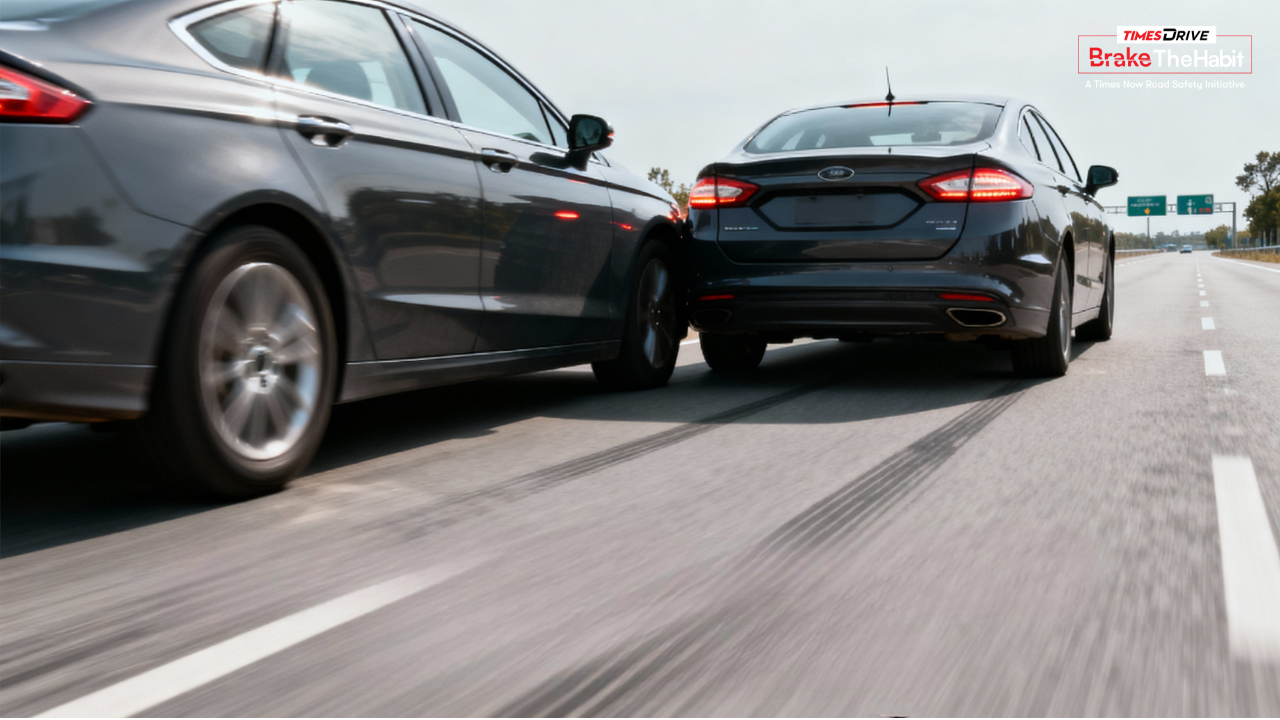
Brake The Habit: Stop Tailgating, Space Saves Lives
If there's one habit that reflects impatience more than aggression on Indian roads, it's tailgating—driving inches behind another vehicle in the hope of forcing them to move faster or make way. What most drivers forget is that tailgating eliminates the single biggest safety buffer on the road: reaction time. Rear-end collisions are among the most common accidents in urban India, and almost all are preventable with adequate distance.

People Also Search
What are some common distractions that lead to unsafe driving habits like sudden lane changes?
How can using indicators improve road safety and reduce accidents?
What are the dangers associated with tailgating heavy vehicles on highways?
What impact does road hypnosis have on driving safety?
What are the legal implications of using footpaths for two-wheeler traffic?
Physics isn’t negotiable. At 80 kmph, a vehicle covers over 22 metres every second. Even a split-second delay in braking—due to distraction, fog, rain, or sudden potholes—can turn a routine slowdown into a life-threatening impact. Road safety experts recommend the three-second rule: pick a reference point, and ensure there's a three-second gap between you and the vehicle ahead. At night or in bad weather, this should stretch to five seconds.
Tailgating creates more problems than it solves. It forces constant braking, disrupts traffic flow, raises fuel consumption, and increases stress for everyone on the road. On highways, following heavy vehicles too closely is even riskier—you lose visibility of the road ahead, making it impossible to anticipate stalled vehicles, animals, or broken barricades.
The behavioural trigger is predictable: impatience. It is widely believed that closing gap can signal urgency to other drivers on the road while others believe it saves time. However, as per different researches, it is contrary to the popular belief, stating that evenly spaced and smooth driving maintains higher overall speed than stop-and-go patterns. In addition to that, smooth driving ensures better fuel economy, cutting fuel expenditure by at least one-third.
Also Read



The fix is simple and intentional: back off, maintain a buffer, and avoid drafting behind larger vehicles. Fleet drivers and taxis should adopt telemetry alerts that warn when distance reduces dangerously. Dash-cams and stricter liability laws can further discourage rear-end collisions.
The road isn’t a queue to push through—it’s a shared space where safety is a collective responsibility. Distance is not a concession; it’s a shield. Leave space to save lives.
Log in to post a comment.
End of Article
Trending

Maruti Suzuki Brezza Facelift Crosses 1 Lakh Bookings in India

BS7 Emission Norms Proposed for April 2029: What Can Change for Cars in India?

Maruti Suzuki Brezza Crosses 15 Lakh Sales Milestone in India

BSA Gold Star 650 Gets Two New British Heritage-Inspired Colour Options in India

Ferrari Luce EV to Debut in India on October 17 with 1,050PS Power and 530 km Range

Mahindra XUV 3XO CNG Launched in India: Top 5 Highlights

Mahindra XUV 3XO CNG Launched at Rs 9.99 Lakh with Dual-Cylinder Technology
Popular





STAY UPDATED Get the latest news from Times Drive