New Delhi


Brake The Habit: Don’t Overtake on Blind Turns- What You Can’t See Can Kill
Speeding on curvy roads significantly increases the risk of fatal accidents, especially when overtaking on blind turns. These turns obstruct visibility due to hills, vegetation, or curves, making it difficult to see oncoming traffic or stationary obstacles. Drivers often engage in this risky behavior due to impatience, overconfidence, and confirmation bias, believing they can navigate safely. Traffic laws prohibit overtaking where visibility is limited, and penalties can be severe. The key to safety is patience: never overtake unless the road ahead is clearly visible.

Saptak Bardhan
Updated Nov 21, 2025, 07:45 PM IST
Brake The Habit: Don’t Overtake on Blind Turns- What You Can’t See Can Kill
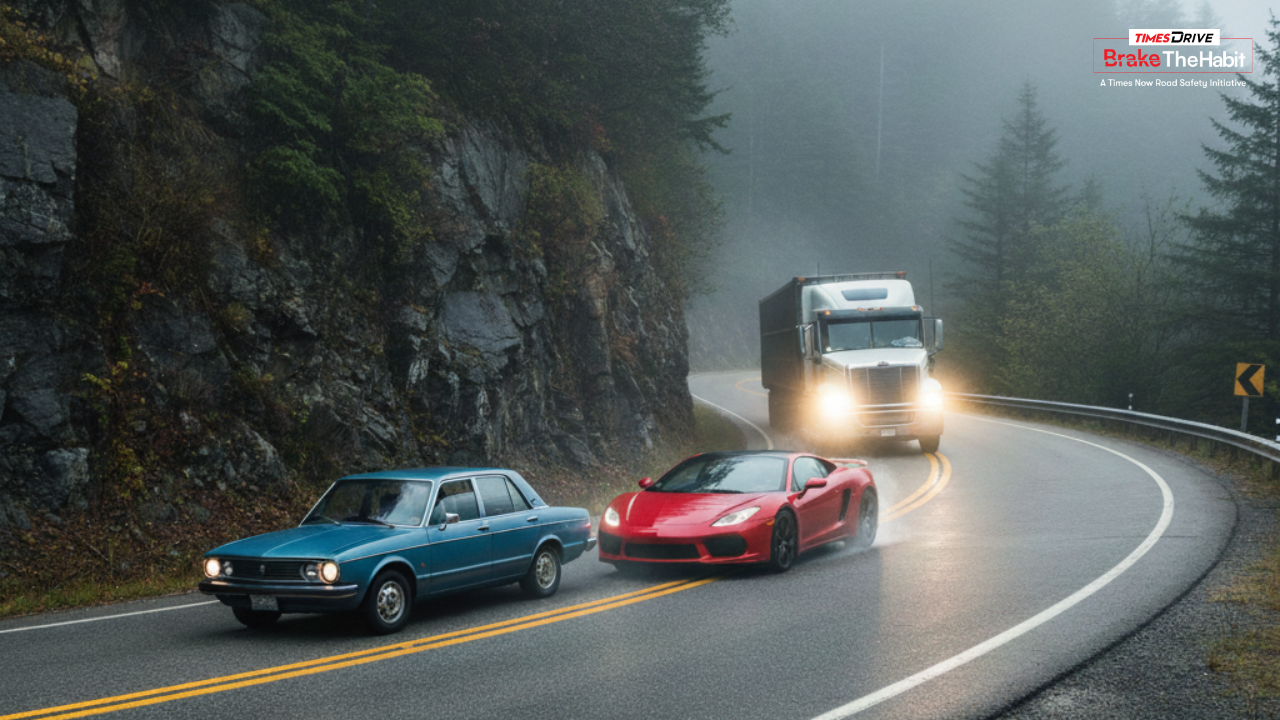
Speeding on a curvy road can lead to fatal accidents and crashes, owing to the incoming head-on traffic from the other side. In the thrilling pursuit of speed and efficiency on the road, drivers engage in the risky maneuver of overtaking. This action becomes a deadly gamble when performed on or approaching a blind turn or curve. Majorly driven by overconfidence and impatience, it can pose as one of the most significant and avoidable risks.

People Also Search
What are some specific strategies to reduce speed-related accidents on mountain roads?
How can tailgating be effectively prevented on busy roads?
What are the risks associated with sudden lane changes in heavy traffic?
What measures can drivers take to enhance visibility during night driving?
Why is it important to use indicators before maneuvering, and what are the consequences of not doing so?
The Fatal Anatomy of a Blind Turn
A "blind turn" is any bend in the road where line of sight is obstructed, caused by hills, roadside vegetation, buildings, bridges, or the curve of the road itself.
The danger lies in the unknown. Specifically, when one cannot see oncoming traffic: a vehicle traveling at speed from the opposite direction will appear suddenly, leaving both drivers mere seconds to react. At highway speeds, the combined closing speed makes an impact almost certain. It is next to impossible to see stationary obstacles, such as a broken-down vehicle, debris, or an animal in the road that the car driver overtaking might be slowing down for, nor can hidden road features like junctions, driveways, or pedestrians about to cross the road right around the corner be seen.
In these situations, the driver attempting to overtake has effectively nullified their safety cushion—the time and distance needed to perceive a hazard and execute a safe response.
The Psychology of Risk: Why Drivers Do It
The decision to overtake on a blind turn is often a lapse in judgment fueled by several psychological factors: Impatience is the desire to maintain speed or pass a slower vehicle quickly, believing the risk is minimal because the driver has successfully executed similar maneuvers before. Overconfidence is an inflated assessment of personal driving skill and the ability to "just make it" before any hazard appears. Finally, confirmation bias is a tendency to look for evidence that the road is clear, rather than confirming that it is not.
The Law and the Consequences
Traffic laws are very clear on this matter. Overtaking is strictly prohibited where visibility is limited. Mountain roads are full of signages, especially near blind turns where the driver's view can be obstructed which can often lead to a crash.
Subsequently, the penalties for not following these rules are hefty. Ignoring these rules can attract legal penalties including fines, penalty points on the license or license suspension, in extreme cases.
Driving Safely: A Simple Rule
The solution to this life-or-death problem is remarkably simple and requires nothing more than patience and discipline.
The Golden Rule is to never overtake unless a driver can see that the road ahead is clear for the entire duration of the maneuver. If a driver cannot see far enough to ensure a complete and safe return to the lane where the car is being driven in, well before the blind turn, do not attempt the pass. Always look for clues; if the car in front slows down for no apparent reason, they may be reacting to an obstacle that is still hidden. Furthermore, respect road markings.
Log in to post a comment.
End of Article
Trending
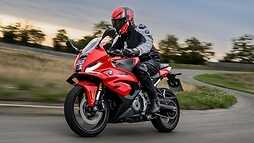
BMW F 450 RR Revealed: Gets 48hp Engine, Sporty Design and Advanced Safety Features

Maruti Suzuki Brezza Facelift Crosses 1 Lakh Bookings in India
BS7 Emission Norms Proposed for April 2029: What Can Change for Cars in India?

Maruti Suzuki Brezza Crosses 15 Lakh Sales Milestone in India

BSA Gold Star 650 Gets Two New British Heritage-Inspired Colour Options in India
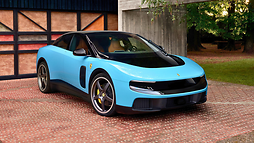
Ferrari Luce EV to Debut in India on October 17 with 1,050PS Power and 530 km Range
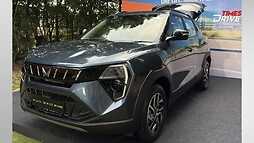
Mahindra XUV 3XO CNG Launched in India: Top 5 Highlights
Popular





STAY UPDATED Get the latest news from Times Drive