New Delhi


Brake The Habit: Slow Down at School & Hospital Zones - Silence Saves Lives
School and hospital zones are designed for the safety of vulnerable individuals like children and patients. Unfortunately, traffic data from 2025 indicates that reckless driving, including speeding and unnecessary honking, creates dangerous environments. Loud noises can disrupt medical recovery and communication in hospitals, while in school areas, they distract students and hinder their learning.

Times Drive Desk
Updated Nov 21, 2025, 12:15 PM IST
Brake The Habit: Slow Down at School & Hospital Zones - Silence Saves Lives
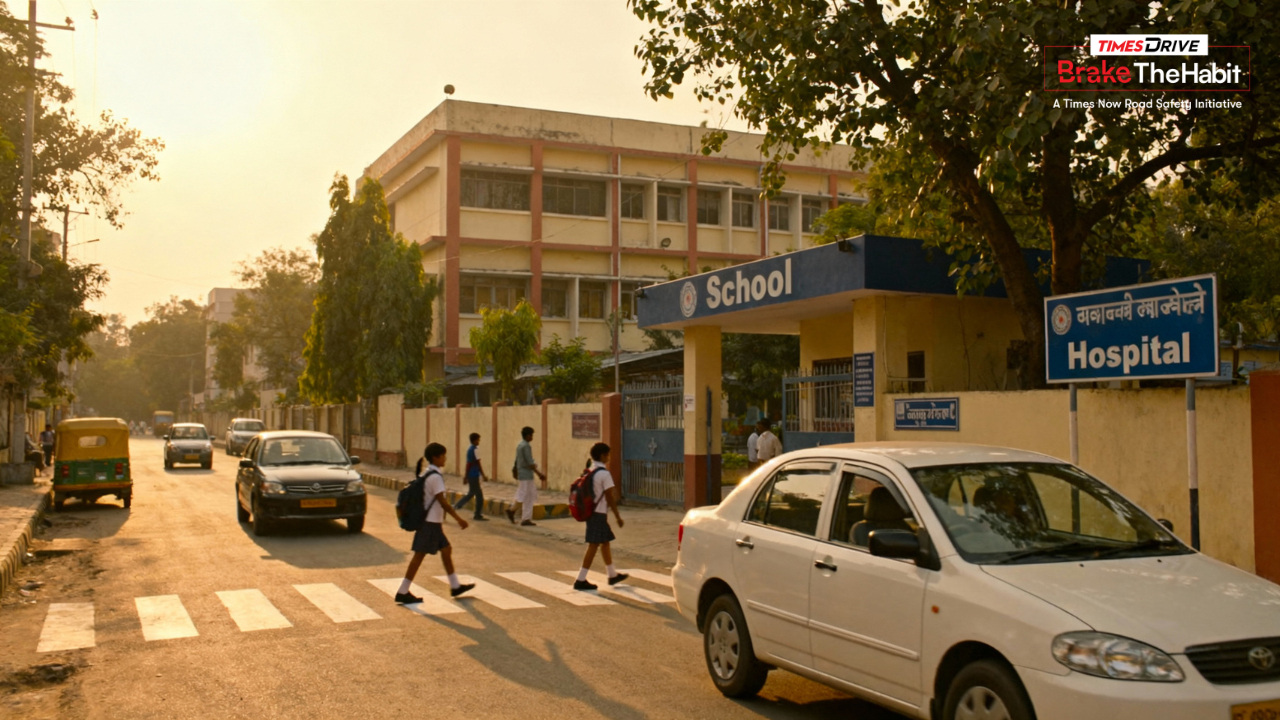
School and hospital zones exist for a simple reason: the people who use these spaces, children, parents, patients and medical staff, are more exposed to danger than regular road users. On any given day, you’ll find students crossing the road, families waiting outside gates, or ambulances navigating tight spaces. Traffic records from 2025 show that these areas quickly become unsafe when drivers refuse to slow down or honk without any real need.

People Also Search
How does honking in traffic relate to overall road safety and stress levels among drivers and pedestrians?
What are some effective strategies for improving lane discipline among drivers?
What role do emergency lanes play in road safety, and how can drivers be encouraged to respect them?
How does tailgating affect overall traffic flow and safety on the roads?
What impact does the misuse of footpaths by two-wheelers have on pedestrian safety?
In hospital surroundings, constant horn noise does more harm than many drivers realise. Patients recovering from injuries or surgeries can be jolted awake, stressed or distracted by sudden loud sounds. It also makes communication tougher for nurses and doctors, especially in emergency sections. For families already tense about a loved one’s condition, continuous noise only adds to their anxiety. Speeding or rushing through these silent zones shows how easily people forget the sensitivity of the environment.
School zones carry a different kind of vulnerability. Children are easily distracted and may misjudge traffic speeds. When drivers speed or honk near schools, students find it harder to focus in classrooms. Continuous noise affects concentration, reading ability and even exam performance. Outside the school gates, fast traffic and sudden honks can startle young pedestrians, increasing the risk of accidents.
Many drivers justify their behaviour by saying they’re “in a hurry,” but the time saved by honking or speeding is rarely worth the risk it creates for others. A few seconds gained for one person can become a lifetime of loss for another.
Driving slowly and avoiding unnecessary honking makes movement more predictable for everyone: pedestrians, students, caregivers and ambulance staff. It reduces sudden braking, confusion and collisions and creates space for safer, calmer roads.
The “Brake The Habit” campaign reminds us that road safety is not only about rules; it is about basic courtesy. A little patience and a quieter approach can make school and hospital areas far safer for the people who rely on them.
Changing this habit does not demand much. It simply asks drivers to stay alert, ease off the accelerator and use the horn only when needed. When you pass a school or hospital sign, remember that silence can protect lives.
Log in to post a comment.
End of Article
Trending

BMW F 450 RR Revealed: Gets 48hp Engine, Sporty Design and Advanced Safety Features

Maruti Suzuki Brezza Facelift Crosses 1 Lakh Bookings in India

BS7 Emission Norms Proposed for April 2029: What Can Change for Cars in India?

Maruti Suzuki Brezza Crosses 15 Lakh Sales Milestone in India

BSA Gold Star 650 Gets Two New British Heritage-Inspired Colour Options in India

Ferrari Luce EV to Debut in India on October 17 with 1,050PS Power and 530 km Range

Mahindra XUV 3XO CNG Launched in India: Top 5 Highlights
Popular





STAY UPDATED Get the latest news from Times Drive