New Delhi


India-UK Trade Deal Set To Shake Up Auto Industry With Lower Import Tariffs
The UK and India have concluded negotiations on a Free Trade Agreement (FTA) that lowers import tariffs on several products, including automotive goods. Industry stakeholders like JLR and Ultraviolette have reacted to the deal, which is expected to gradually shape automotive trade between the two countries.

Keshav Rajput
Updated May 12, 2025, 04:18 PM IST
India-UK Trade Deal Set To Shake Up Auto Industry With Lower Import Tariffs
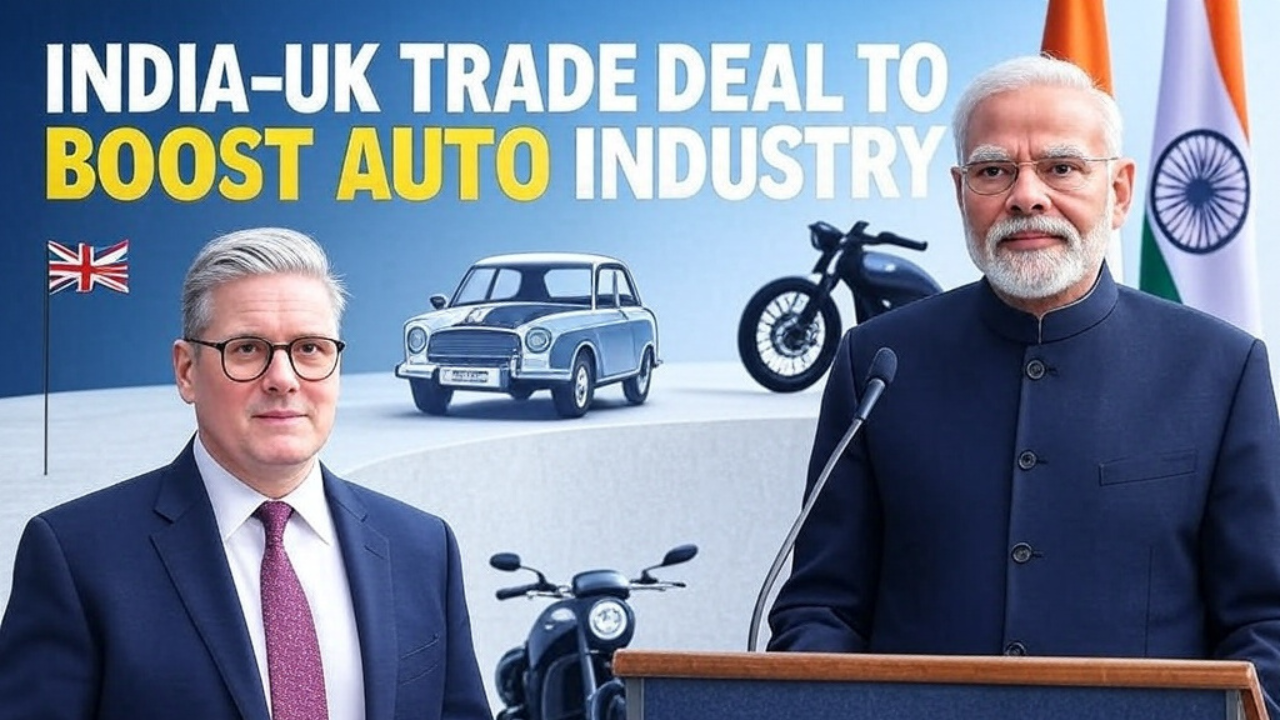
On May 6, 2025, Indian Prime Minister Narendra Modi and UK Prime Minister Keir Starmer announced the conclusion of the Free Trade Agreement (FTA) between India and the United Kingdom. The agreement follows over ten years of discussions and covers reduced tariffs on 85% of tariff lines and 66% of India’s imports from the UK.
Automotive components, medical devices, food and drink products and advanced manufacturing goods are among the sectors included under the arrangement. The deal will undergo legal review and ratification before implementation, which could take up to a year.
Tariff Reductions on Automobiles and EVs
According to reports, customs duty on automotive imports from the UK will drop from 110% to 50% for vehicles above USD40k and from 70% to 10% for vehicles below USD40k, depending on cess and surcharges. A quota system will apply first to internal combustion engine (ICE) cars, with later inclusion of hybrid and electric vehicles (EVs). The UK will also allow quota-based access for Indian EV and hybrid models.
Industry Viewpoints: JLR and Ultraviolette
Adrian Mardell, Chief Executive Officer, JLR, Said, "The car industry is vital to the UK’s economic prosperity, sustaining 250,000 jobs. We warmly welcome this deal which secures greater certainty for our sector and the communities it supports. We would like to thank the UK and US Governments for agreeing this deal at pace and look forward to continued engagement over the coming months."
Narayan Subramaniam, Ceo and Co-Founder, Ultraviolette an Indian Electric Two-Wheeler maker, said, "We applaud the Government’s decision to integrate Automotive and Mobility into the Free Trade Agreement (FTA) with the UK by reducing trade barriers, increasing transparency and improving access to vital information. This strategic step will unlock new business opportunities for EV component manufacturers and SMEs operating within this space."
"At the outset, this marks a significant development, offering the much-needed momentum toward India's ambitious export target of USD 1 trillion by the financial year 2030. This agreement paves the way for expansion into new sectors beyond mineral fuels, machinery, pharmaceuticals, iron and steel and chemicals. The positive move will open a plethora of opportunities for other industries to successfully overcome earlier technical trade barriers through reduced tariffs, ease of processes, and support for innovation-intensive industries—ultimately fostering trade in Innovative products and services. More importantly, this agreement opens up a broader platform for exchanging trade-related knowledge, simplifying the understanding of international markets and potential trade barriers—creating an environment of transparency and ease of doing business across borders. While the FTA has been successfully concluded, bringing significant positive developments for both nations, various industries, and the EV sector, its full implementation will require some time" he further added.
Impact on Current Trade Volume
According to BNP Paribas India’s Automotive Report – May 2025, the effect on India’s vehicle market may be small in the near term. In 2024, India imported 60 passenger vehicles from the UK, worth USD 2.75 million. Most UK automotive production serves brands such as Bentley, Rolls-Royce, Aston Martin and BMW. JLR may benefit, although some models like the Defender are not produced in the UK.
The report also speculated that Stellantis, which owns Vauxhall, Peugeot and Citroën, could consider bringing UK-made models to India. This would depend on product planning, demand and the implementation timeline of the FTA.
Also Read


Log in to post a comment.
End of Article
Trending
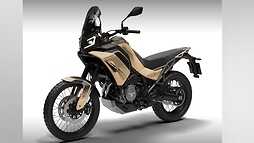
Moto Morini Camel Unveiled at EICMA 2026: Gets 670cc Engine, 250mm Suspension Travel
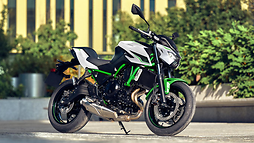
Kawasaki Z650 S Launched in India at Rs 7.59 Lakh; Gets Revised Styling and New Features

CFMoto V4 SR-RR Unveiled at EICMA 2026, Gets 210bhp V4 Engine

Ducati Desmo450 MX Factory, EDX Launched in India: Price, Engine, Features and More

KTM 450 RC Unveiled at EICMA 2026: Gets 56bhp Parallel-Twin Engine, India Launch Ruled Out
VinFast VF MPV 7 EV Gets a Price Cut of Over 4 Lakh: Check New Price
Volkswagen Virtus Facelift Teased Ahead of India Launch: Here's What to Expect
Popular

STAY UPDATED Get the latest news from Times Drive