New Delhi


MoRTH Proposes Mandatory Automatic Emergency Braking in Cars by 2030
The Ministry of Road Transport and Highways has released draft rules requiring Advanced Emergency Braking Systems in all passenger vehicles by 2032 as part of a broader push to improve road safety.

Updated Oct 23, 2026, 03:30 PM IST
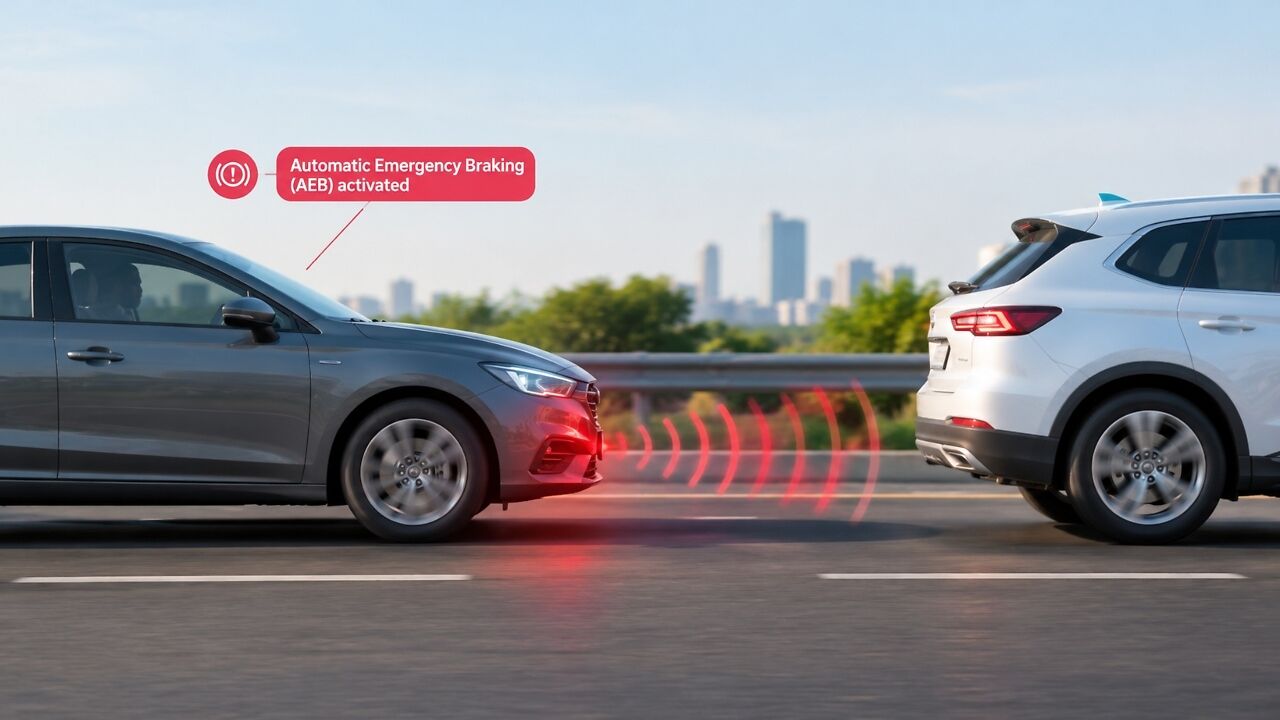
MoRTH Proposes Mandatory Automatic Emergency Braking in Cars by 2030. (Image: AI-Generated)
The Ministry of Road Transport and Highways (MoRTH) has proposed stricter vehicle safety rules in India, including making Advanced Emergency Braking Systems (AEBS) mandatory for passenger cars. Under the draft regulations, the requirement will be introduced in phases, starting with new car models from October 1, 2030, before extending to all vehicles in the M1 category by October 1, 2032.
The proposed changes are part of the government's efforts to improve road safety and reduce accidents and fatalities. The draft amendments also cover steering systems, lane-keeping technology and safety features for commercial vehicles, including buses and trucks.
Key Highlights:
- MoRTH proposes mandatory AEBS for new car models from October 1, 2030.
- The AEBS requirement will extend to all M1 category vehicles by October 1, 2032.
- New bus and truck models will face stricter safety requirements, including AEBS, from January 2027.
- The draft also proposes updated steering, lane-keeping and vehicle-to-vehicle communication requirements.
When Will Advanced Emergency Braking Become Mandatory in Cars?
According to the draft notification, the AEBS requirement will be implemented in phases to give automakers time to introduce the technology.
From October 1, 2030, all new models in the M1 category will have to feature AEBS. The requirement will subsequently extend to all M1 category vehicles, including existing models, from October 1, 2032.
Cars that already offer AEBS as an optional feature will also have to comply with the Automotive Industry Standard AIS-185 from October 1, 2028.
Advanced Emergency Braking Systems use sensors and other detection technologies to identify potential collisions. Depending on the system and driving conditions, the technology can warn the driver and apply the brakes automatically if the driver does not respond in time.
What Other Safety Technologies Are Covered Under the Draft Rules?
The proposed amendments to the Central Motor Vehicles Rules (CMVR), 1989, also cover steering and lane-keeping technologies.
From October 1, 2027, steering efforts in motor vehicles will have to comply with AIS-193 standards. The proposal provides specific exemptions for motorcycles, three-wheelers and invalid carriages.
In addition, M1 category vehicles registered as transport vehicles will have to incorporate Automatic Command Steering Functionalities (ACSF) and Emergency Lane Keeping Systems (ELKS) from October 1, 2029.
These technologies are intended to improve vehicle control and help prevent unintended lane departures, depending on the system's capabilities.
What Are the Proposed Safety Rules for Buses and Trucks?
The draft regulations also introduce additional safety requirements for commercial vehicles. New bus and truck models will be required to feature AEBS from January 2027. The proposed rules also cover driver-drowsiness detection, lane-departure warning systems and blind-spot information systems for these vehicles.
For trucks, revised braking standards and Electronic Stability Control (ESC) are proposed to become mandatory from October 1, 2027. ESC helps drivers maintain control when a vehicle begins to skid or lose stability. These measures are aimed at improving safety for commercial vehicle occupants and other road users.
Will Vehicle-to-Vehicle Communication Also Become Mandatory?
The proposed safety changes also complement the government's plans for Vehicle-to-Vehicle (V2V) communication technology. The ministry has proposed making V2V communication mandatory for all new vehicles from October 1, 2028. The technology allows vehicles to exchange relevant information in real time, potentially helping drivers and safety systems respond to road conditions and nearby vehicles. If implemented, these technologies could work alongside existing driver assistance systems to improve awareness of potential hazards.
What Happens Next to the Proposed Safety Rules?
The draft notification is open for public consultation for 30 days. During this period, stakeholders can submit their feedback and suggestions to the ministry.
MoRTH will consider the feedback before finalising the amendments. The proposed implementation dates and requirements may be subject to change before the rules are notified in their final form. If approved, the regulations would introduce significant changes to India's vehicle safety requirements over the coming years, with separate timelines for passenger cars, transport vehicles, buses and trucks.
Log in to post a comment.
End of Article
Trending
2027 Yamaha MT-125 Unveiled with New Design to Match Its Bigger Siblings
Kawasaki KLE650 Adventure Motorcycle Teased Ahead of Global Debut: Here's What to Expect

Hyundai Bayon Powertrain Details Revealed Ahead of October 26 India Launch

Ducati Formula 73 Limited Edition Launched in India at Rs 20 Lakh; Indian Allocation Sold Out

Benelli TRK 552, TRK 552X Launched in India: Price, Power, Engine, Features and More
Youdha ePod G Electric Three Wheeler Launched for Cargo Operations

Ultraviolette X-47 Venom Launched in India at Rs 2.65 Lakh: Range, Features and More
Popular





STAY UPDATED Get the latest news from Times Drive