New Delhi


Snapdragon for India Auto Day 2025: Qualcomm to Develop Made-in-India ADAS Stack by 2030
Qualcomm Technologies is developing a localized Advanced Driver Assistance Systems (ADAS) platform in India, aiming to enhance automotive safety features tailored to local conditions. At Snapdragon Auto Day 2025, Nakul Duggal emphasized the necessity of creating solutions that address India's unique regulatory and driving challenges. The initiative will involve partnerships with local manufacturers and engineers, and aims to commercialize the technology within five years. Additionally, Qualcomm is collaborating with government agencies to align its technology with evolving safety regulations, viewing India as a vital innovation hub for future automotive advancements.

Times Drive Desk
Updated Jul 30, 2025, 02:28 PM IST

Snapdragon for India Auto Day 2025: Qualcomm to Develop Made-in-India ADAS Stack by 2030
Qualcomm Technologies has announced plans to build a fully localised Advanced Driver Assistance Systems (ADAS) stack in India, in a major push towards democratising automotive safety features for the domestic market.

People Also Search
What are some key features of Honda's ADAS technology, and how has it been received in the Indian market?
How does Tata Elxsi's partnership with Qualcomm enhance the development of software-defined vehicles?
What role does Vehicle-to-Everything (V2X) technology play in enhancing road safety in India?
What advancements are being made by Bharat NCAP regarding ADAS testing in vehicle assessments?
How has the integration of ADAS in electric buses by NueGo set a benchmark in the industry?
Speaking at Snapdragon Auto Day 2025 held at Bharat Mandapam, Nakul Duggal, Group General Manager, Automotive and Industrial & Embedded IoT at Qualcomm, said the company had kicked off the development of a “made-for-India” ADAS platform in 2024 and expects to commercialise it within the next five years.
“This is a market with unique infrastructure, regulatory and driving challenges. To address them effectively, ADAS solutions must be built, trained and tested locally not adapted from global templates,” Duggal said.
Qualcomm’s local ADAS programme aims to support features such as lane keeping, collision avoidance, traffic sign recognition and pedestrian detection using AI models trained on Indian driving conditions.
Duggal said India’s complex traffic patterns and mixed vehicle usage make it imperative to collect local data and build region-specific perception stacks. “Every market requires different sensor configurations and rule sets. You can’t import that logic from another geography,” he said.
The initiative includes partnerships with Indian OEMs, component suppliers and engineering teams to co-develop and validate the stack. Qualcomm also plans to expand local investment in infrastructure and R&D to support the rollout.
Calling the car “one of the most sensor-rich edge AI platforms,” Duggal noted that future vehicles will need to process and respond to massive volumes of sensor data in real-time. Qualcomm’s chipsets, already ASIL-certified for safety, will anchor this next generation of intelligent automotive platforms.
“Our unified safety-focused architecture across cockpit and ADAS domains allows OEMs to build cost-effective yet feature-rich vehicles. We're building in flexibility and longevity so platforms aren’t obsolete with each generation,” he added.
Regulatory Engagement and Vision for India
Qualcomm is also engaging with government agencies, including the Ministry of Road Transport and Highways, to align its technology roadmap with India's evolving safety regulations such as the upcoming mandate for Autonomous Emergency Braking (AEB) by 2028.
In June 2025 Qualcomm acquired Autotalks to update Snapdragon Digital Chassis product portfolio with production-ready, automotive-qualified vehicle-to-everything (V2X) communications solutions compatible with DSRC and C-V2X standards for global deployments.
With over 22,000 engineers in India and nearly 5% of them focused on automotive, Qualcomm views India not just as a market but as a key innovation centre for its global automotive ambitions. “ADAS cannot be an afterthought or an import,” Duggal said. “If India is to leapfrog into the next era of intelligent mobility, the technology must be built here, for here and we’re committed to that journey.”
Also Read


Log in to post a comment.
End of Article
Trending

KTM 450 RC Unveiled at EICMA 2026: Gets 56bhp Parallel-Twin Engine, India Launch Ruled Out
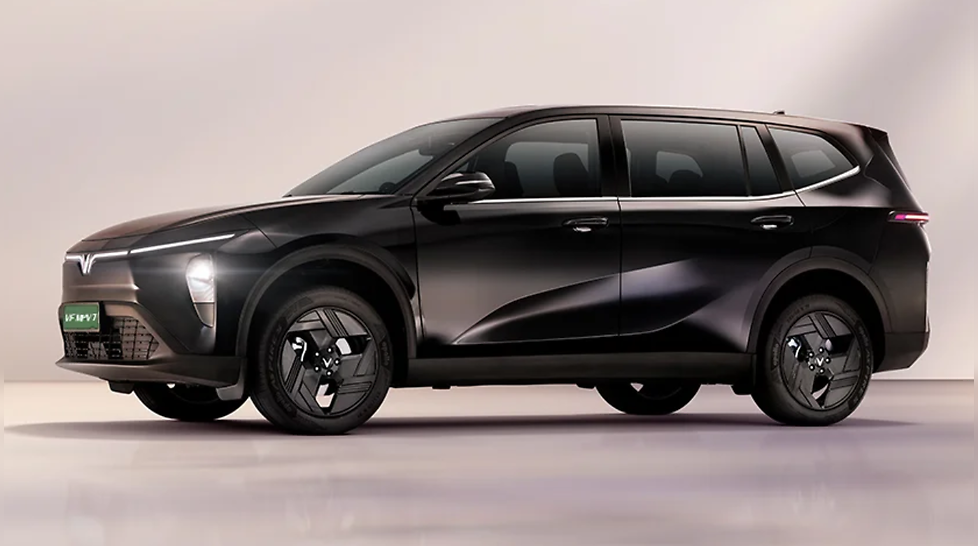
VinFast VF MPV 7 EV Gets a Price Cut of Over 4 Lakh: Check New Price

Volkswagen Virtus Facelift Teased Ahead of India Launch: Here's What to Expect

TVS Unveils Four New Models at EICMA 2026, Including Three Electric Scooters

Mercedes-Benz GLC EV Launched in India at Rs 78.50 Lakh: Gets 94kWh Battery, 490bhp Power

Honda Alpha EV Set to Launch in India on December 2: Expected Design, Features and Range

Hero Vida UBX 06 Electric Motorcycle Debuts at EICMA 2026: Features, Range and More
Popular




STAY UPDATED Get the latest news from Times Drive