New Delhi


IEC 2025: Gadkari says Vehicle Emissions Cause Nearly 40 Percent of Delhi Air Pollution, Calls for Action
At the India Economic Conclave 2025, Nitin Gadkari highlighted the urgent need to combat rising air pollution and traffic congestion, particularly in Delhi. He noted that vehicular emissions significantly contribute to local pollution and emphasized the government's plan to invest Rs 1.5 lakh crore in infrastructure to enhance road capacity. Gadkari advocated for a shift to alternative fuels like green hydrogen and biofuels, while also addressing stubble burning as a pollution source. He called for coordinated efforts across various governmental sectors to tackle this complex issue effectively.

Atul Bandhu
Updated Dec 18, 2025, 05:20 PM IST

IEC 2025: Gadkari says Vehicle Emissions Cause Nearly 40 Percent of Delhi Air Pollution, Calls for Action
Photo : TIMES DRIVE
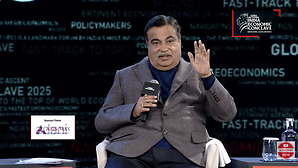
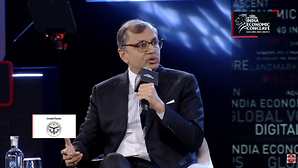
Speaking at the India Economic Conclave 2025 organised by Times Network, Minister of Road Transport and Highways of India (MoRTH) Nitin Gadkari addressed the audience outlining the need to address rising air pollution and traffic congestion, particularly in urban centres such as Delhi.

People Also Search
What alternative fuels is the Indian government promoting to reduce pollution?
How is the Indian government addressing the issue of crop stubble burning?
What role does green hydrogen play in India's future energy plans?
What measures are being taken to improve public transport in Delhi?
How is the government addressing the economic impact of pollution in India?
At the event Gadkari said traffic density in India has reached very high levels, especially in metropolitan areas. He stated that Delhi is facing persistent challenges related to congestion and air quality. To address this, the government is planning infrastructure expenditure of Rs 1.5 lakh crore for the Delhi NCR region, aimed at improving road capacity, traffic flow and overall mobility. A smoother flow of traffic will result in lower emissions which will reduce air pollution as well.
Delhi Air Pollution: Vehicular Emissions A Major Contributor
According to Gadkari, vehicular emission contributes to around 40 percent of air pollution in Delhi NCR. He expressed the underlying need for interventions beyond temporary restrictions. He said reducing pollution linked to fossil fuels is achievable through policy, technology and better enforcement. To reduce vehicular emissions Gadkari urged for a shift from highly fossil based fuels like petrol and diesel to alternate fuels like flex-fuel, ethanol, ethanol blended fuel, biofuel, Methanol, EVs and green hydrogen.
The Indian government has set up the ‘Green Hydrogen Mission’ with the aim to make India the epicentre of green hydrogen and its technology. The central government wants to make India the middle east of green hydrogen. Gadkari has also been a great advocate for the use of green hydrogen and at the event he hailed it as the fuel of the future. He further went on to give examples stating that manufacturers in India are already testing hydrogen powered vehicles and the government is looking to scale this fuel of the future for a greener tomorrow.
Citing some long-term solutions to reduce air pollution, the minister highlighted that the government has already mandated the use of pre-cast technology in road construction, which helps reduce dust during execution. He suggested that similar construction methods could also be adopted in the building sector. He stated that dust, mud and muck which accumulates alongside the roads also remains a major concern. He suggested that agencies responsible for road maintenance must deploy proper equipment to remove mud, muck and dust from roads. Following which, these areas should either be planted with grass or or paved with concrete to prevent dust from becoming airborne again.
Delhi Air Pollution: Tackling Stubble Burning Issue
Shedding light on the issue of stubble burning, Gadkari said that the government is actively working on converting crop residue into useful products. He noted that stubble can be processed into fuels and other resources, reducing open-field burning and its contribution to seasonal pollution. He cited the ‘waste-to-wonder’ initiative for the same.
Delhi Air Pollution: Need For Coordinated Government Action
Calling air pollution a complex issue, Gadkari said multiple departments need to work together to arrive at a solution on priority. While the problem involves infrastructure, fuel, construction practices and agriculture, he expressed confidence that coordinated action can deliver results in the near term.
Also Read
Log in to post a comment.
End of Article
Trending

Maruti Suzuki Victoris Aurum Edition Launched in India: What's New?

Denza India Debut on November 13: D9 MPV and Z9 GT Expected
KTM Opens New Motorcycle Plant in Brazil, to Produce 10 KTM and Husqvarna Models

MoRTH Proposes New Driving Licence Rules: Colour Coding, 75% Test Score and More
Ultraviolette to Launch 4 New Electric Two-Wheelers in Next 12 Months

Updated Bajaj Pulsar NS200 Launched in India at Rs 1.60 Lakh: What’s New?

2027 Yamaha MT-125 Unveiled with New Design to Match Its Bigger Siblings
Popular





STAY UPDATED Get the latest news from Times Drive